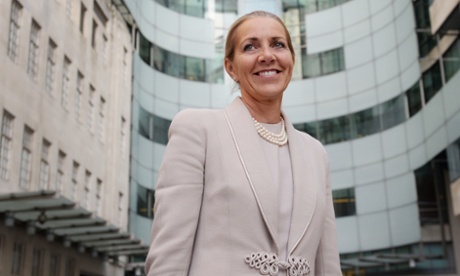
Rona Fairhead will call for a “proper public debate” about the future of the BBC and not one conducted by a small elite in her first speech as chair of the BBC Trust.
Fairhead’s speech, in which she focuses on the importance of the licence fee payer rather than BBC executives or indeed government ministers, is her first salvo in the negotiations around renewal of the charter which ends in 2016.
“This will be a very real debate about the future, size and shape of the BBC,” she will say in a speech to the Royal Television Society in London on Tuesday.
“And I believe it needs to be a proper public debate, not one conducted by a small elite …
“I believe the debate must include the voices of all the people out there who pay for the BBC, who love its programmes, who are its true owners.”
To support this view, the trust will publish initial findings of research by ICM which found that a majority of licence fee payers (83%) agreed that the BBC’s independence and impartiality were important.
Being impartial in news and current affairs programming is the chief priority in all subject areas, according to the research.
About 85% agreed with the BBC’s “core mission” to inform, educate and entertain, while similar numbers thought providing good-quality programmes and value for money were important.
Fairhead, the former finance director of the Financial Times, defends the trust amid increasing criticism of the structure of the organisation, which was set up as both champion and regulator of the corporation.
She will say: “I took this job because I believe the trust needs to be at the heart of that debate.”
Fairhead’s speech reprises the themes in an email she wrote to BBC staff when she started as chair of the trust four months ago.
It said: “In this role, we can help the BBC remain the gold standard in journalism, produce the highest-quality, boldest programmes and remain the beating heart of the UK’s creative and digital world.
“We need to defend vigorously the BBC’s independence while holding it accountable to its audience and to its public service mission and ensuring it continues to meet the changing needs of its audiences.”
The earlier email from the corporation’s first female chair also pointed out the need for cost-cutting and to “rectify some of the high-profile issues of the past” including the corporation’s handling of the Jimmy Savile scandal, which led to the departure of the previous director general, controversial executive payoffs and the high costs of its Digital Media Initiative.