
The 79th edition of the Cannes Film Festival came to a close on Saturday evening, with the coveted Palme d’Or for best film going to family drama Fjord by Romanian director Cristian Mungiu. He called on filmmakers to set the example by promoting tolerance.
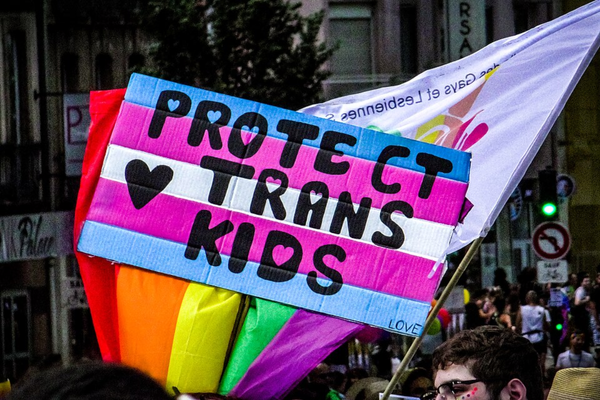
The emotionally charged closing ceremony wrapped up an unusual festival, which saw a mix of political references to current conflicts and a host of stories from LGBTQ+ perspectives.
After 11 days of discovery, surprises and debates over the merits of each of the 22 films in competition, the nine-member jury rendered its verdict.
“We chose this film because of its capacity to address the theme of diversity,” jury president Park Chan-Wook told the audience gathered at the Grand Theatre Lumière.
A deafening round of applause erupted when the Palme d’Or was attributed to Fjord, by Romanian director Cristian Mungiu – his second film to take the top prize after 4 Months, 3 Weeks and 2 Days in 2007.
In Fjord, a Romanian-Norwegian family moves into a small town in Norway but faces the suspicions of the community over their religious practices. Accused of mistreating their children, they undertake a legal battle to maintain custody.
“The state of the world is not the best, I’m not very proud with what we’re leaving to our kids,” Mungiu said. “The change must start with us. Today the society is split. This film is a pledge against fundamentalism. We need to apply lovely words like tolerance more often.”

A host of celebrities were on hand to present prizes, including Tilda Swinton, Zoe Saldana and Isabelle Huppert, who presented the Honorary Palme d’Or to Barbra Streisand. Unable to attend the ceremony in person, the American star sent a video message.
Dressed in a long, sparkling red gown, Geena Davis laughed as she recounted being surprised to see her face – alongside Thelma and Louise co-star Susan Sarandon – on all the posters around town. She introduced the Best Actor award, which was presented jointly to the young leads in Belgian World War I drama Coward, directed by Cannes regular Lukas Dhont.
Emmanuel Macchia and Valentin Campagne could barely contain their excitement as they came on stage to accept the trophy – urging the audience “to dance, to live, to love”. The film follows two soldiers as they on a musical revue to lift moral in the trenches.

Best Director went jointly to the Spanish duo Javier Calvo and Javier Ambrossi for The Black Ball, a story of gay men coming out during the Spanish Civil War, and Pawel Pawlikowski for Fatherland. This dark piece explores trauma through the eyes of German writer Thomas Mann and his daughter Erika in the wake of World War II.
“We live and breathe politics and it takes courage to resist bullies and noise, algorithms and peer pressure,” Pawlikowski said, encouraging artists to be authentic in their storytelling.
The role of France's collaborationist Vichy government during World War II was at the centre of the French film A Man of His Time, which won Best Screenplay for Emmanuel Marre. He castigated “those bullies who destroy lives”, without mentioning names.

Grand Prix winner Andrey Zvyagintsev, whose film Minotaur tackles the issue of military conscription against the backdrop of the Ukraine conflict, was more forthright. The exiled director took a swipe at “the President of the Russian Federation” who “is the only one who can stop these massacres”.
The Jury Prize went to The Dreamed Adventure by German director Valeska Grisebach, who paid tribute to the women in the Bulgarian village where her film was set, acknowledging their empathy and openness.
The award for Best Actress was shared between France's Virginie Efira and Japanese co-star Tao Okamoto, who appeared in Ryusuke Hamaguchi’s film All of a Sudden.
The Short Film prize went to Mexican boxing fable For the Opponents, directed by Federico Luis.
The Camera d’Or for first feature went to Ben’Imana, directed by Rwandan director Marie Clémentine Dusabejambo.
The Un Certain Regard jury handed out their awards on Friday night, with the top prize going to Sandra Wollner’s Everytime.