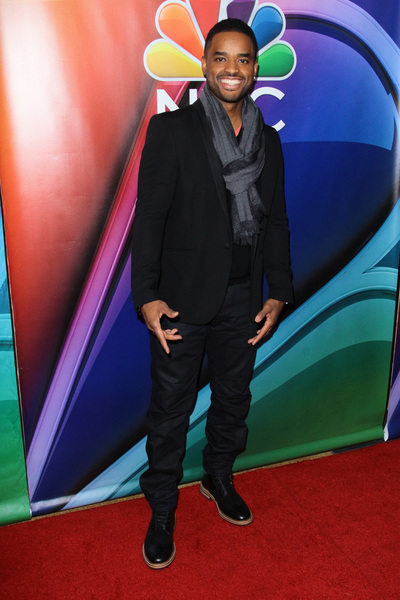
Before "Love Jones," black romance on the big screen was hard to come by. Sure, "Mahogany," starring Diana Ross and Billy Dee Williams, paved the way in 1975. Since then, most of the movies featuring black people were about 'hood life: poverty, gangs, drugs and guns. Someone was always dying by the time the credits rolled.
Then, in 1997, came a simple movie about the love lives of black artists in Chicago. Starring Larenz Tate and Nia Long, writer-director Ted Witcher's debut film followed the rise and fall, and rise again, of a relationship between a young poet named Darius Lovehall and Nina Mosley, a photographer. Set in the city's spoken-word scene, "Love Jones" showcased a different aspect of black life, one where struggle and strife did not dictate one's circumstances, where one's group of friends, played by Isaiah Washington, Lisa Nicole Carson, Bill Bellamy and Leonard Roberts, were more like family.
It was the kind of film white communities had known well.
In the 20 years since "Love Jones" was released on March 14, 1997, black love has found its way into films and television shows. Think "The Best Man" franchise, "Queen Sugar," "Southside With You" and "Insecure." But where "Love Jones" should have been a catalyst, a more robust canon of romantic films featuring black couples hasn't materialized.
On the film's 20th anniversary, which saw the film honored at last month's American Black Film Festival Awards, The Times shaped this oral history from conversations with the "Love Jones" cast and crew about how the film came to be, the impact of black love on screen in the 1990s and why the film is considered a classic.
"Love Jones" is about possibilities, opportunities people of color know exist for them _ in love, life, career. But it was difficult for Witcher as a first-time director to show that when most black films at the time were more like "Menace II Society" and "Boyz N the Hood."
Witcher, writer-director: There was this (poetry) club in Chicago that we all used to go to, called Spices. I thought that was an interesting backdrop onto which I could layer this story of a twentysomething's relationship. It had never occurred to me that the movie would get made, quite frankly, because it just seemed so small and niche, even for black people. It seemed so outside of what Hollywood was making at the time.
(Then) I came upon an executive who was at New Line, Helena Echegoyen. With her encouragement, I sat down in my little apartment in Koreatown for about nine months and wrote this script. When I gave it to her, she saw the potential of it and was, like, "We're getting this made."
Helena Echegoyen, executive producer: He wanted to make a romantic comedy, and I had been looking for a filmmaker to work with who could make a movie that was more about my experience. Because at the time we had a lot of movies about West Coast gangs and violence. That wasn't my experience. I was more like the Winona Ryder character in "Reality Bites" than the Regina King character in "Boyz N the Hood."
Nick Weschler, producer: It just felt like I hadn't seen these characters in this kind of a love story. (Witcher's) approach for black characters and a black audience ... it just felt real, like its own thing.
Julia Chasman, executive producer: It was the first script that I had seen that was attempting to show the lifestyles of a whole sector of young African American artists _ the sort of striving artist that we were so used to seeing in white movies.
Larenz Tate (Darius Lovehall): They were intellectuals. They were not afraid to be vulnerable and to be in love and to face their feelings in a way that we probably hadn't seen people of color do in a long time. That was really nice.
Lisa Nicole Carson (Josie Nichols): It seemed like a young "Mahogany." It was very adult but still capturing the experiences of black young people.
Leonard Roberts (Eddie Coles): If you are 22 and you're black and it's 1996, you've never seen a movie with more than four people of color where somebody doesn't die or somebody isn't in prison or somebody isn't struggling. I told (my agent) that that alone was getting me through the door. I still have the script. It sits on my bookshelf.
Though most would say "Love Jones" would not be "Love Jones" without Long and Tate, neither actor was Witcher's first choice.
Witcher: Believe it or not, I had Jada Pinkett (Smith) in mind. ... I had seen her on "A Different World" and thought she had a very different sensibility from other black actresses of her generation. I tried to get her and she passed.
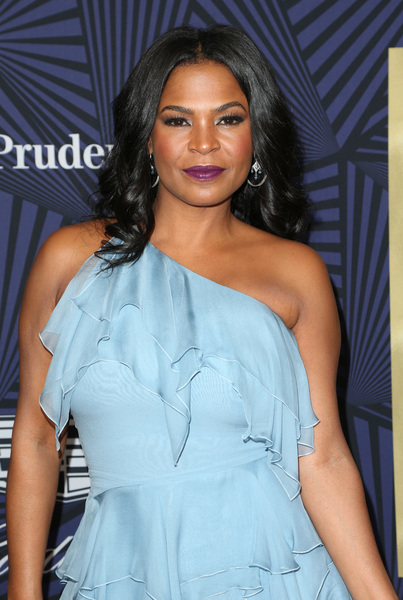
Then the studio came in _ and this is how Hollywood works _ and had had a lot of success with Larenz (Tate). They had made "Menace II Society" and, from a marketing (and) numbers standpoint, said, "Look, if you can get Larenz, we'll make the movie." His participation became integral to getting a green light.
Tate: We had our meeting of the minds, and there were some things that I saw differently than he, as far as the character. But what I gathered from him was that we would have a work relationship that was open and that we would be able to do it in a collective way.
Witcher: My recollection of it is he was a little bit standoffish. What I learned later was he liked the script but was not interested in working with a first-time director. We circled each other in the meeting, but I remember having a good meeting and thinking to myself, "Well, OK, maybe let's keep talking about it."
Helena introduced me to Nia because Nia had done "Friday," which Helena was the executive on. We had dinner, the three of us, and I remember it being very ebullient. I just thought she had a really great energy.
Tate: She and I connected immediately. She was just willing to do what it takes for us to find that gem.
Nia Long (Nina Mosley): I honestly felt like our chemistry was the best. It felt amazing and it felt right, and we looked good together and it looked believable. Ted just really wanted two black people that were identified as being black and beautiful in this movie. It wasn't meant to be any more than a story about two black people falling in love.
Isaiah Washington (Savon Garrison): We just felt, like, "Wow, Larenz Tate and Nia Long are going to be the next Denzel, the next biggest stars in the history of filmmaking."
Bill Bellamy (Hollywood): I was the rookie actor compared to everyone else. I had just been doing comedy and being funny all the time, but I wanted to get my weight up and show people that I could act in a different way. I thought the movie would be my chance to show that I could get down with the big dogs.
Carson: I felt like I had been let into the place with the cool kids on campus. They were all so cool, hot young actors. It felt like a black "90210."
Bellamy: If there was a "Rat Pack" or "Breakfast Club" for us, this was it.
"Love Jones," which wasn't considered a hit, was Witcher's first movie and still is his only feature film. Though many, including Spike Lee, projected a promising future for the writer-director, he hasn't made a movie since. The reason?
Echegoyen: I think that he had a very strong vision for the kind of career that he wanted to have and the kind of films that he wanted to make. But the tide was such that he was not really able to hold that vision for himself to literally manifest it past all of the haters and the stuff that you have to go through.
Witcher: Show business is funny. It's really not that complicated. I had some opportunities in the initial years after the movie because people liked it and I think they generally liked me. The trick is trying to sync up what you want to do with what the studio wants to pay for. I wanted to make (another movie), something better, deeper, richer. I wanted to take where I had started and move the chains down the field even further.
Echegoyen: Mathematically, if it costs $7 million and it makes $13 million (over its theatrical run), and you're still talking about it 20 years later, then I would say that it, by now, has certainly recouped its expense. I mean that's just plain math.
Witcher: I'll come back around. Maybe I'll make another film. I'd certainly like to; it's been a long time. It is very difficult to sustain any kind of career in show business and much less a career in which you're trying to make choices based on your own creative impulses and pursue your own individual vision. It is very difficult because it's a highly, highly commercial business. There's a little bit of room for creative expression. They'll let a few of those guys loose, off the reservation, but not many. Then, you add the black thing in ... it's challenging.
If the movie had been a hit, I might have been able to force some hands, but not having the platform of commercial success really limits your ability to throw your weight around. They'll just pull up the numbers and be, like, "Why are you in my office at all with this gross?"