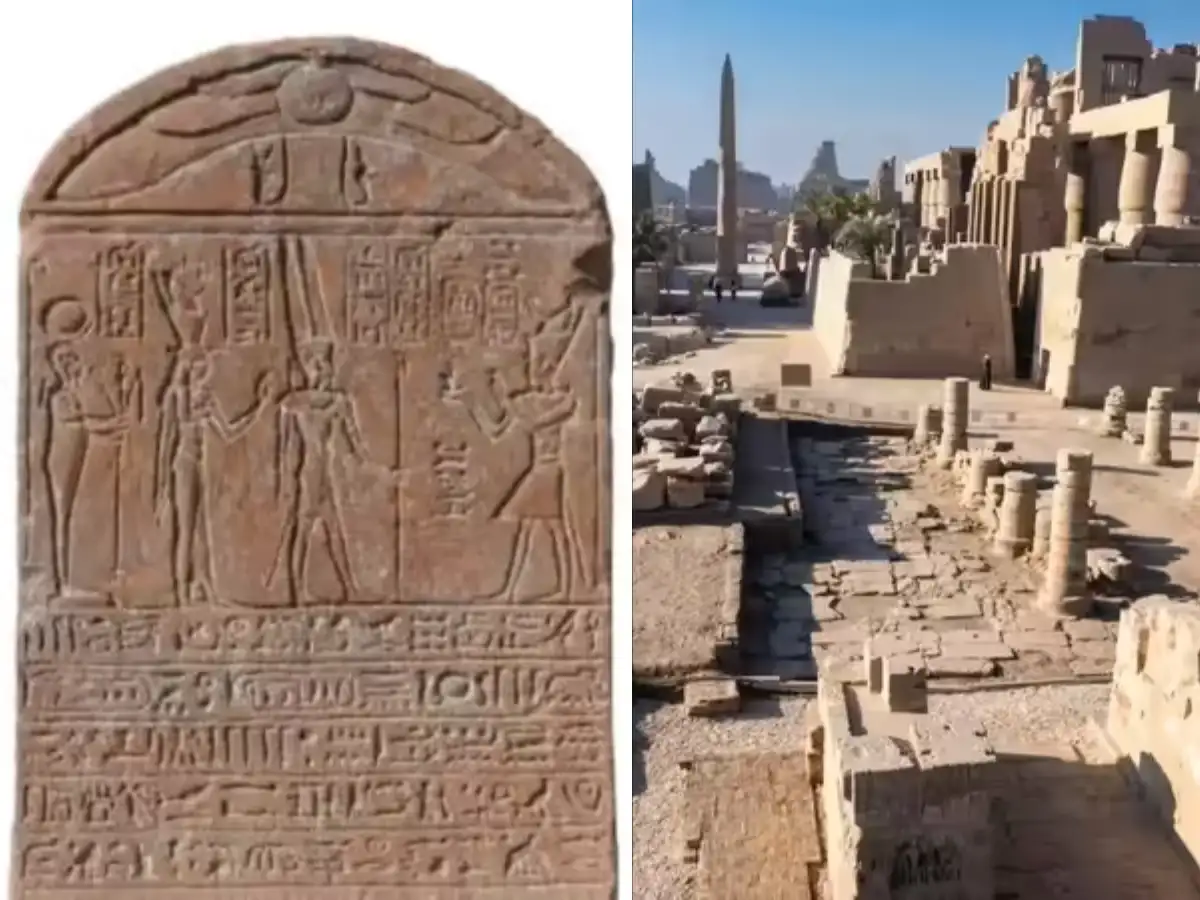
Ancient Egypt continues to surprise historians with layers of history buried beneath its most iconic monuments. At the Karnak Temple complex in Luxor, ongoing restoration work has uncovered a remarkable 2,000-year-old stone slab that appears to show a Roman emperor depicted as an Egyptian pharaoh. As cited in a TOI report, the discovery adds a new layer to the long and complex history of how sacred Egyptian spaces were reused, reinterpreted, and reshaped over centuries.
Karnak Temple Restoration Uncovers Hidden Architectural Layers
The discovery was made during a careful restoration project near the northern gate associated with Pharaoh Ramses III of the 20th Dynasty. This section of the Karnak Temple complex had suffered significant damage over time, with collapsed blocks, vegetation growth, and partially exposed foundations that made the original structure difficult to interpret.
Between 2022 and 2025, an Egyptian-French archaeological mission working at the site began dismantling and documenting the gate stone by stone. Instead of reconstructing the structure based on assumptions, researchers followed a scientific process of recording, cleaning, and reassembling each block to preserve historical accuracy.
During this work, archaeologists identified reused stone blocks embedded within the gate structure. Some of these stones date back to earlier reigns, including decorative elements linked to Amenhotep III, suggesting that materials from older monuments were repurposed in later constructions.