
Roland VAD316 review: What is it?
Towards the end of last year, Roland released its 7 Series V-Drums, introducing a selection of new electronic drum set configurations based around the almighty V71 module, which replaced the long-serving TD-50 as the company’s flagship offering.
Since its release, the V71 has been touted as a professional level, stage-ready module, boasting a completely overhauled sound library, large colour display, Bluetooth audio, built in Wi-Fi for app control and upgrading sounds, USB inputs for digital trigger pads, masses of routing options and full multi-track recording capability. You can read our full, 5-star TD-716 review here.
Fast forward to this year and Roland just dropped not one, but two brand-new V-Drum lines. The 3 Series and 5 Series are essentially smaller siblings to the flagship 7 Series - offering many of the same top-end features but in more streamlined and affordable packages. In fact, the new V31 and V51 modules which the 3 and 5 Series kits (respectively) are centred around, share a startling number of the V71’s top-end bells and whistles.
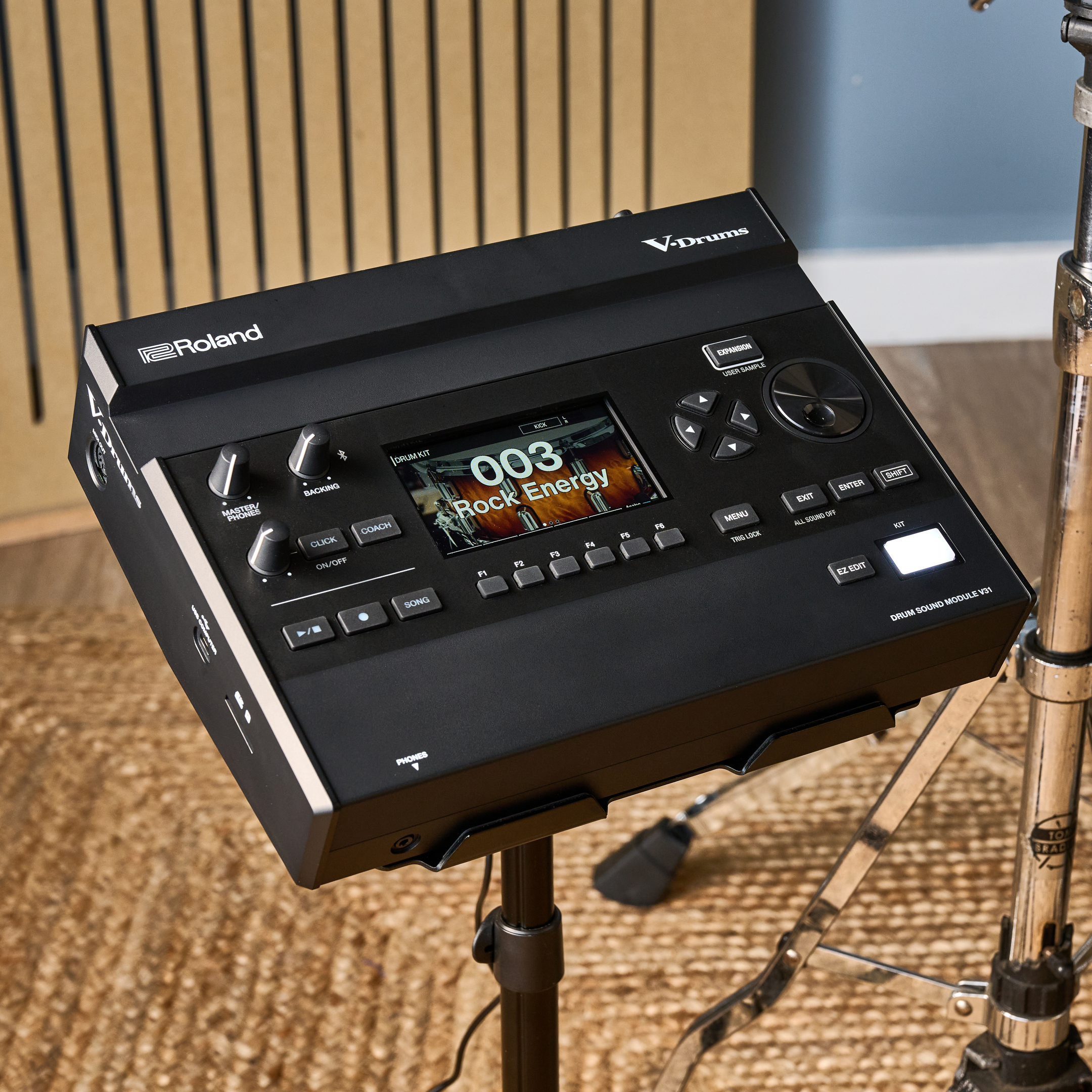
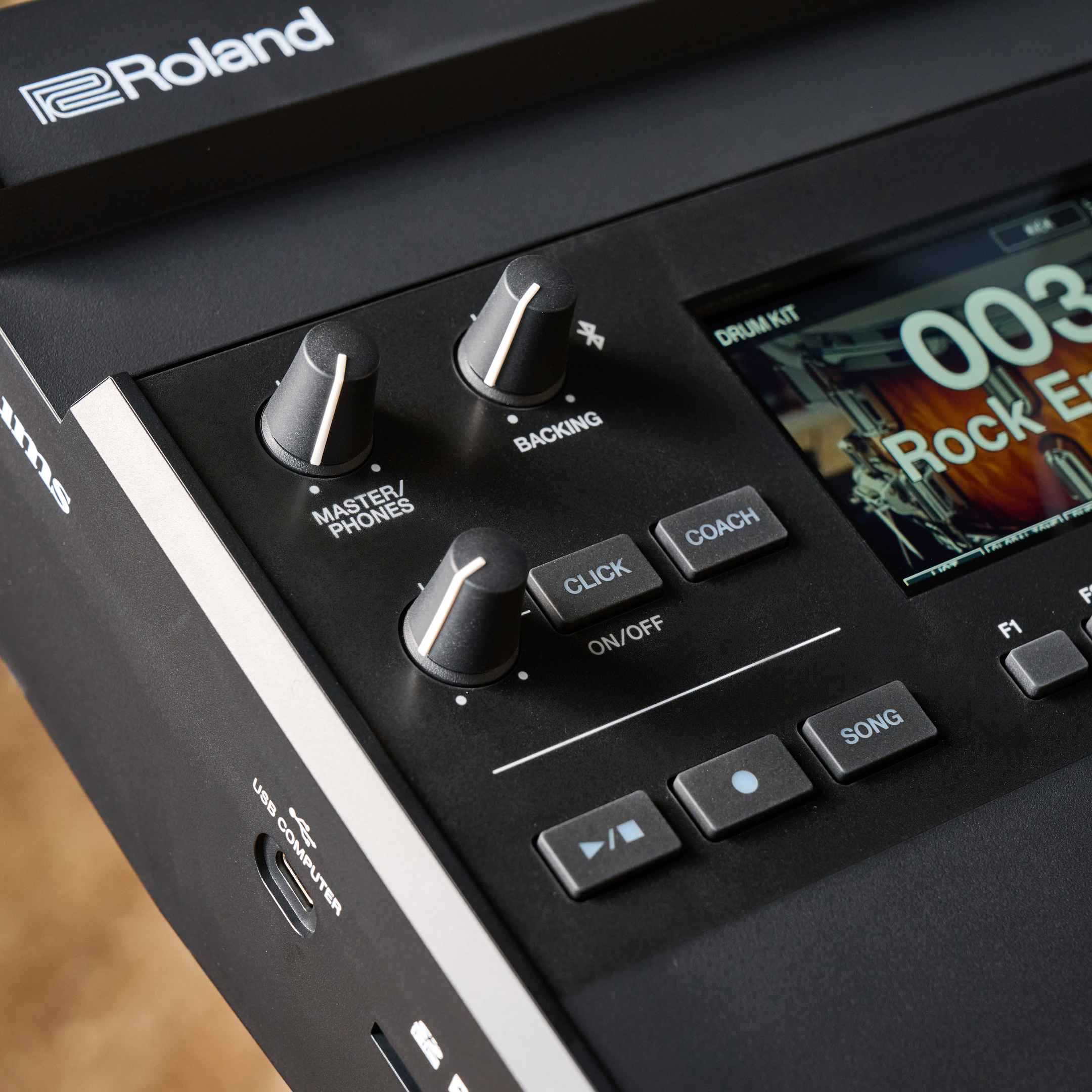
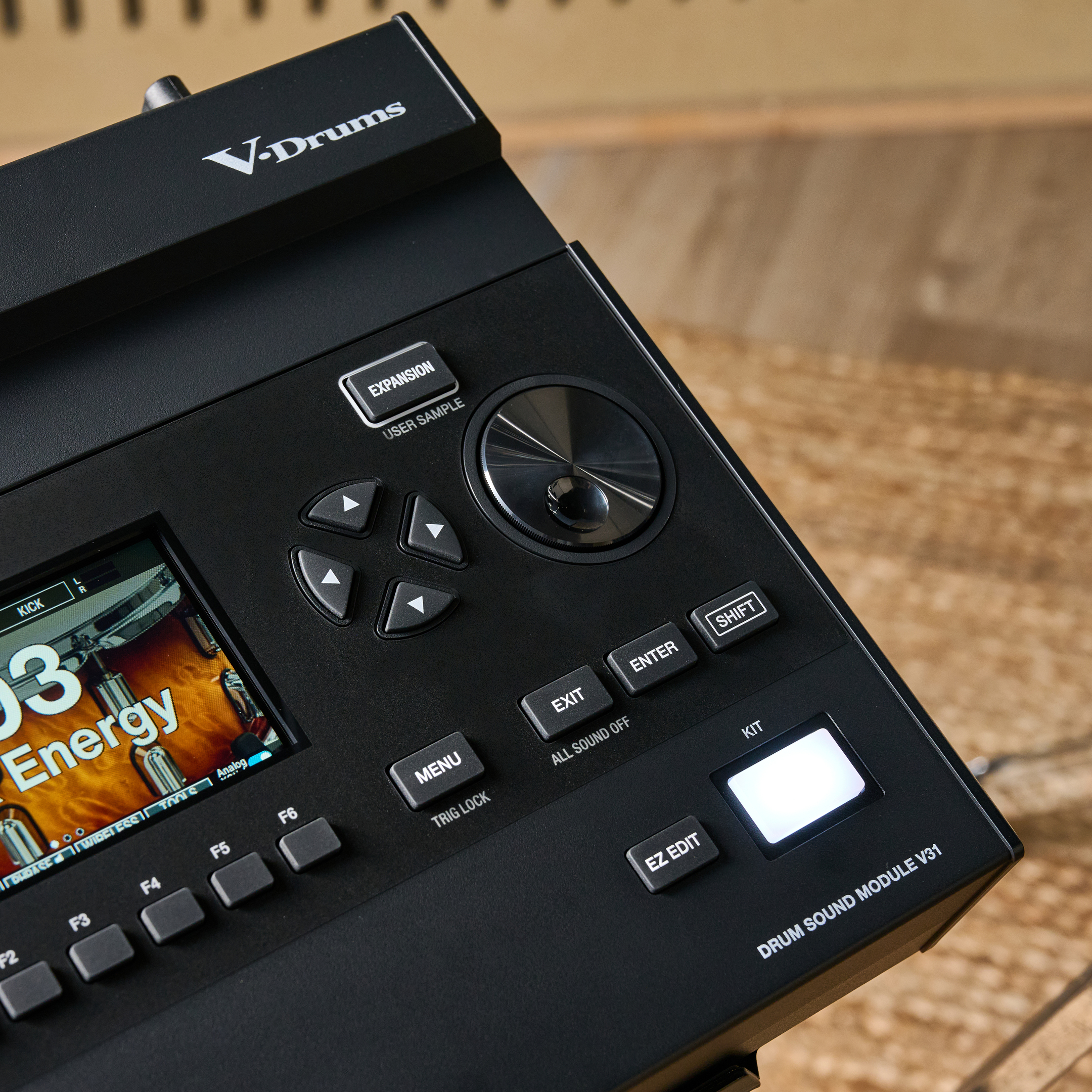
Both feature the exact same sound library as the V71 with the ability to connect to the Roland Cloud for access to the latest kit packs and expansions (but more on that later). They also share the large colour screen, Bluetooth audio, Wi-Fi, coaching functions and internal recording. Lastly, both the V51 and V31 are capable of running Roland’s high-tech digital snare, hi-hat and ride pads, although the latter has only one USB trigger input.
The kit line-up within each series is laid out identically, with each one boasting a full-size V-Drums Acoustic Design (VAD) kit at the top, followed by a medium sized rack-based setup and then a more compact offering. In the case of the 7 Series these are the VAD716, TD716 & TD713; for the 5 Series it’s VAD516, TD516 and TD513. Our review kit is the VAD316 - the largest configuration in the 3 Series - followed by the TD316 and TD313 models.
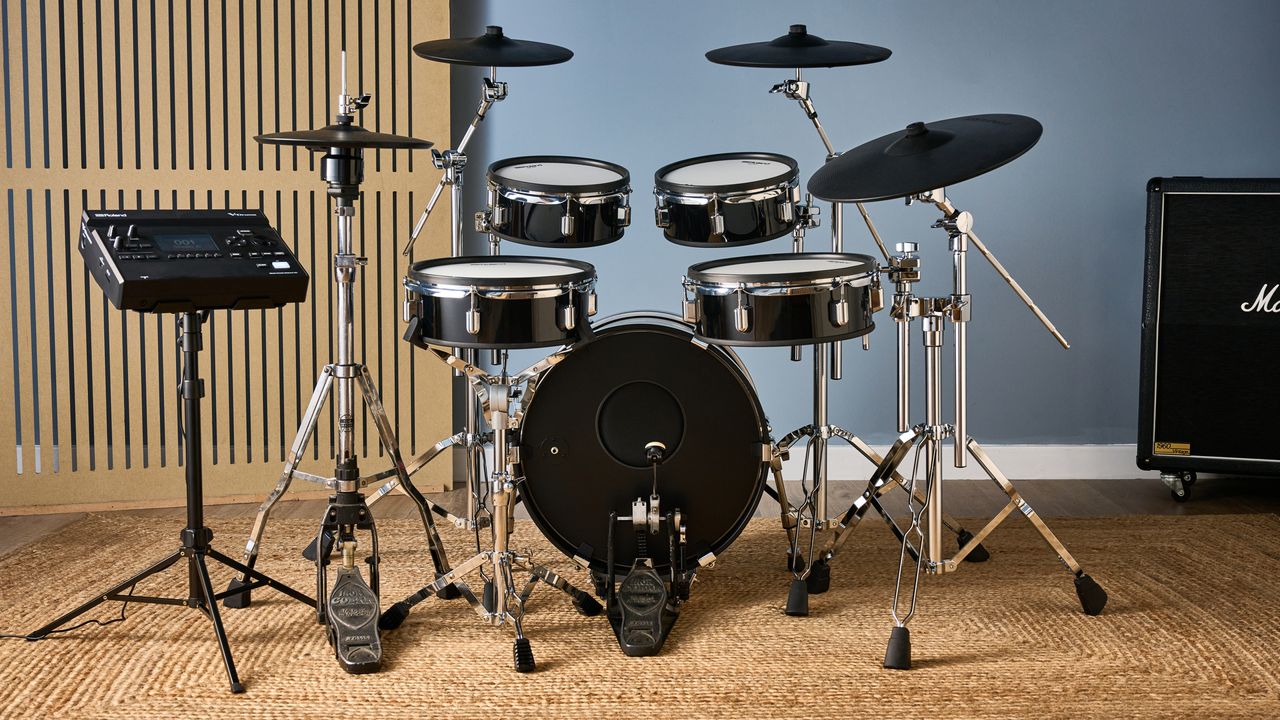
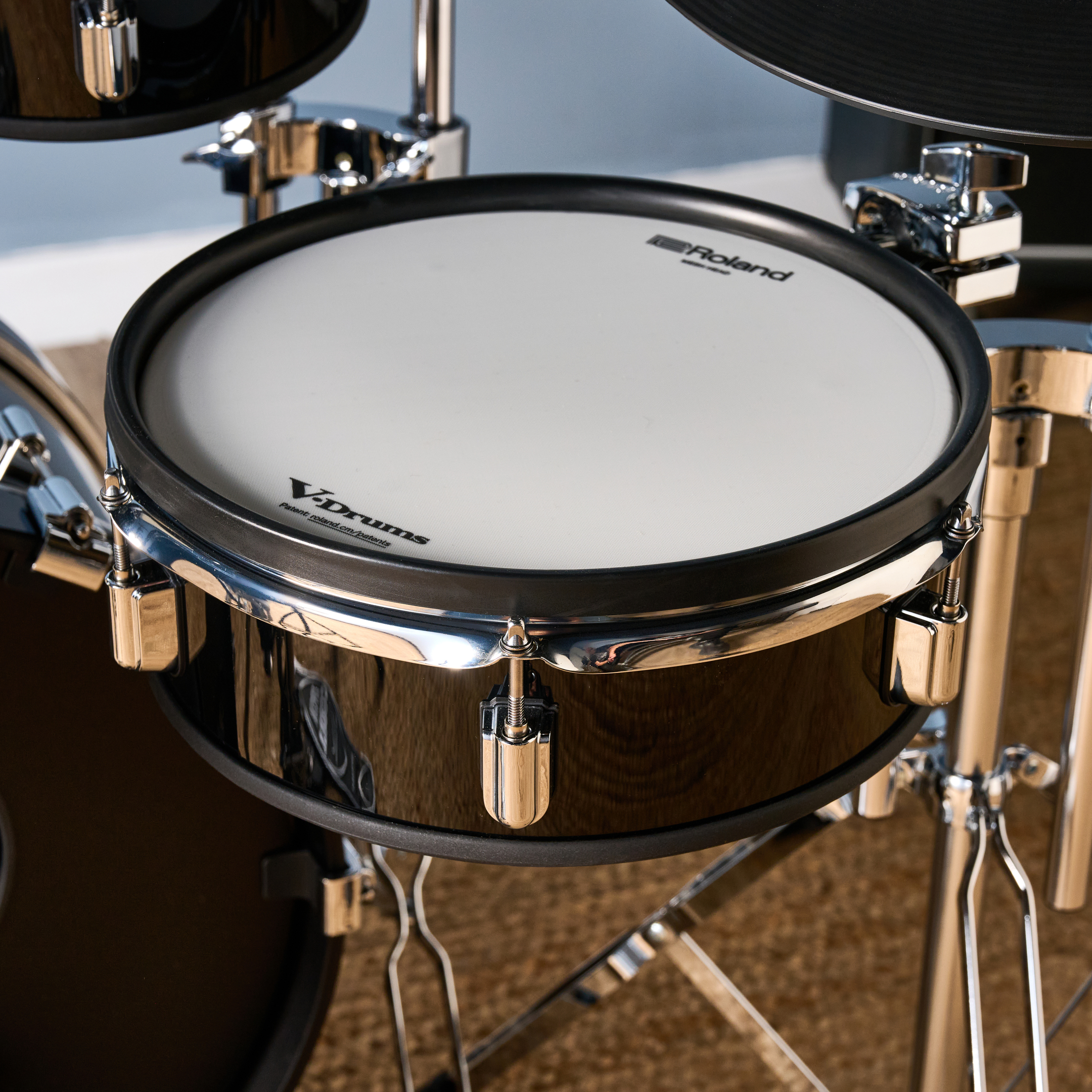
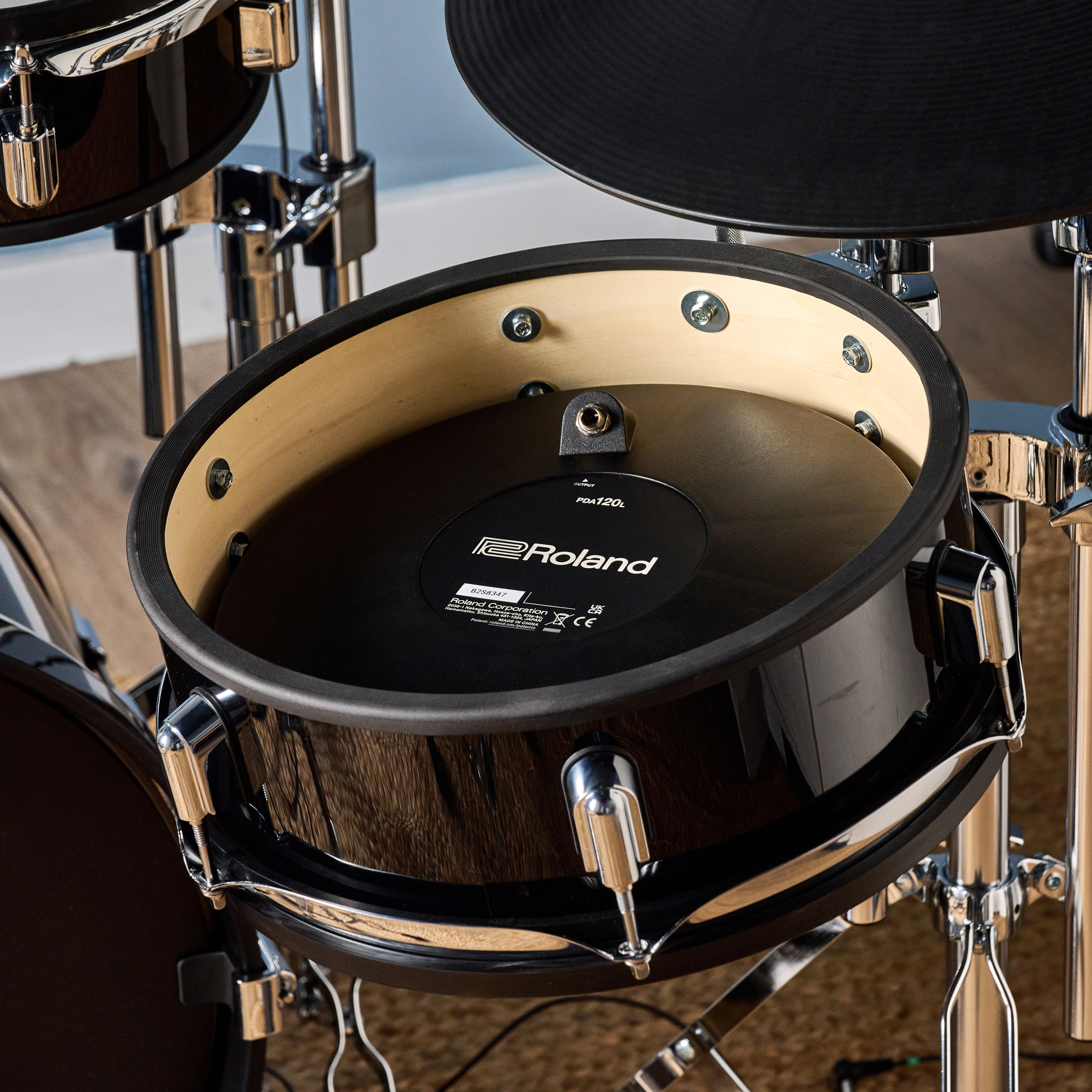
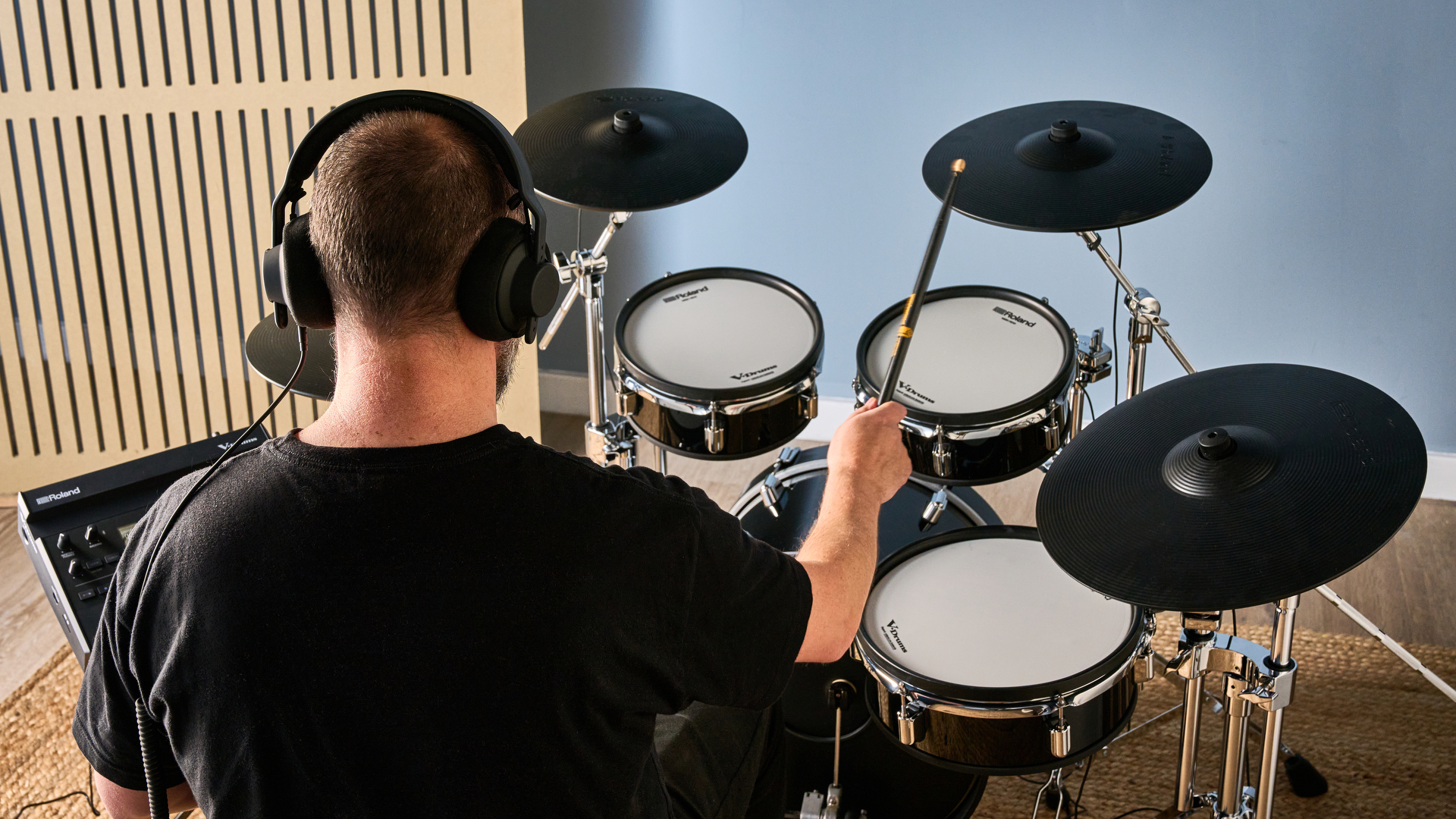
The VAD316 comprises an acoustic style 18”x14” bass drum with Roland’s KD-A (Kick Drum Attachment), 12” snare pad, two 10” toms and a 12” floor tom pad - all dual-zone pads with mesh heads and real wooden shells. The half-depth style gloss black shells are finished with a rubber rim at their base rather than a metal hoop which gives them a kind of hybrid electronic/acoustic aesthetic quality.
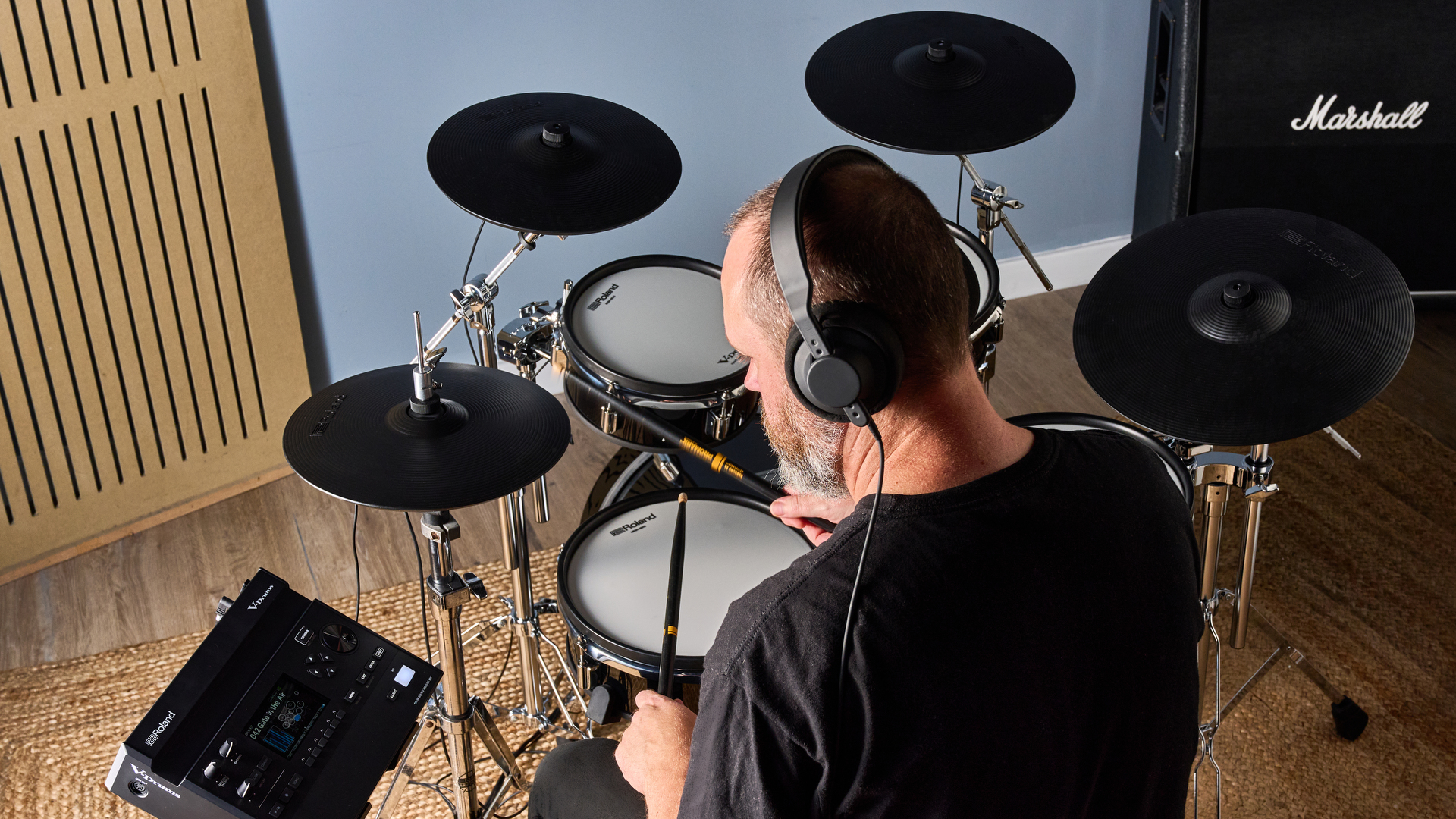
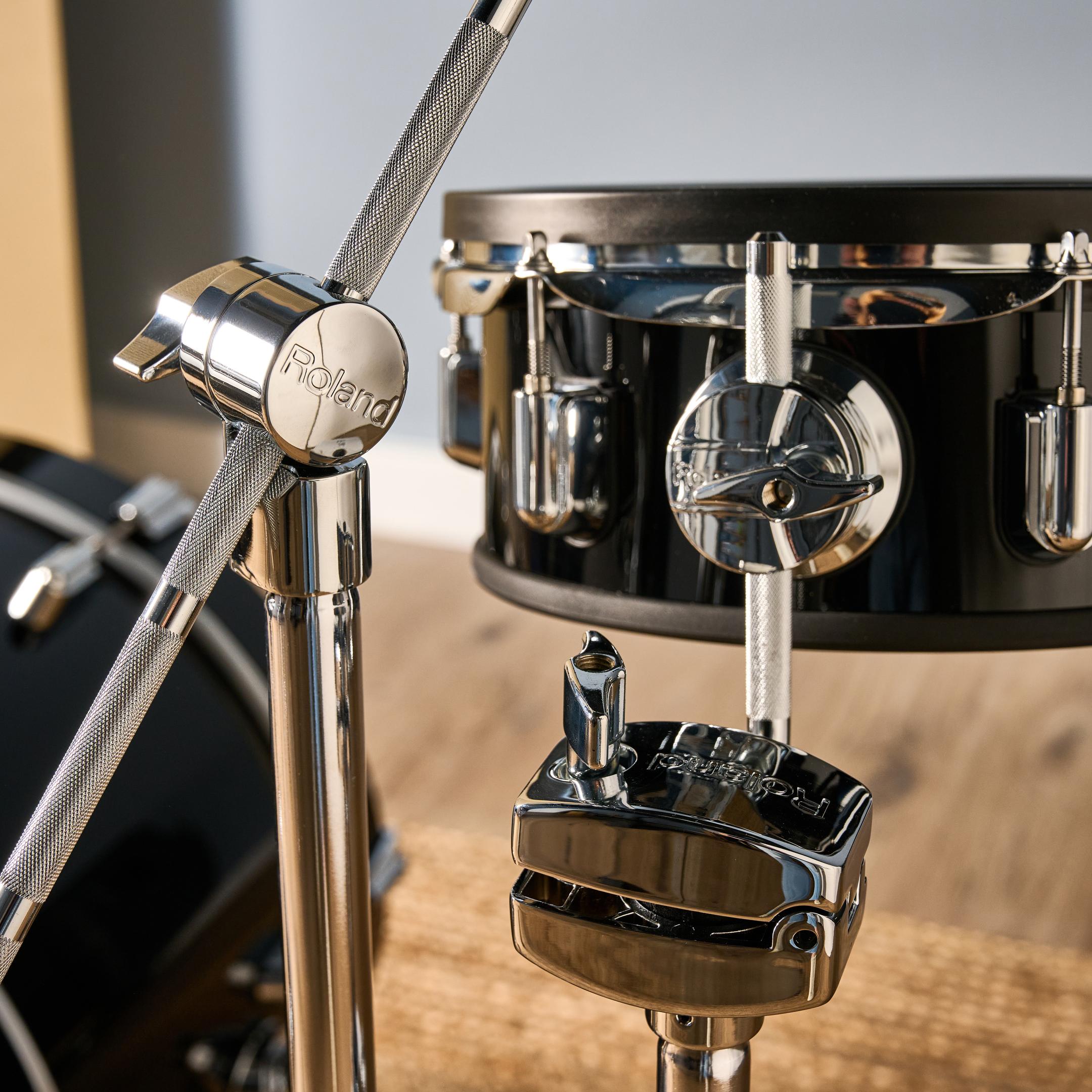
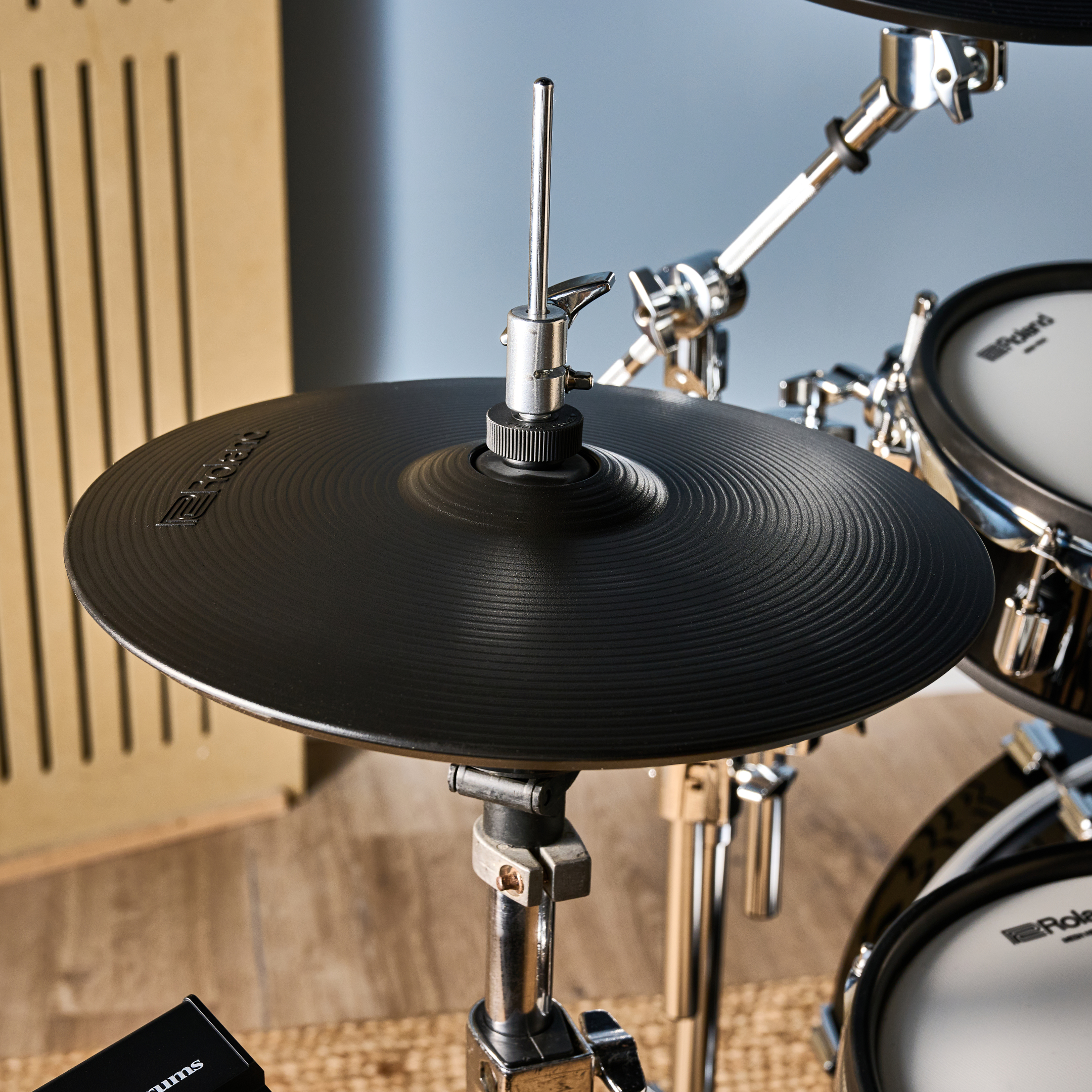
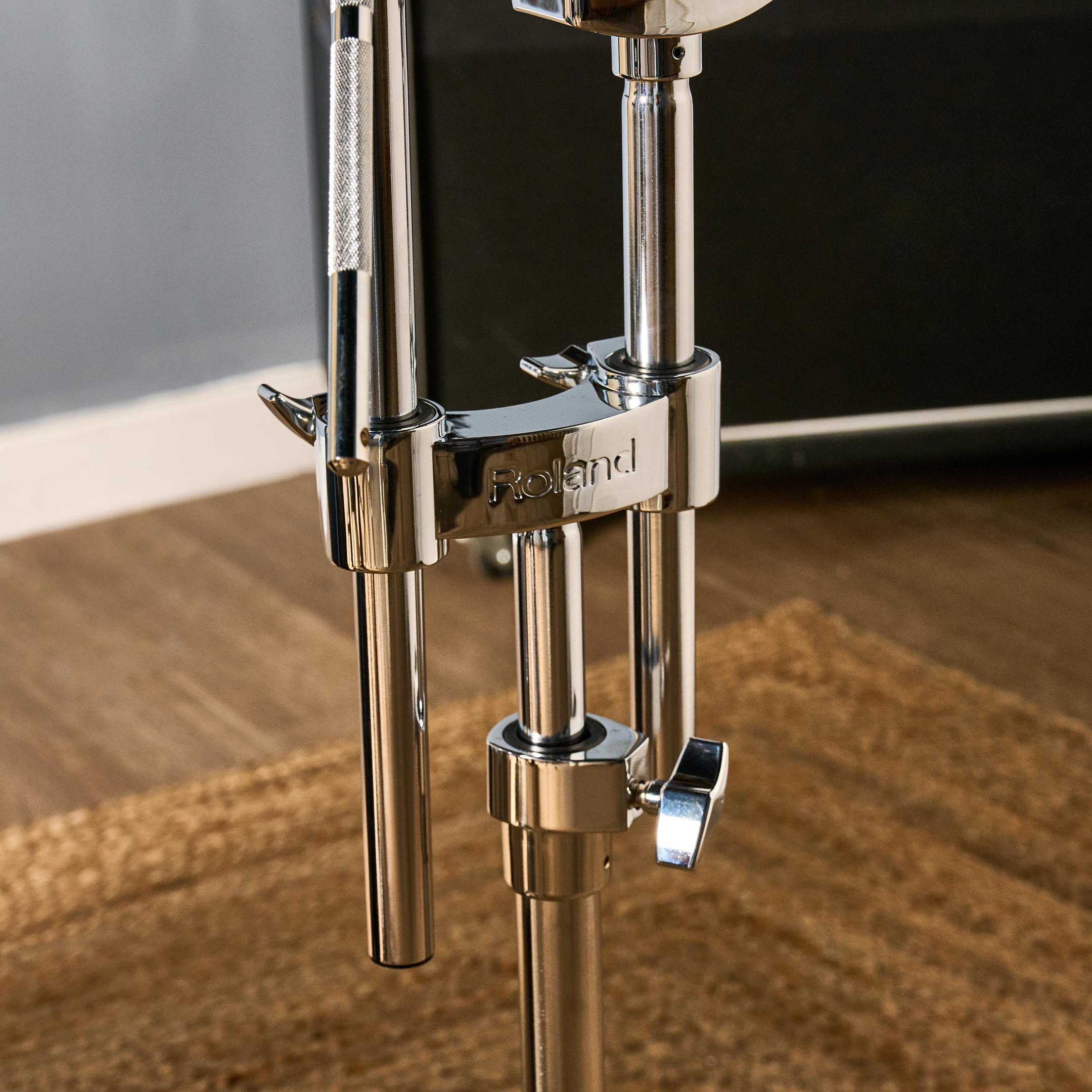
On the cymbal front, there’s a 16” 3-zone ride, 12” stand-mounted dual-zone hi-hat, plus 12” and 14” dual-zone crashes. Three heavy-duty Roland combination tom and cymbal stands are included but you’ll need an additional hi-hat stand, snare stand, bass drum pedal and throne to complete the setup. You also don’t get any digital pads as standard with this configuration, so you’ll need to factor in budget to upgrade.
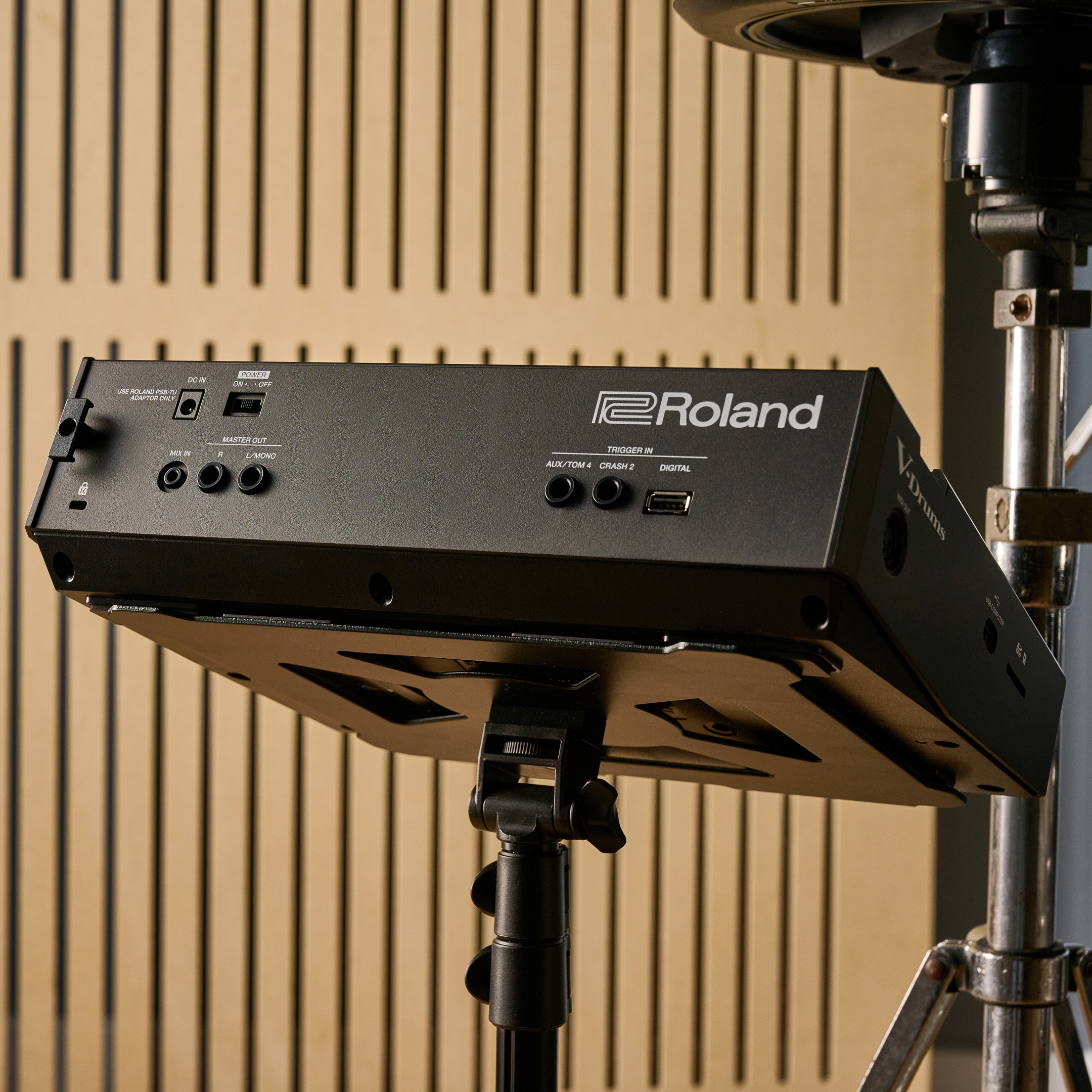
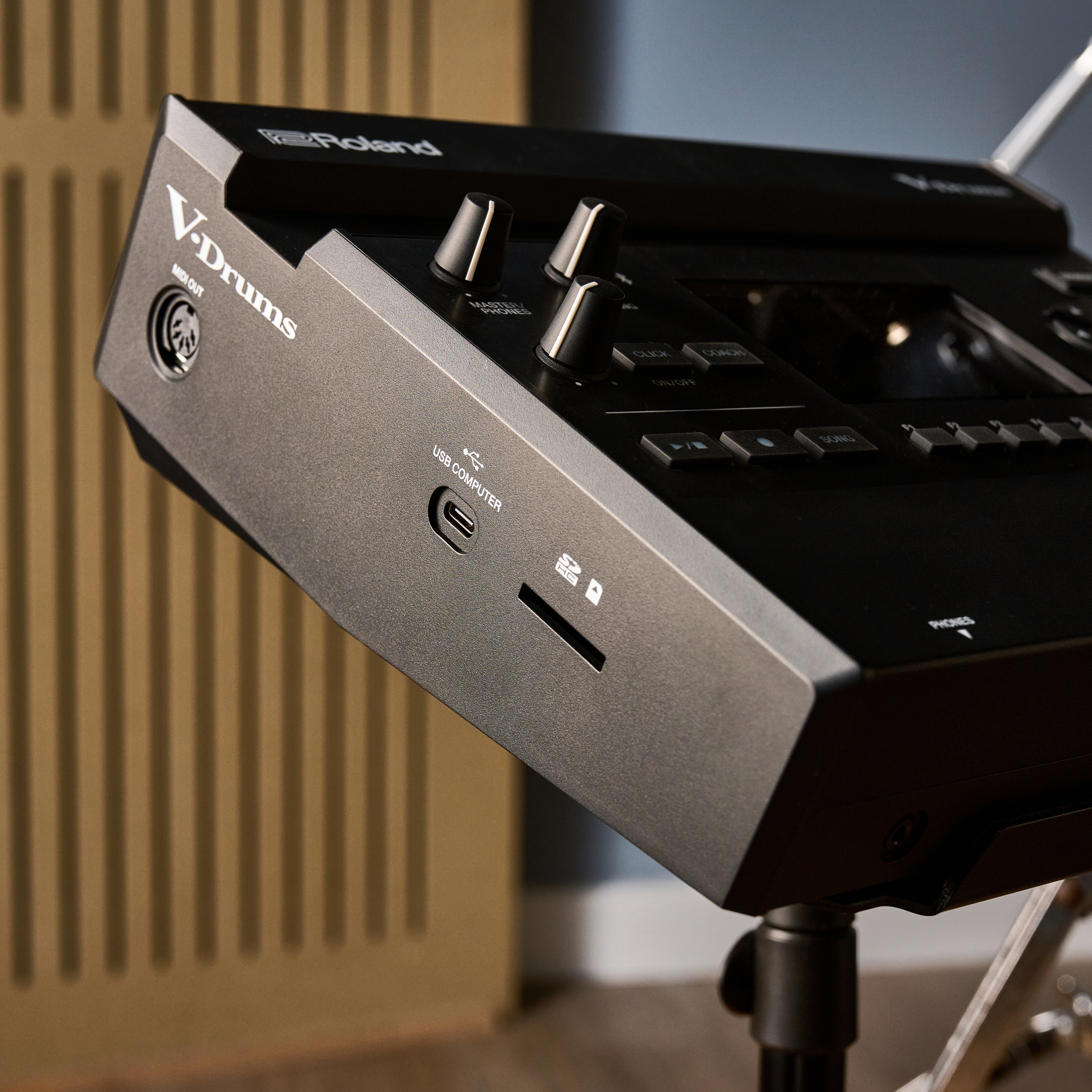
The included cable loom is enough to connect all of these pads to the V31 module except for the second crash which uses one of two additional jack inputs on the rear of the unit. The other is ideal for a fourth tom pad but could be used for any other auxiliary trigger pad. There’s also the aforementioned single USB trigger input, master left and right out jacks, mini-jack mix input, MIDI out, a USB-C computer connection and an SD card slot. Don’t forget there’s also in-built Bluetooth audio and Wi-Fi capabilities.
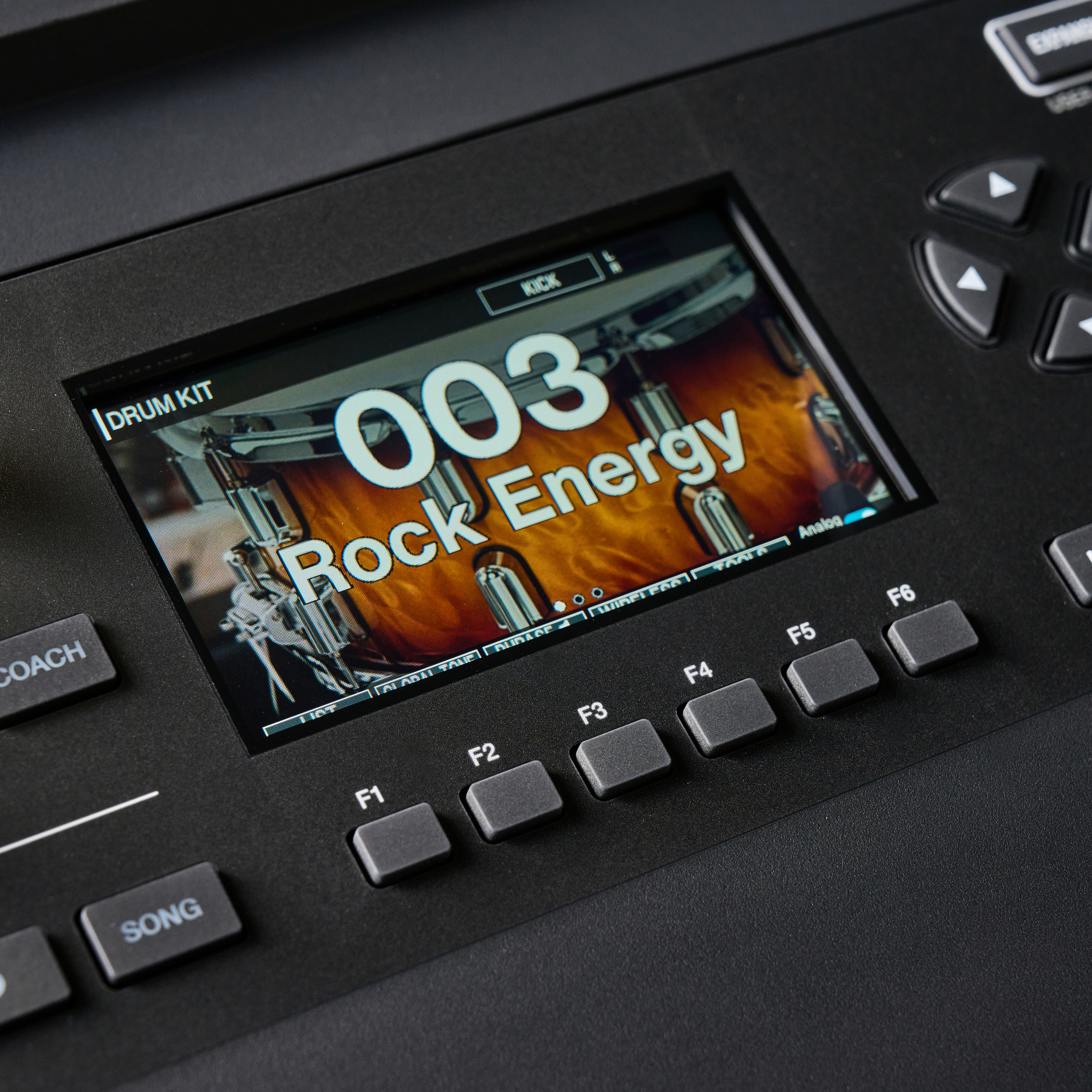
The layout of the module is noticeably stripped back in comparison to the V71, which has myriad glowing knobs, buttons and dials. Most notably there are no mix faders or LED rotary dials on the V31. There is however a large colour screen taking pride of place in the centre of the module, accompanied by volume pots for master/phones, backing (including Bluetooth) and click to the left, and menu navigation controls to the right. There are also ‘Expansion’ and ‘EZ edit’ buttons for quick access to editing and changing sounds such as instrument selection, tuning, muffling and instrument volume.
Roland VAD316 review: Performance
I already know from spending time with the V71 module over the last year that the new sound library is a notable step up from its predecessors. There are 70 built-in kit presets which range from dry studio kits to reverb soaked stadium style behemoths. As you’d expect from Roland, there are a good handful of classic electronic sounds too, including the TR-808 and 909 plus a section of tuned percussion and hand percussion kits. There’s also a tip of the hat to some drumming greats which can be found in presets such as ‘Ghost Note King’, ‘Babylon Shuffle’ and ‘Gate in the Air’.
The additionally available expansion packs are well worth checking out too as they take yet another step towards mimicking the realism of playing an acoustic kit by utilising high quality samples, borrowed from its computer-based Soundworks VST software.
The rapidly growing DW collections include Pure Cherry, Pure Purpleheart, Pure Maple, 50th Anniversary and Acrylic kits which are of an incredibly high standard. There is also a Slingerland Vintage 1958 set and cymbal packs include ‘EFX Cymbal’, ‘Swiss Cymbal’ and ‘German Cymbal’ collections.
Installing the packs is as simple as connecting the module to Wi-Fi and downloading them via the Roland Cloud app on a smartphone or tablet. It’s worth noting that these are a paid extra, either as part of a Roland Cloud subscription or as a one-off payment. Some might be understandably put out by the idea of having to purchase or even effectively rent additional sounds after spending a substantial wedge of cash for the e-kit to begin with, but an included 6 month Ultimate trial membership will allow time to make comparisons with the built-in sounds and decide whether the cost is justified.
Something that Roland has always been extremely good at is marrying the playability of its samples with the physical feel of its hardware - the VAD316 is no exception. Although not quite a ‘full size’ kit which many of the VAD setups are, the configuration of the 10” rack toms with the 14” snare and floor tom feel substantial enough and work well proportionately with cymbal sizes - with the exception perhaps of the 12” crash which feels a little on the small side to me. The full 18”x14” bass drum shell helps in filling out the size of the kit as a whole, making the VAD316 a great looking yet relatively compact kit overall.
Whilst on the subject of sizes, it’s worth mentioning that Roland’s digital snare and hi-hat pads are both 14” while the ride is 18” - this is something worth considering if you’re thinking about upgrading. As discussed earlier, the V31 module has space to run one of these digital pads, which presents a tricky decision. In terms of features alone I’d be tempted by the newer PD-14DSX snare due to the throw-off and strainer which can be programmed to control tons of parameters; these include not only virtually controlling snare wires but also adjusting snare tuning, controlling the click, effects, and song playback. It’s really quite clever.
The control placed under your fingertips in the V31 module is vast - allowing up to three separate samples to be layered on any one instrument (another pro feature which has filtered down from the V71). This means that each hit of a bass drum could actually be a precise blend of two or three different bass drums, individually tweaked and EQ’d to perfection.
Roland VAD316 review: Verdict
If you’re enticed by the features on offer from the 3 Series but perhaps looking for a more compact practice solution, it may be worth looking into the TD313 and TD316 kits which are both smaller, rack based configurations based around the same 3 Series module. Equally, if you like the idea of a bigger kit or you’re keen keen on the digital triggers but can’t decide on just one, one of the larger 5 or 7 Series kits would be the way to go.
Hands-on demos
MusicRadar
Sweetwater
65 Drums
Alternatives
Roland VAD316 review: Spec
- Drum sound module: V31
- Snare: PDA120LS
- Tom 1: PDA100L
- Tom 2: PDA100L
- Tom 3: PDA120L
- Hi-hat: VH-10
- Crash 1: CY-12C-T
- Crash 2: CY-14R-T
- Ride: CY-16R-T
- Kick: KD-18-BK
- Drum sound module stand: PDS-5
- Drum combination stand: DCS-30 x 3
- Other features: Single digital pad USB input, computer control via USB-C connection, large colour screen, training functions, in-built recording function, kit expansions available via Roland Cloud, Bluetooth audio, in-built Wi-Fi, stereo jack outputs, mini-jack aux input
- Contact: Roland