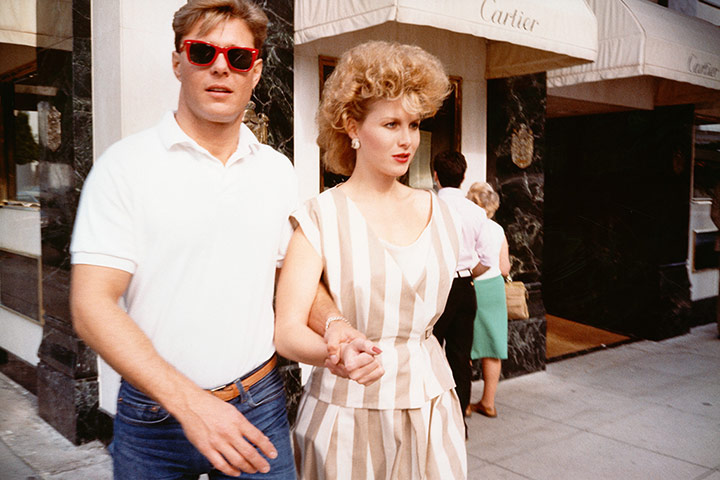
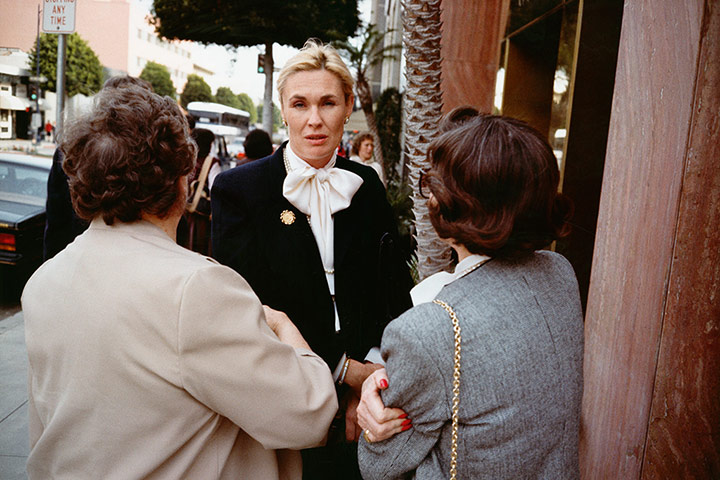
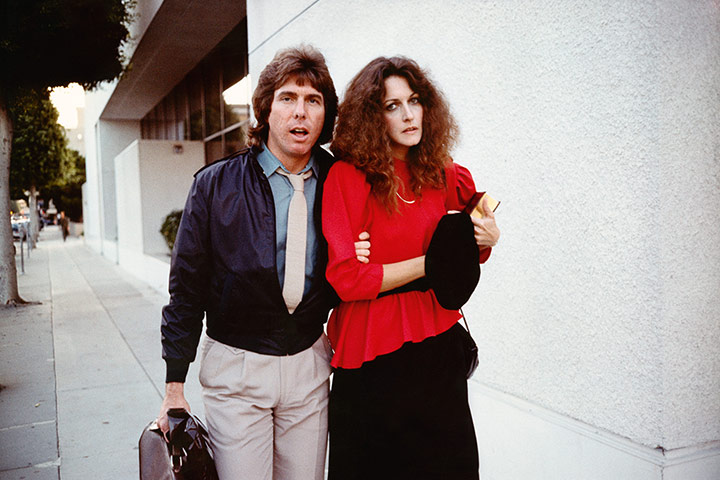
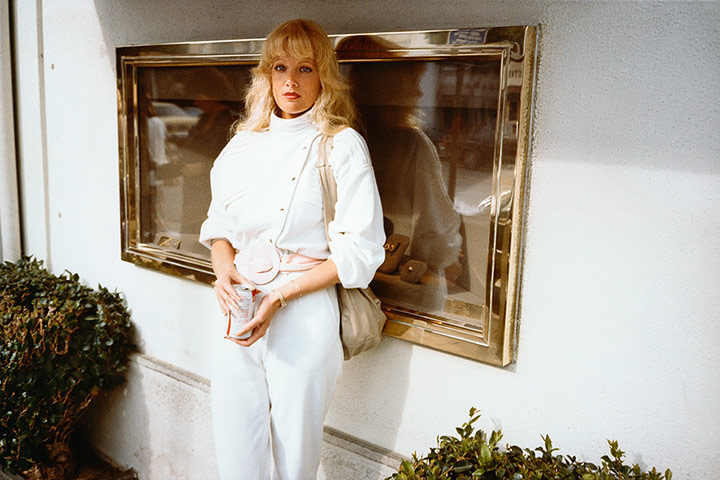
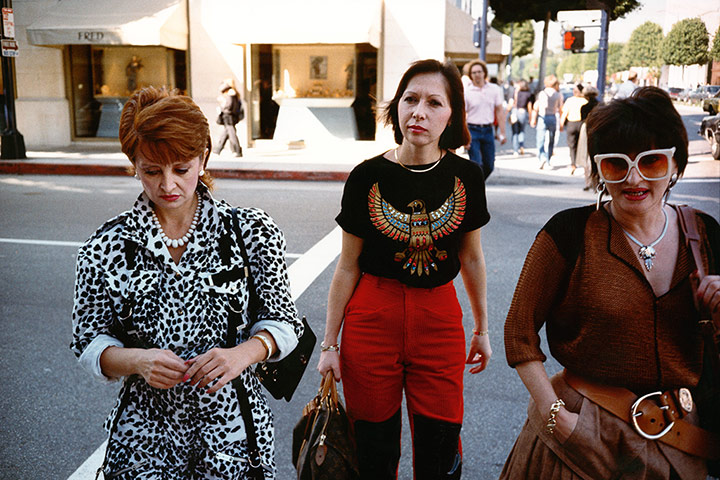
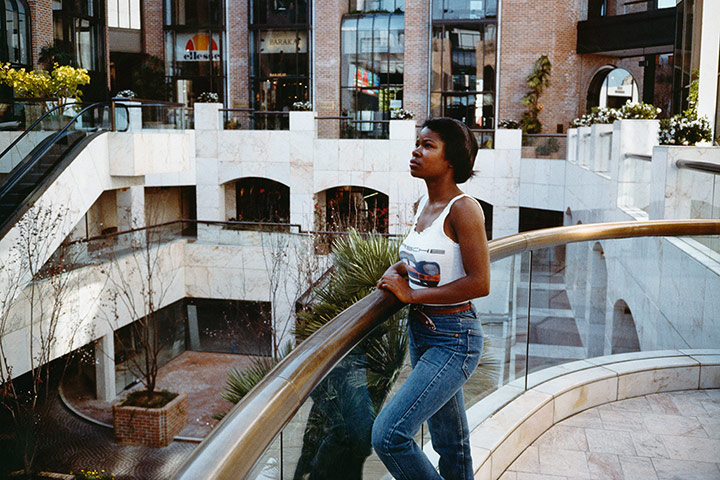
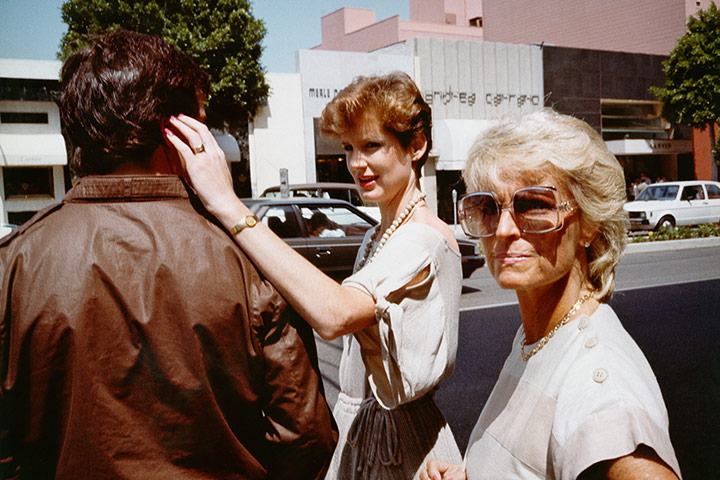
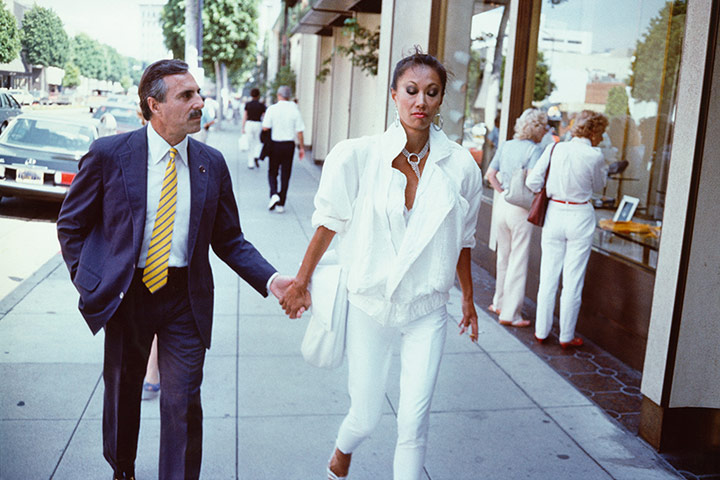
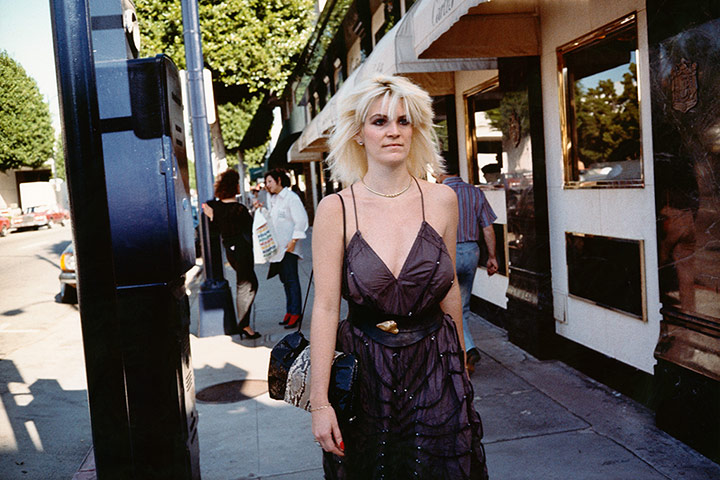
When photographer Anthony Hernandez decided to shoot in colour for the first time, he headed to the one place that summed up the bright, sunlit optimism and heady consumption of 1980s California: Rodeo Drive in Beverly Hills. →Photograph: Anthony HernandezWith its well-coiffed pedestrians, glass store fronts and air of luxury, the street made a sharp contrast to the gritty corners and desolate bus stops of working-class east Los Angeles that Hernandez had shot in black and white. →Photograph: Anthony HernandezYet for all its air of exclusivity, there are few vulgar displays of wealth – rather, a quieter sense of privilege mixed with a whiff of trying a bit too hard. →Photograph: Anthony Hernandez
This restraint is reflected in the muted colour palette: Hernandez deliberately overexposed the film to lend the images a faded, sun-bleached patina – as opposed to pop, saturated colour – which today ages the photographs almost as much as the gravity-defying perms, shoulder pads and outsize glasses. →Photograph: Anthony HernandezHernandez shot fast while walking, barely stopping for more than a few seconds at a time. 'I was trying to be invisible,' he says. 'I didn’t want the confrontations that come with taking more considered photographs.' →Photograph: Anthony HernandezThe result is a set of unguarded, natural portraits of people who often weren’t even aware they were being photographed. →Photograph: Anthony HernandezExpressions are vacant, bored and quizzical, and heads are turned away from the camera. →Photograph: Anthony HernandezThe pre-digital age meant Hernandez never knew if his shots would even be in focus, let alone how they might turn out. →Photograph: Anthony HernandezHe has shot in colour countless times since, but this was the last time he ever photographed people. He denies it – 'I just discovered landscapes, that’s all' – but perhaps his brief brush with the upscale residents of Beverly Hills left a nasty taste.