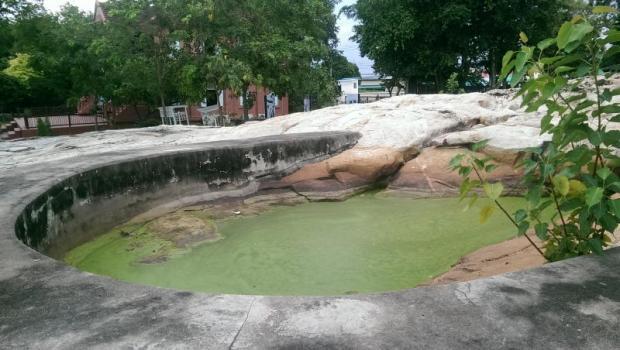
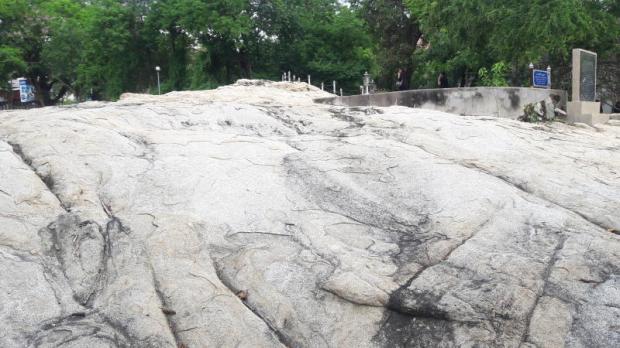
King Rama V wrote a letter dated Jan 9, 1876, saying: "It is called Ang Sila because it has big rock hills as well as two oval rock ponds. … The ponds are for retaining rainwater. No leakage not all. Chao Phraya Thiphakornwong Mahakosathibodi believed they are useful for all people, so he ordered Luang Ritthisakchollakhet, assistant to the Chon Buri governor, to supervise the reinforcement of the pond edges to prevent the flow of dirty water into the ponds. The people, villagers and seafarers can use rainwater from Ang Sila … Since then, the area where villagers use water from these ponds have been called Ban Ang Sila."
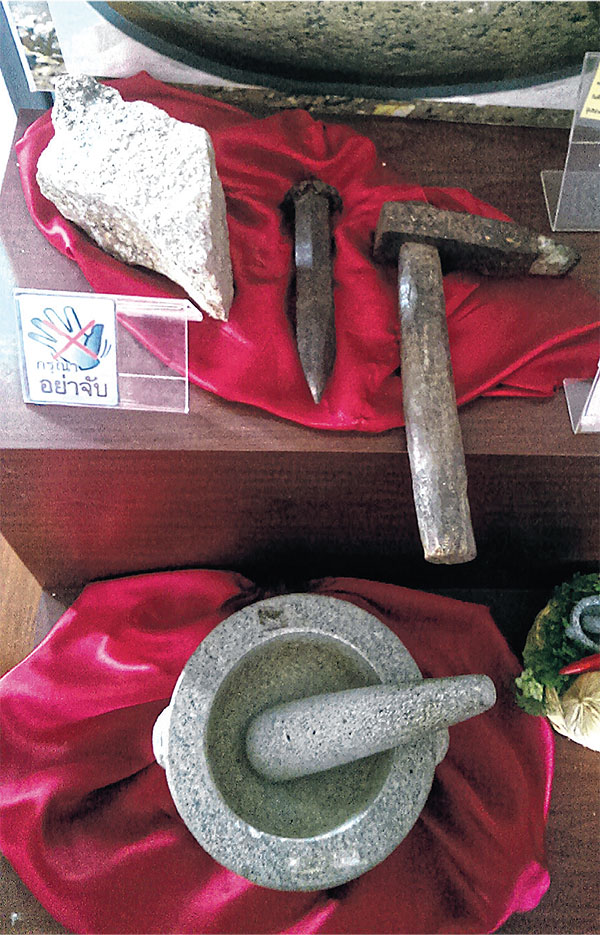
The name Ang Sila (rock pond) has long rung a bell for almost every Thai household for its high-quality granite mortars. Nowadays, this tambon in Chon Buri has fewer rocks for the production of this kind of kitchen tool. Nonetheless, the community is still an interesting attraction with old temples, markets, fishing villages and the beach.
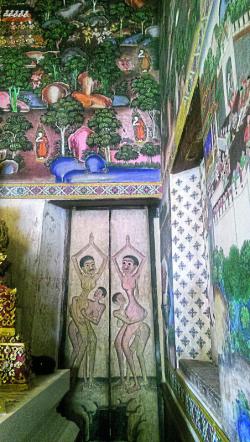
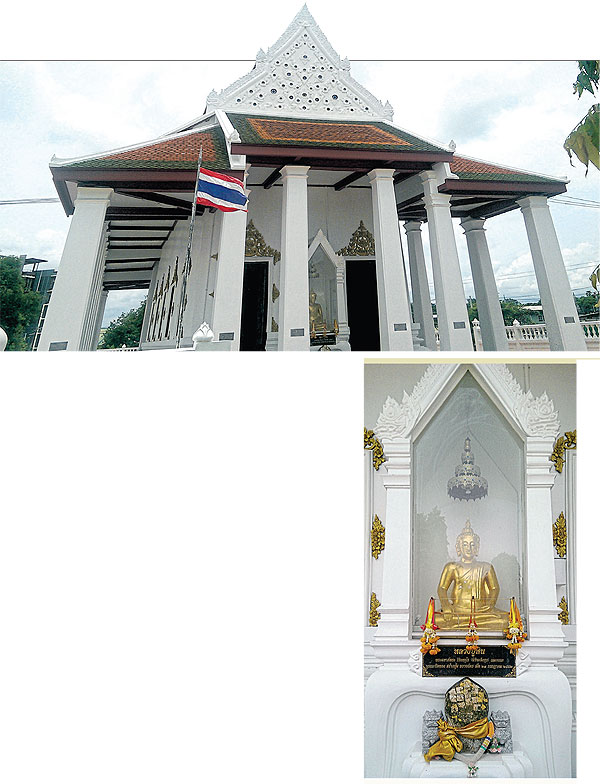
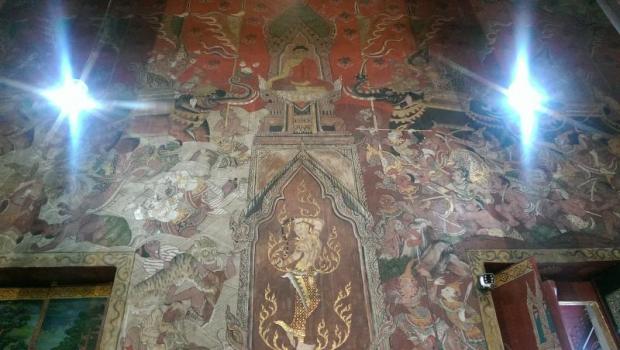
The four interior walls of the inner ubosot of Wat Ang Sila sport colourful mural paintings, which are in a very good condition. The parts above the windows depict the Lord Buddha's life according to Buddhist literature Pathomsomphothikatha. The story ranges from Devas asking Sandusit Devabutr to be born as a human being to the birth, priesthood and enlightenment of Prince Siddhartha and the Lord Buddha's pilgrimages. The lower parts portray major incidents in Buddha's life. These murals were painted by masters in the reign of King Rama IV. Paintings on the front interior doors show monks preaching and those on the rear interior doors depict hungry ghosts (pret) begging for merit. Those on the interior windows portray monks carrying out their religious duties as well as two Devas with dark and white skin holding lotus flowers and standing on a human-headed animal.
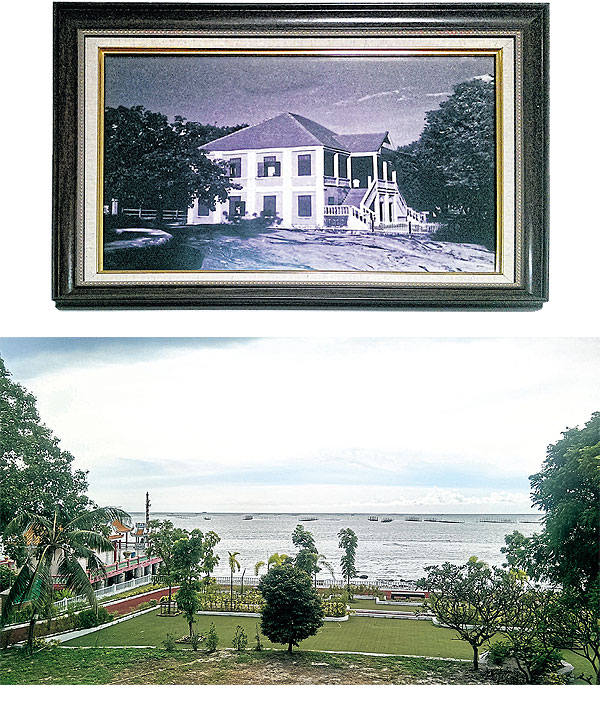
Ang Sila was formerly known as Ang Hin, also meaning stone ponds. Starting from 1827, Ang Sila became a popular resort town among royals and Westerners as well as a rehabilitation place for those recovering from illnesses because of its good weather and proximity to Bangkok. King Rama IV visited Ang Sila several times for relaxation. For example, on Jan 1, 1860, the king travelled in the royal steamboat Siam Orasumpol to the Eastern Region of Siam from Chon Buri to Trat and stayed in Muang Chon Buri, Ang Sila, Bang Phra and Bang Lamung. On July 11, 1863, the king travelled to Ang Sila and then to Bang Phra to apply gold leaf to Buddha statues. Initially, the king stayed overnight in the boat. Later, he mentioned the nice weather in Ang Sila and ordered the construction of a royal mansion there.
The Krung Rattanakosin Fourth Reign Royal Chronicle by Chao Phraya Thiphakornwong Mahakosathibodi states: "Bricks and lime were prepared for constructing a road linked to a stone bridge. His Excellency Chao Phraya Srisuriyawong, the defence minister, had a large building built for ill Europeans to rehabilitate -- as merit-making. At the market behind Khao Sam Muk, a cluster of royal pavilions and a stone road were constructed." In the Fifth Reign, King Chulalongkorn (Rama V) paid a visit to Chon Buri and spent one night in Ang Sila.
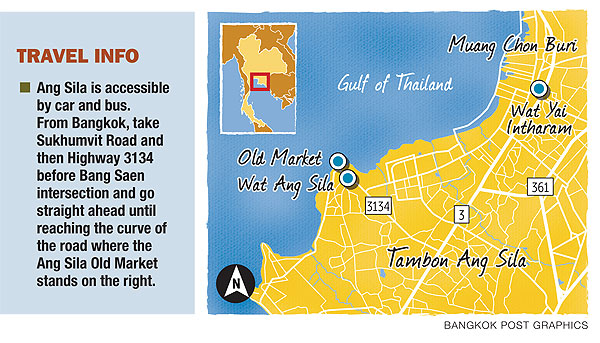
Today, tambon Ang Sila as part of Muang Chon Buri is located about 5km from downtown Chon Buri and around 90km from Bangkok. Adjacent to the Gulf of Thailand in the north and west, it is major cultivation source of oysters and mussels. The area is full of granite and sandstone. Granite rocks there are mostly off white and mild yellow in colour.
Those going to Ang Sila should not miss the opportunities to visit the century-old Talat Kao Ang Sila, which can be divided into four zones. Zone 1 consists of Wat Ang Sila, which boasts two ordination halls, a mondop (pavilion), a model of the Lord Buddha's footprint and old pagodas. Visitors can see one of the country's finest mural paintings dating to the reign of King Rama IV in the temple's old ubosot and pay respect to Luang Phor Hin, a major Buddha statue, and the statue of former abbot Phra Wisuthisamajarn.
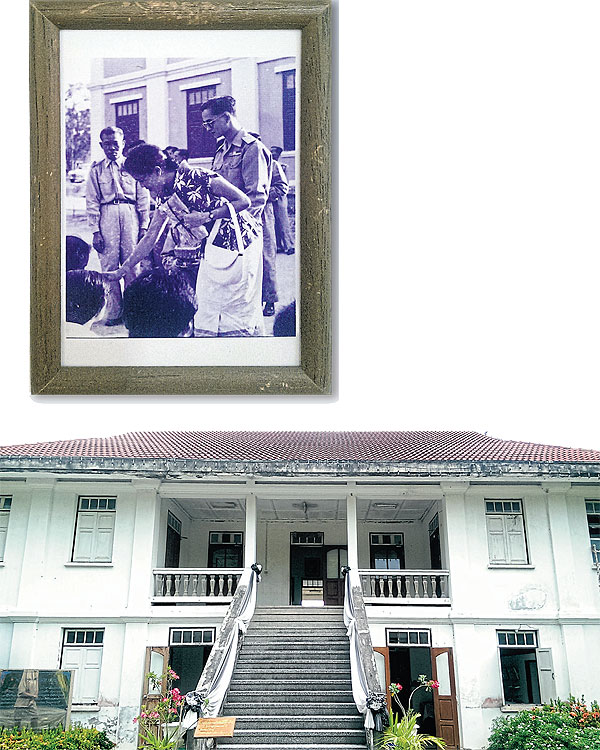
Zone 2 consists of Maharat Building and Rachini Building restored by King Rama V's Queen Saovabha and named by the king. Alongside them are two famous rock ponds. Zone 3 has two Chinese shrines dedicated to deities Pun Thao Kong and Pun Thao Ma as well as the century-old Ang Sila Market where people can buy fresh and dried seafood, local food and products. Zone 4 consists of a cave with many bats inside as well as oyster and mussel farms.
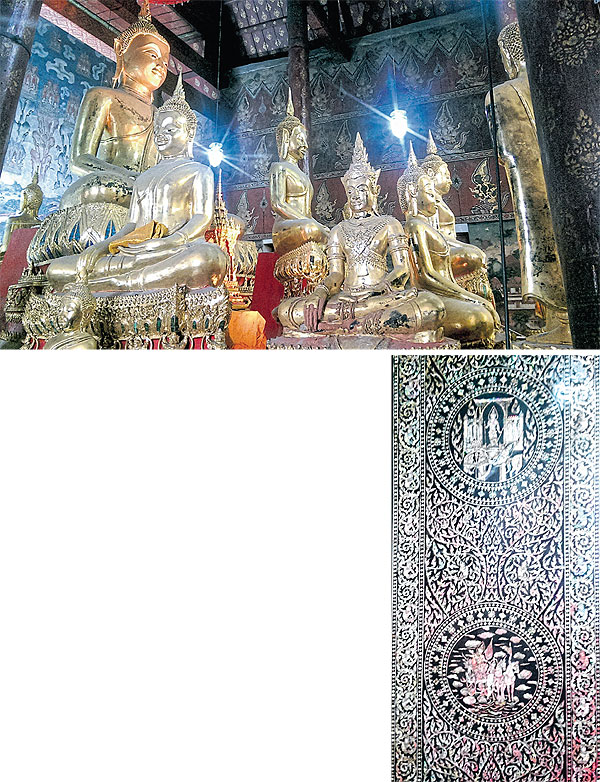
Not far from Ang Sila is Wat Yai Intharam, an important temple in tambon Bang Pla Soi. The interior walls of the ordination hall sport the oldest mural paintings in the Eastern Region of Thailand. The murals date back to the late Ayutthaya and early Rattanakosin periods.
Before going home, tourists can enjoy shopping for seafood, stone mortars and handwoven textiles which are renowned products of Ang Sila.
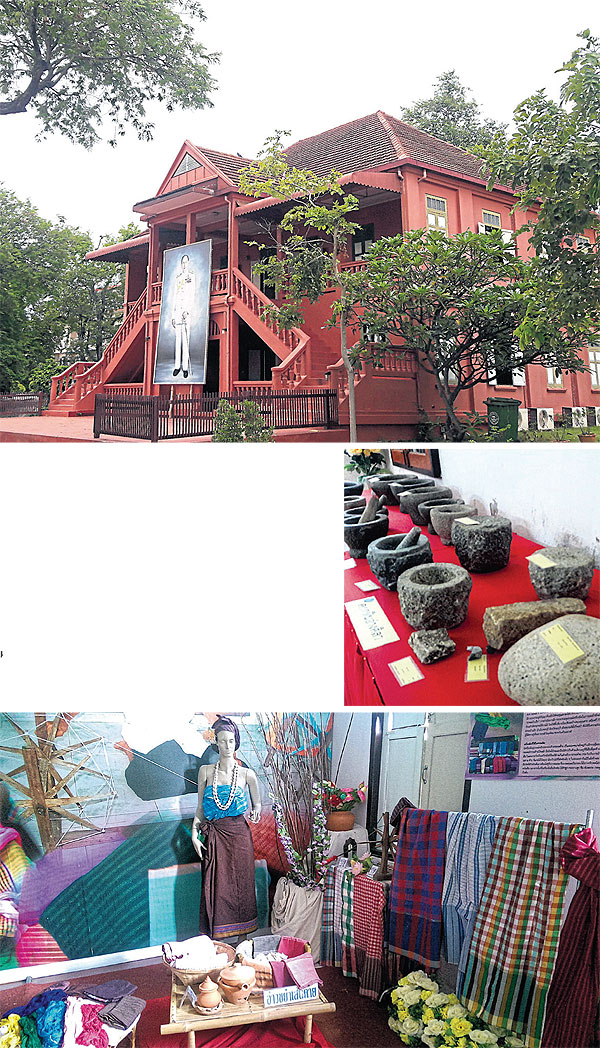
Rachini Building is a red two-storey brick building in the colonial style with a hip roof on the front. Facing the sea, its front has a porch with two staircases at both sides. On the ground floor, the room behind the porch has two arches. The upper floor boasts an open-space balcony. The building serves as a local museum for rock mortars and handwoven textiles.King Rama V wrote a letter dated Jan 9, 1876, saying: "It is called Ang Sila because it has big rock hills as well as two oval rock ponds. … The ponds are for retaining rainwater. No leakage not all. Chao Phraya Thiphakornwong Mahakosathibodi believed they are useful for all people, so he ordered Luang Ritthisakchollakhet, assistant to the Chon Buri governor, to supervise the reinforcement of the pond edges to prevent the flow of dirty water into the ponds. The people, villagers and seafarers can use rainwater from Ang Sila … Since then, the area where villagers use water from these ponds have been called Ban Ang Sila."Wat Ang Sila dates to the late Ayutthaya Period. It had consisted of two temples — Wat Ang Sila Nok and Wat Ang Sila Nai — before being merged into one temple in 1916. This is why the temple boasts two ordination halls — the inner and outer ones. The inner ordination hall is a rectangular brick building with a double-tiered tiled roof surrounded by sloping tiled roofs called phalai. The gables are decorated with Chinese porcelain. Around the temple's inner ubosot are sema stones (demarcation stones) on bases with lion and lotus stucco motifs. The sema stones are made of carved sandstone decorated with gilded lacquer. Interestingly, the sema stone in front of the ubosot was carved in the image of the worshipping Deva seated in a lotus flower. This form of art dates to the Ayutthaya Period. The ubosot is the art and architecture of the Fourth Reign when the roofs, walls and floors usually remained in a traditional Thai style while doors, windows, gables and pillars mixed Thai and Western art.Maharat Building is a white two-storey brick building in the colonial style with a hip roof. Its front has a balcony, with two staircases on both sides, that overlooks the sea. The room behind the balcony has three arched doors, half-wooden half-glass. A staircase leading to the porch is in the middle. The upper floor shows old photos of a royal visit by King Bhumibol Adulyadej and Queen Sirikit to Ang Sila. The ground floor is a museum featuring local household objects.A royal chronicle says that Somdet Chao Phraya Borom Maha Srisuriyawong (Chuang Bunnag) had a large building built in Ang Sila for patient rehabilitation while Chao Phraya Thiphakornwong had a smaller brick building constructed for the same purpose. Both buildings were frequented by Westerners and called Arsaisathan. The buildings date back to the times of King Rama IV. In 1897, during the reign of King Rama V, Queen Saovabha funded the restoration of the two buildings as merit-making on his birthday. The king later gave the names "Maharat Building" and "Rachini Building" to both structures. Anyone who wished to stay there could seek official permission. Donations were welcomed for the maintenance of the buildings. Both buildings were registered as a historic site covering 18 rai and 393 square wa in 1996. They now serve as local museums of the royal visits to Ang Sila, and home to old artefacts and local products, especially rock mortars and handwoven fabrics.Wat Yai Intharam holds historical significance. In 1767, King Taksin the Great, then Phraya Wachiraprakan, gathered forces there to regain Siamese independence from the Burmese. After his success, the king returned to this temple, which was then called Wat Luang. He led his troops to take the oath of allegiance in the temple's pavilion called Sala Kao Hong. After that, it became a tradition for rulers of Chon Buri to perform this ceremony in this pavilion from the Thon Buri to Rattanakosin periods until the Siamese Revolution in 1932. The temple's ordination hall is the art of the Ayutthaya Period — having the junk-shaped base. The glazed tiled roof is decorated with stucco art in the images of worshipping Devas, a man and the nagas' heads. The hall has mother-of-pearl inlay doors portraying a religious story entitled Dhamma Dhamma Songkhram (The War Between The Good And The Evil).Murals on the interior walls of the ubosot at Wat Yai Intharam are very beautiful. Those on the upper walls to the left and right of the principal Buddha statue depict the gathering of the Devas after the Lord Buddha's enlightenment. The lower walls portray some of the Lord Buddha's past lives. The conquering of the Mara is shown on the wall in front of the Buddha statue. A highlight is the painting of the god Rahu eating two nagas that represent time. This dhamma puzzle says that time flies and never returns and that death destroys days and nights and all lives, warning people not to spend time recklessly. The mural behind the Buddha statue depicts Mount Sumeru (the centre of the universe) according to the religious literature, Traiphum, and a dhamma puzzle showing the giant fish Anond rolling and moving the earth, meaning lust keeps humans in agony.
Sign up to read this article
Read news from 100’s of titles, curated specifically for you.