
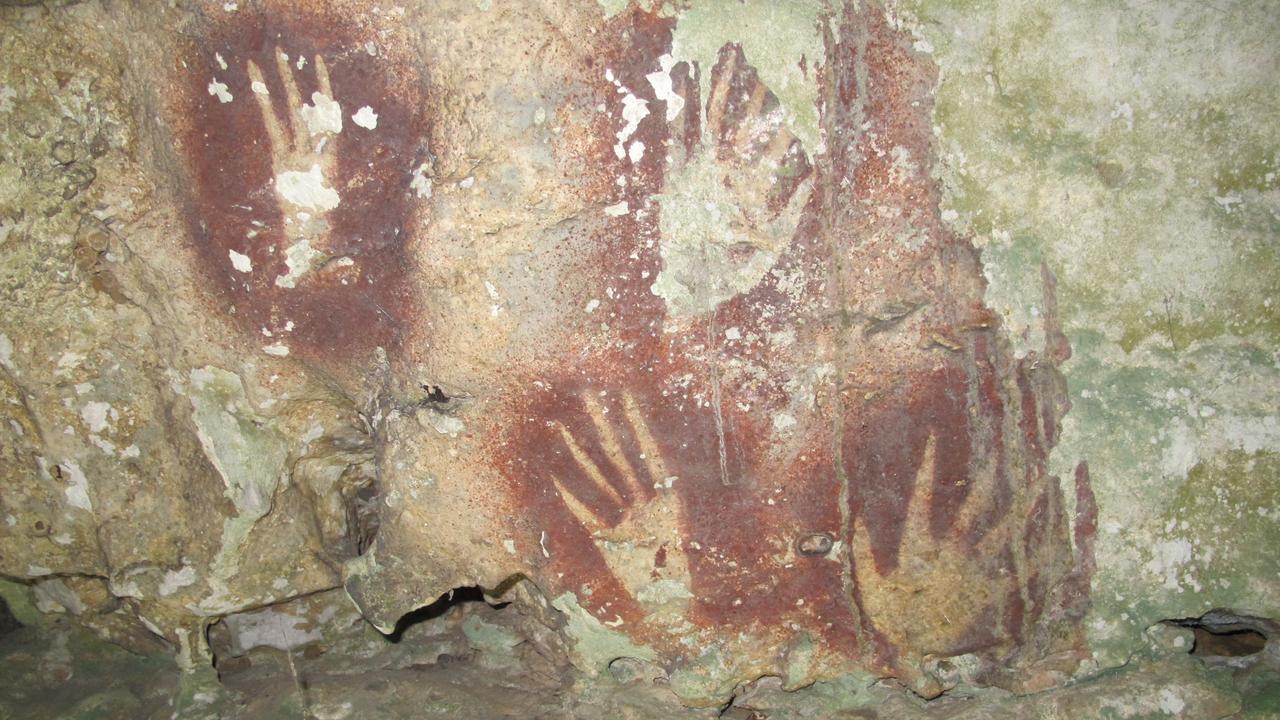
An ancient hand stencil on the walls of an Indonesian cave has sharpened scientists' understanding of how and when humans first arrived in Australia.
Preserved in limestone caves in southeastern Sulawesi on the satellite island of Muna, the fragmentary hand stencil has become the oldest known rock art in the world.
It dates back to a minimum of 67,800 years ago, exceeding the researchers' previous discovery in the same region by 15,000 years.
Griffith University's Australian research centre for human evolution professor Adam Brumm said this discovery has important implications for understanding early human migrations to Australia.
"Now we have evidence for modern humans at an earlier point in time on Australia's doorstep," he said.
"It does make this argument that humans have been in Australia and New Guinea for at least 65,000 years much more credible."
The hand stencil found in Sulawesi is unique in that as it was made, the negative outline of the fingers was deliberately narrowed, creating the impression of claws.
Professor Brumm said researchers believe the cave art was the handiwork of a modern human - homo sapiens - rather than an extinct form of human such as the neanderthal.
"One of the strongest pieces of evidence we have for that ... is this deliberate attempt to modify the fingers and almost playfully or imaginatively transform a human hand mark into something else," he said.
"That to me is a very modern human trait."
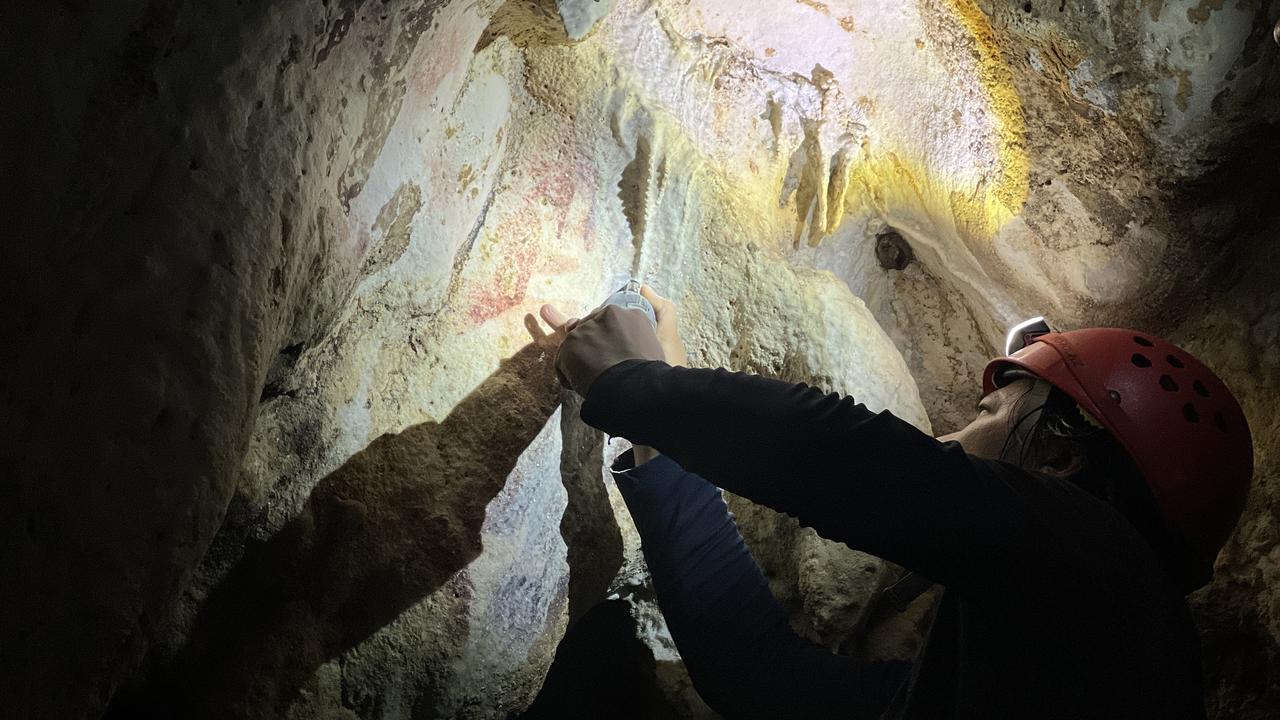
In order to date the rock art, the team analysed microscopic mineral deposits that formed both on top of and, in some cases, beneath the paintings, to discover the period in which the stencil was created.
The rock art also has implications for narrowing down the migration route taken by humans towards Australia.
The two main journeys proposed by researchers are via a northern route to the New Guinea portion of the landmass known as Sahul, heading through Sulawesi and the "spice islands"; and a more southerly route, taking the sea voyagers directly to the Australian mainland via Timor or adjacent islands.
This discovery, the team said, points toward the northern route being the more plausible proposition.
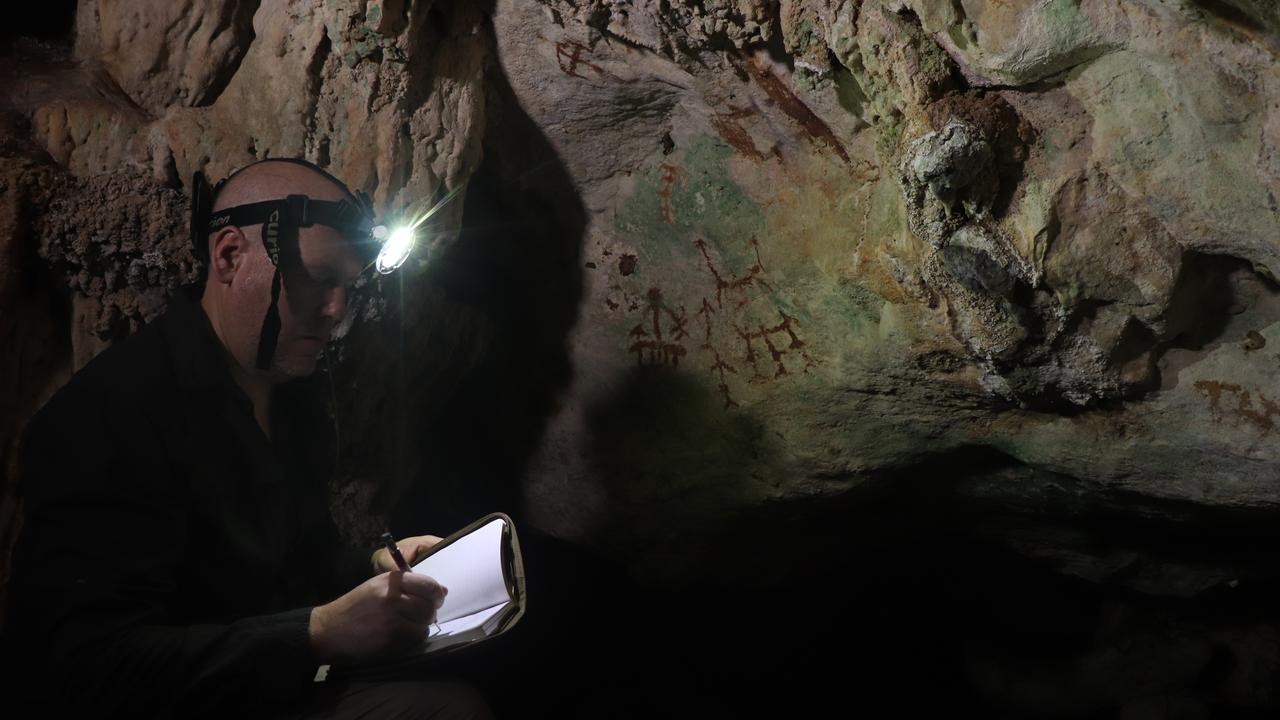
The team is continuing its work searching for more evidence of early human art and occupation along this northern route.
Archaeologist and geochemist Maxime Aubert from Griffith University's centre for social and cultural research said there is plenty more to discover.
"We are just scratching the surface," he said.
"We have just dated a handful of sites ... there's hundreds and hundreds of rock arts out there."
The team's discovery has been published in a study in the journal Nature.