Labour’s soul-searching about Ukip’s triumph in Rochester started on Friday night with a warning by its election co-ordinator, Douglas Alexander, that a rising level of public anger built up over decades is transforming the “entire business model of UK politics”.
His speech was the most open attempt yet by a senior Labour politician to concede that anti-EU populism has blown into Britain in a way that threatens to undo Labour as well as the Conservatives in next year’s election.
The headline story of the byelection may have been the failure of David Cameron’s “kitchen sink” campaign, and the resilience of Ukip, but Labour ended up with its vote badly squeezed, still unable to appeal to voters as an agent of change, and increasingly facing a threat on its left from the Greens.
In Alexander’s view Labour has not acknowledged enough how quickly politics is being transformed. A decade ago, he said, his analysis – shared with the Labour strategist Philip Gould – was that two-party politics was being played in a rapidly emptying stadium, but now, he said, “the issue is not apathy, but anger. A decade on the issue is not that the stadium is emptying, but that other teams are winning support by playing a different type of game.” Labour’s response, he said, “must not be to carry on as before, but “to adapt and change”.
His remarks suggest Labour is less certain than ever in the wake of Ukip’s continued momentum that the general election will see voters revert to one of the two mainstream parties. Those at the top privately acknowledge Ukip has in recent months started to eat into Labour’s vote, and officials are discussing how to combat the threat, including using different doorstep techniques and locally crafted messaging.
The Tories had vowed to defeat Ukip in this campaign. Cameron visited the seat five times, as did members of the cabinet, MPs and many party workers. Some residents claimed to have been rung 10 times by a Conservative canvasser in one day. All to little avail. If there is a vaccine that can immunise voters from Ukip’s appeal, Lynton Crosby and Conservative Central Office have not yet developed it.
But the nature of byelections is that they are of little intrinsic significance: their importance lies in their consequence. The three consequences of Rochester were due to be: a potential leadership challenge to Cameron; further defections to Ukip by rightwing backbenchers; and a more general Tory ideological meltdown about Europe.
Yet, at this juncture Cameron looks supremely safe, the chief whip, Michael Gove, has declared he is 100% certain no further defections will occur, and the party seems content to wait for Cameron’s imminent speech about Europe and an autumn statement by George Osborne that will try to change the subject by telling voters of the risks facing the economy in Ed Balls’ hands.
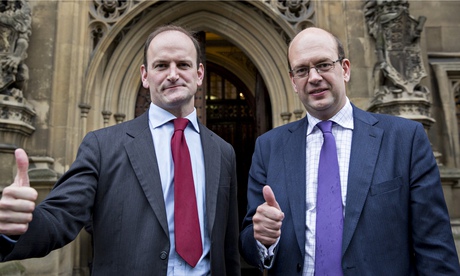
Overall, the Rochester result does not seem such a thunderbolt, or so unexpected that the Tory party will self-destruct, placing some pressure on Ukip to retain momentum. In that context Mark Reckless’s acceptance speech in Rochester was as fascinating as Douglas Carswell’s in Clacton. Carswell quoted from Abraham Lincoln, Reckless almost from the Benn diaries, saying Ukip lay in the noble radical tradition of the Chartists and suffragettes. He described Miliband as a representative of the bloated public sector elite, not the working class. His remarks underline the extent to which Ukip genuinely believes the Labour vote is soft.
Meanwhile Miliband is looking again at how to revive his claim to be the insurgent in politics, and stop being labelled as part of the Westminster establishment. He is unrepentant about toughening the party’s stance on immigration this week, believing on the basis of feedback from party candidates in marginal seats that Labour’s key election message on a broken economy will not get a hearing unless it shows it hears voters’ anger about immigration. He thinks its promises to restrict out-of-work benefits and in-work tax credits to EU migrants are credible, and do not represent pandering to Ukip, something he has vowed not to do. “Without a clear message on immigration, we will simply not get the permission to be heard”, a Miliband ally said.
Miliband’s advisers are warning him of a fundamental divide between generally younger, socially liberal graduates who are comfortable with diversity, and older, less-qualified nostalgic voters who see the changes in the past couple of decades as a decline.
In his speech in Stirling, Alexander said “the rising tide of anger is not just caused by austerity and the longer-run rise in inequality”. The “character of 21st-century politics is still emerging”, he contended, but “undoubtedly it is already defined by contests about both identity and insecurity, rather than simply economic interests”.
“Of course issues of economic production and distribution endure, but the rise of identity, culture and self-expression as drivers of people’s vote is a key feature of 21st-century politics not only in the UK, but across the modern industrialised world.”
He suggested the unprecedented collapse in faith in mainstream politics started with the 2008 crash, “which undermined trust in the competence, motives and honesty of the powerful – including politicians around the world – who were seen as failing to prevent the crisis or judged unable to resolve its effects”. Across Europe, he argued, there had been an electoral shift to the extremes of politics. He said “it would be wrong to mistake the angry mood simply as a rise in voter apathy”. Indeed, he said, “what we are witnessing today is, in fact, almost the opposite. It is active, engaged and it is transforming our politics.”
He suggested: “It is not simply falling levels of support for all mainstream parties. It is also rising levels of anger among the public and these trends have built up over decades, not overnight. They were not started by a tweet on the eve of a byelection. They were started by deep political and economic shifts that are today changing Britain”. As a result a “very different kind of political business model is taking hold in some parts of the UK. It sees grievance as a commodity to be quarried for electoral profit. It sells cries of protest to people who feel voiceless. And it claims to be ‘authentic’ by amplifying voters’ grievances, too often at the expense of any pretence that they will actually be resolved.”
Alexander said the changes in politics requires “an acknowledgement of the anger, the grievance and the deeper forces causing economic and political alienation”. He adds: “If we are not prepared to engage with that anger, we simply won’t be listened to, however effective our policy answers. That means getting outside Westminster and engaging directly with the public; it means opening up the campaigning, meetings and formats we use to ensure in a real dialogue with the public.”
In an implicit acknowledgement that Labour must deploy the shadow cabinet more and rely less on Miliband, he said “the party needs to use the full breadth and talent of our frontbench and backbench, because we need to be seen to look like and reflect the country we aspire to lead” .
But Miliband faces a dilemma on how to frame his response to the autumn statement, and the coming debates on the economy. The temptation will be to stick with the story of frozen living standards and dire public finances.
The Policy Network thinktank warns in a scathing new pamphlet that Labour is still devoid of a coherent economic alternative. Written by a former Labour No 10 adviser, Patrick Diamond it says the Scottish referendum and Ukip’s rise means Labour can no longer rely on increasing its share of parliamentary seats in its northern and Celtic heartlands’.
Labour neglects the English marginal seats at its peril, he says, adding: “Labour has been so distrusted on the economy that it is barely taken seriously as a contender for power by key target voters in marginal seats.”
He warns against “appealing to a pessimistic narrative about the economy, that is unremittingly depressing and downbeat. As circumstances change, Labour needs to adapt and refine its message for a new context. The party cannot construct an electoral majority appealing only to those hardest hit since the crisis. Labour’s challenge now is an existential one: it must demonstrate that British social democracy can achieve reforms in the name of a more equal and just society without higher public spending.”
With months to go, it all suggests Labour is still grappling with fundamentals.