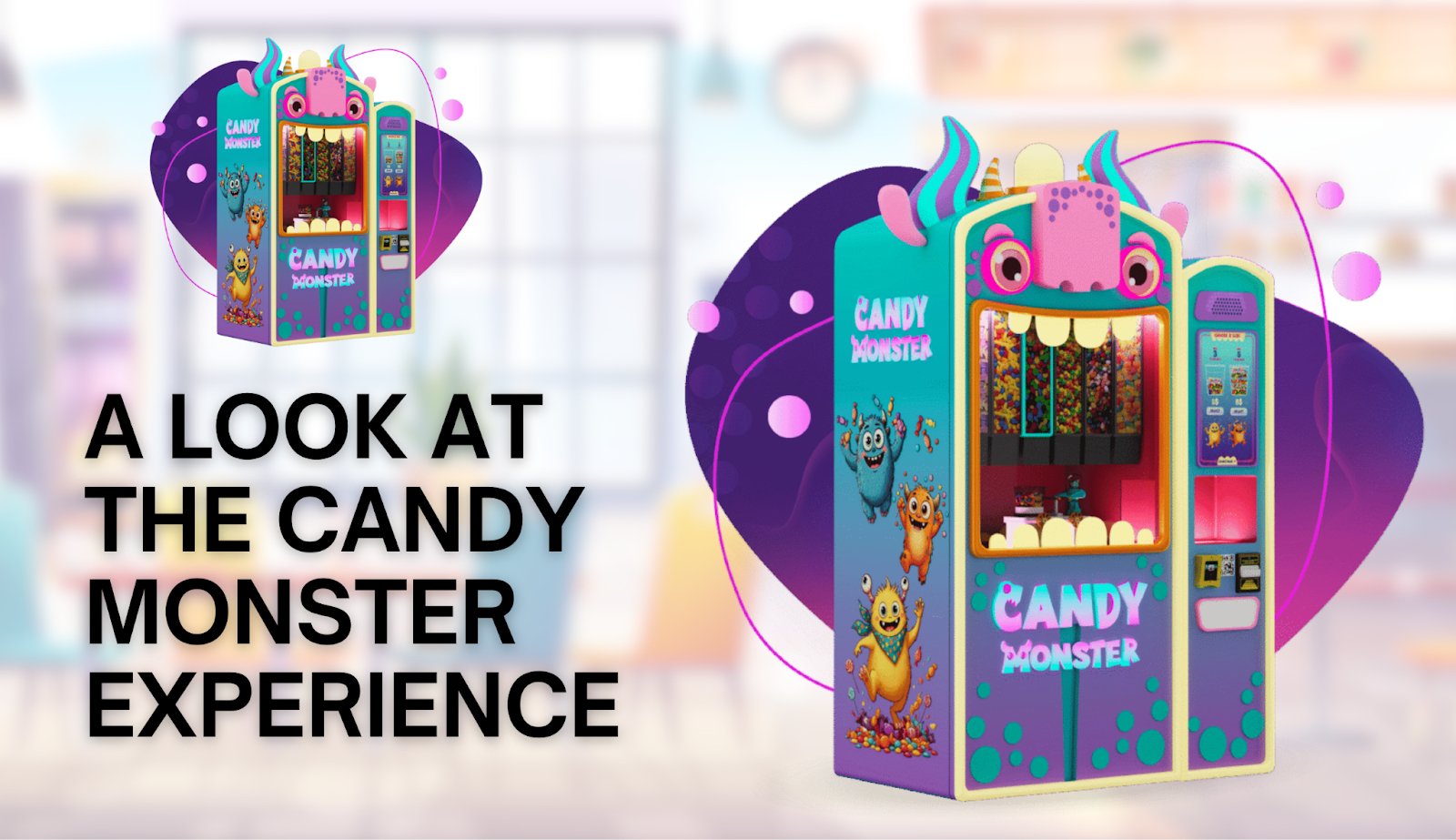
The landscape of modern retail is shifting toward automated experiences that prioritize speed, convenience, and entertainment. For entrepreneurs looking to capitalize on high-foot-traffic locations, the latest generation of interactive vending machines offers a low-overhead entry point into a market that is increasingly defined by digital integration and gamified consumer interaction. No longer relegated to dusty corners with crank-handles and jammed coin slots, the micro-retail sector has undergone a massive technological overhaul. By merging the nostalgia of the classic gumball machine with the precision of modern robotics, a new era of automated commerce has arrived, led by innovations like the Candy Monster.
The Evolution of the Micro-Retail Stack
For decades, the bulk vending industry relied on mechanical simplicity. It was a business of quarters and gears. However, the modern entrepreneur recognizes that the current consumer base, specifically Gen Z and Gen Alpha, rarely carries physical currency. To stay relevant, the tech stack inside a modern vending unit must mirror the sophistication of a smartphone.
The transition from mechanical to digital is not just about aesthetics; it is about data and accessibility. When we look at the internal components of a machine like the Candy Monster, we see a sophisticated array of sensors, motherboards, and communication modules. These components allow the machine to function as a standalone retail hub that communicates in real-time with the cloud. For an entrepreneur, this means the difference between guessing which locations are performing well and having a heat map of sales data accessible from a home office.
Cashless Systems: The Gateway to Higher Margins
One of the most significant barriers to entry in traditional vending was the "quarter ceiling." Mechanical machines were limited by the physical capacity of their coin mechs, often restricting price points to 25 or 50 cents. The integration of advanced cashless payment systems has shattered this ceiling.
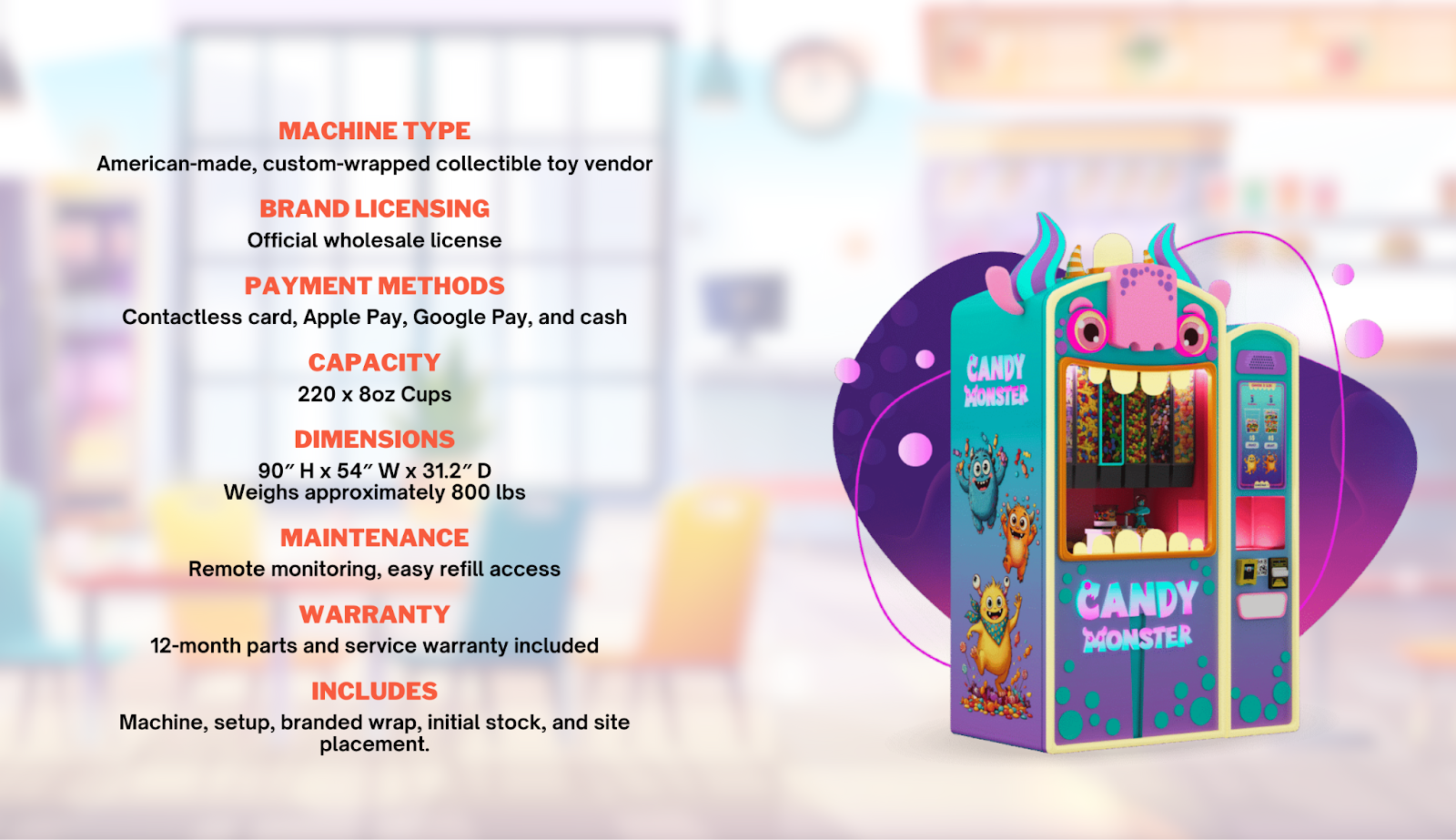
By incorporating NFC (Near Field Communication) readers, modern units now accept Apple Pay, Google Pay, and encrypted credit card taps. For the entrepreneur, this shift is transformative. Cashless transactions tend to have a higher average ticket value than cash transactions. When a child asks a parent for a treat, the friction of "not having change" is removed. Furthermore, these digital payment systems provide an extra layer of security and accounting accuracy, automatically logging every transaction and reducing the labor costs associated with manual coin counting and bank deposits.
Remote Monitoring and Operational Efficiency
The greatest challenge in scaling a vending route has always been logistics. Historically, an operator had to physically visit every machine to check inventory levels. This led to "dead miles"—driving to a machine only to find it was still 90% full, or worse, arriving to find a machine had been empty for days, resulting in lost revenue.
Modern tech-forward machines utilize telemetry apps that provide remote monitoring capabilities. Through a centralized dashboard, an entrepreneur can see exactly how many units of product remain in each canister. These apps provide "low stock" alerts and "machine down" notifications. If a sensor detects a jam or a power outage, the owner knows instantly. This allows for "dynamic routing," where the operator only visits machines that actually require service. This optimization of time and fuel is what allows a modern micro-retail business to scale from five machines to fifty without a proportional increase in labor.
The "Monster Robot" Mechanism: Engineering the Experience
At the heart of the new wave of candy vending is the robotic delivery system. The Candy Monster, for example, does not simply drop a product into a bin. It utilizes a precision-engineered "Monster Robot" claw and elevator system. This is a significant departure from the gravity-fed systems of the past.
The robotics serve two purposes. First, they ensure the integrity of the product. By gently transporting the prize or candy from the storage area to the delivery chute, the machine minimizes breakage. Second, and perhaps more importantly, the movement of the robot is part of the "show." In a world where every child has a screen in their pocket, a vending machine must provide a physical spectacle to capture attention. Watching a robotic arm navigate the interior of a brightly lit, "monster-themed" cabinet creates a "retail-tainment" experience that justifies the purchase.
Gamification for Gen Z and Alpha
The target demographic for these machines has never known a world without instant digital gratification. To them, a standard vending machine is boring. However, a machine that incorporates lights, sound effects, and a visible robotic process is perceived as an arcade game that happens to dispense a prize.
This gamification is the secret sauce of the modern candy monster. By turning the act of buying a gumball or a toy into a sixty-second event, the machine builds brand loyalty. It becomes a destination within a mall, a theater, or a family entertainment center. Entrepreneurs are finding that these "theatrical" machines can command a much higher price point—often $1.00 to $2.00 per vend—compared to the 25-cent machines of yesteryear. The value proposition has shifted from the commodity (the candy) to the experience (the robot).
Low Overhead, High Tech
From an investment perspective, the appeal of the tech-forward gumball machine lies in its autonomy. Traditional retail requires leases, employees, and utility bills. A modern vending unit requires only a few square feet of floor space and a standard power outlet.
The "employee" is the motherboard. It never calls in sick, it handles every transaction perfectly, and it upsells the customer through visual cues and interactive displays. For the entrepreneur, this represents a "passive" income stream that is backed by hard data. The ability to monitor the "health" of the business through a smartphone app means that the business can be managed as a side hustle or scaled into a full-time enterprise.
The Sustainability of the Model
Technology also addresses the issue of "stale" retail. In the past, if a vending machine wasn't selling, you changed the candy and hoped for the best. Today, the data provided by the tech stack allows for rapid A/B testing. An entrepreneur can see that a specific toy mix is selling 30% faster than a candy mix in a specific zip code. This level of granular insight was previously reserved for big-box retailers with massive IT budgets. Now, it is available to anyone with a single smart machine.
Furthermore, the hardware is built for longevity. Unlike the plastic gears of the past, the "Monster Robot" mechanisms are designed for high-cycle environments. They are industrial-grade tools housed in whimsical, monster-themed shells. This contrast between a "fun" exterior and a "serious" interior is what defines the successful modern vending venture.
Conclusion: Embracing the Automated Future
The "vending machine" is no longer a relic of the 20th century. It has been reimagined as a high-tech, robotic micro-retail kiosk that speaks the language of the modern consumer. For entrepreneurs, the integration of cashless payments, remote monitoring, and robotic delivery systems represents a massive opportunity to capture a share of the "impulse buy" market.
By focusing on the experience as much as the product, machines like the Candy Monster are proving that there is still a massive appetite for physical, interactive retail. As we move further into a digital-first economy, the businesses that succeed will be those that use technology to make the physical world more engaging, efficient, and profitable. The future of the gumball machine is here, and it is robotic, data-driven, and ready to scale.