
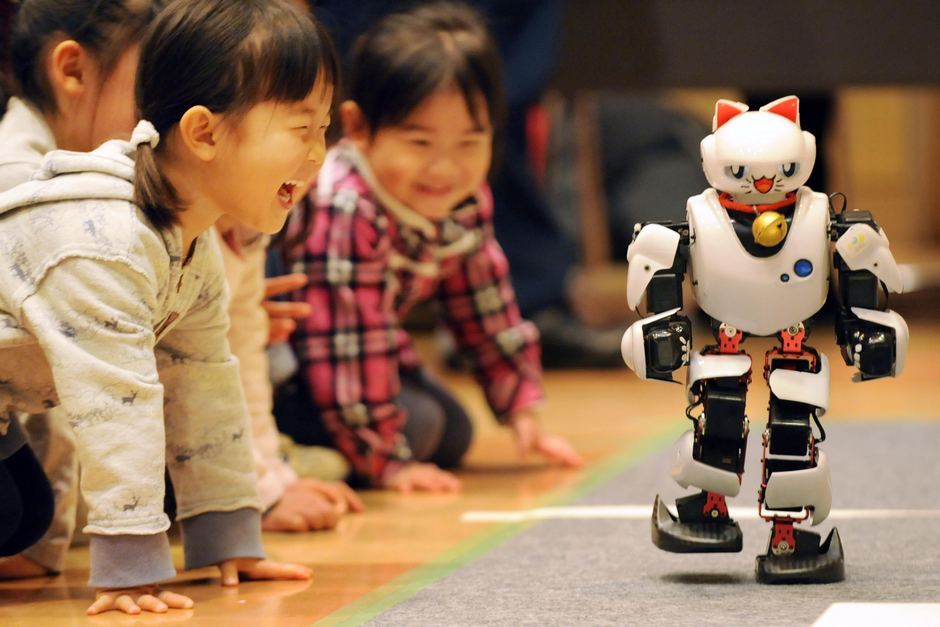
Washington DC: It is known that children are susceptible to getting influenced easily. New research has shed light on the fact that children tend to change their opinions and decisions getting influenced by robots.
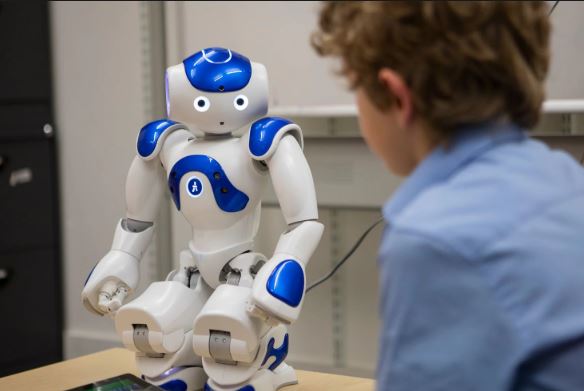
The research compared how adults and children responded to the same task when done in the presence of both their peers and humanoid robots.The findings published in the journal 'Science Robotics' showed that while adults regularly have their opinions influenced by peers, they are largely able to resist being persuaded by robots.
On the other hand, children aged between 7 to 9 years were more likely to get influenced by robots and give the same responses as the latter gave even when they were wrong.Researchers used the Asch paradigm first developed in the 1950s, which asks people to look at a screen showing four lines and say which two match in length.When alone, people almost never make a mistake but when doing the experiment with others, they tend to follow what others are saying.
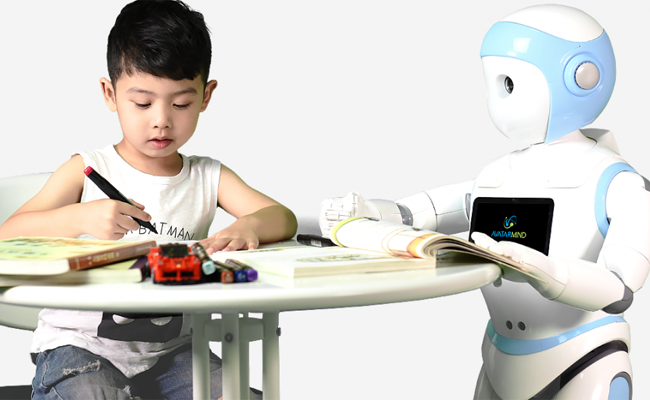
In this research, when children were alone in a room, they scored 87% on the test, but when the robots joined in, their scores dropped to 75%. And of the wrong answers, 74% matched those of the robot.
"People often follow the opinions of others and we've known for a long time that it is hard to resist taking overviews and opinions of people around us. We know this as conformity. But as robots will soon be found in the home and the workplace, we were wondering if people would conform to robots," said Prof. Tony Belpaeme, University of Plymouth and Ghent University.
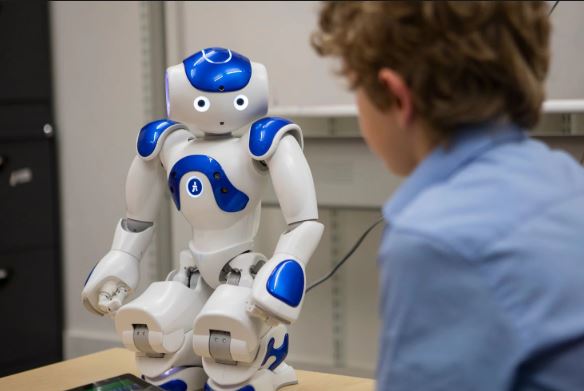
Prof. Belpaeme added that adults didn't always agree to what the robots opined but it was the opposite in the case of children.
"It shows children can perhaps have more of an affinity with robots than adults, which does pose the question: what if robots were to suggest, for example, what products to buy or what to think?" he added.
As a conclusion to the current study, the researchers add: "A future in which autonomous social robots are used as aids for education professionals or child therapists is not distant." They continued, "In these applications, the robot is in a position in which the information provided can significantly affect the individuals they interact with." (ANI)