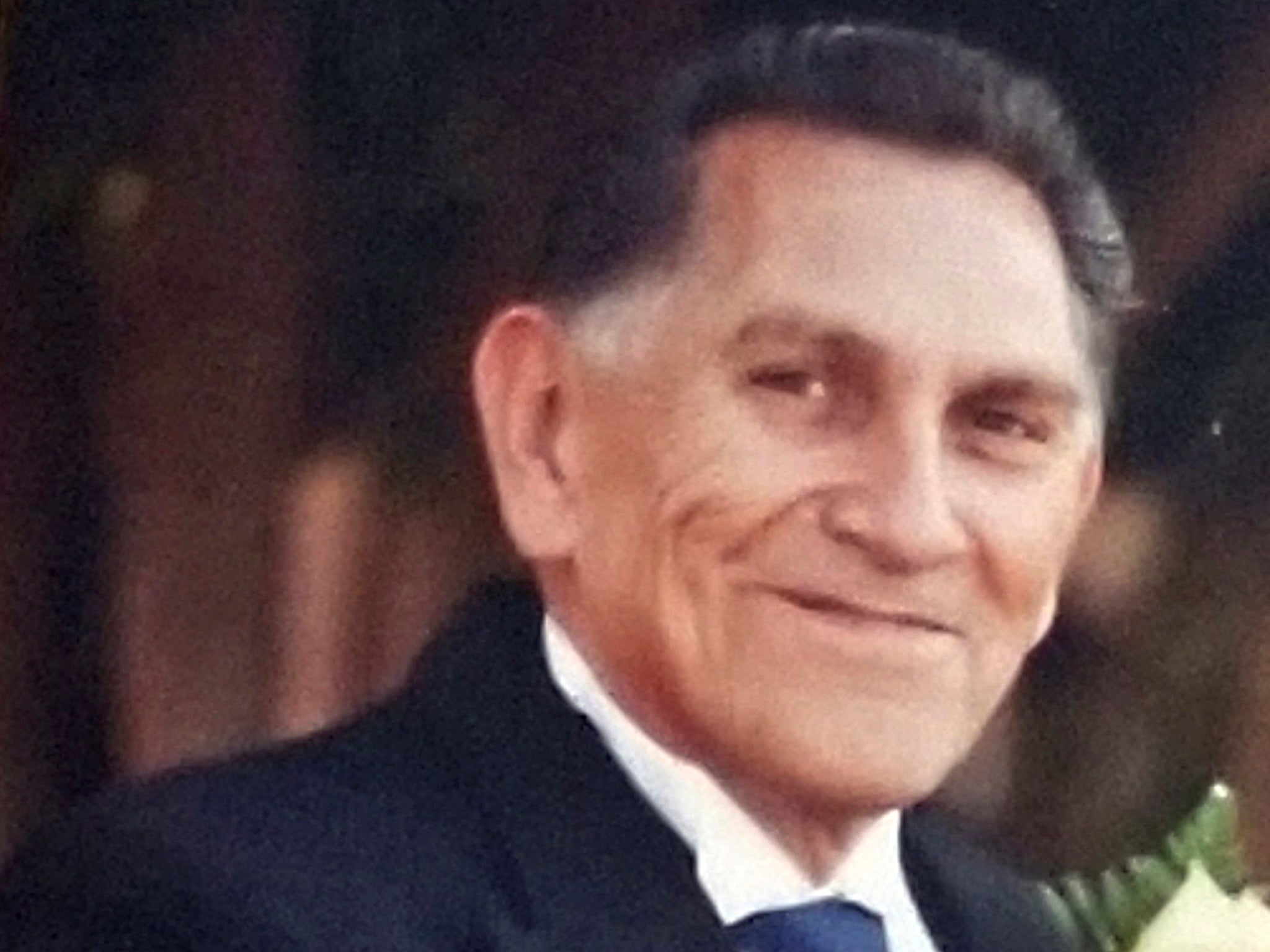
A 97-year-old man was told he would die within days via a robot that rolled into his intensive care unit during the night at a hospital in California.
Ernesto Quintana was given the terminal diagnosis by a doctor who appeared on a video screen on the robot after he was admitted to Kaiser Permanente Medical Centre in San Francisco on Sunday.
His family said they were “shocked” the news Mr Quintana would die from his chronic lung disease was communicated via the robot.
Mr Quintana’s daughter Catherine said: “If you’re coming to tell us normal news, that’s fine, but if you’re coming to tell us there’s no lung left and we want to put you on a morphine drip until you die, it should be done by a human being and not a machine.”
The grandfather died on Tuesday, two days after he was admitted to hospital.
Michelle Gaskill-Hames, senior vice president of the Kaiser Permanente medical centre in Fremont, described the situation as “highly unusual” and said officials “regret falling short” of the patient’s expectations.
However, the hospital also defended the use of “tele-visits” and said its policy is to have a nurse or doctor in the room at the time of remote consultations.
Ms Gaskill-Hames added: “The evening video tele-visit was a follow-up to earlier physician visits.”
“It did not replace previous conversations with patient and family members and was not used in the delivery of the initial diagnosis.”
Steve Pantilat, chief of the palliative medicine division at University of California, said that robot technology has “done wonders for patients and their families, some of whom are too far away for in-person visits”. He added he did not know the specific details of Mr Quintana’s case.
Annalisia Wilharm, Mr Quintana’s granddaughter, said she was alone with him when a nurse came into the ward to tell them a doctor would be making his rounds.
It was then the robot rolled into the room and a doctor appeared on the video screen, she said.
Ms Wilharm said she was “astonished” by what the doctor started saying.
“This guy cannot breathe, and he’s got this robot trying to talk to him,” she said.
“Meanwhile, this guy is telling him, ‘So we’ve got your results back, and there’s no lung left. There’s no lung to work with.”
Ms Wilharm added that she had to repeat what the doctor on the screen was saying to her grandfather who has hearing problems in one ear.
She said that the robot could not get round to the other side of the bed where Mr Quintana could hear more clearly.
The use of telepresence robots that interact with people via screens is becoming more popular in hospitals around the world.
The Japanese government even supports introducing these type of robots in care homes to address the country’s ageing population problem.
Additional reporting by AP