“Some of our top developers are starting to get about a quarter of a million dollars a year. They’re treating it literally as a career, and starting to hire their friends…”
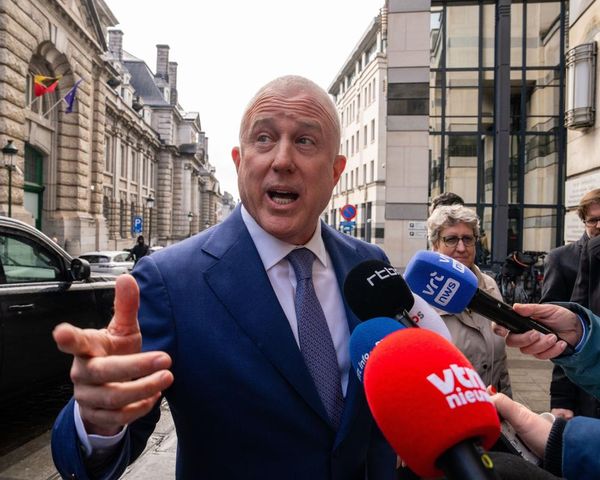
David Baszucki is the chief executive of Roblox, the all-ages gaming community whose rise has been lower-profile than that of Minecraft, but just as interesting.
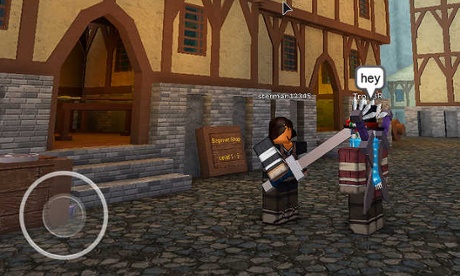
Minecraft is often mentioned as a comparison for Roblox, but the two are very different. Where Minecraft is concerned with creating one albeit vast and imaginative world, Roblox is more about creating different games and then making them available for the rest of its online community to play.
“In December, we hit 4.7 million players. The foundation of Roblox is user-generated content: just like on YouTube there is so much to watch, on Roblox there is so much to play,” says Baszucki.
“People get really attached to it: many of our players have played for four to five years, and our developers range in age from eight to 80. Some of the top developers are 18 or 20, and we have kids in high-school who are making two, three or four thousand dollars a month.”
How? By creating 3D games on Roblox’s website, then sharing them to be played online, as well as on iOS, Android and Kindle Fire devices. The money comes from the in-game currency, “Robux”, bought by players to spend within games, and then exchanged for real money again by those games’ developers.
“Just as the creation is powered by the community, so is our economy. Our developers are helping and participating in the virtual economy by making games that aren’t just fun, but which monetise as well,” says Baszucki.
“When it’s fun and monetises well, a lot of people play it and a lot of virtual currency goes into the game. We’re making it possible to publish a multiplayer, physically-simulated destructible-environment game that works on multiple devices and screen types, and can scale to 12,000 concurrent players.”
A platform with lots of children playing and a growing number of games using in-app purchases? It sounds like a recipe for controversy, especially with the US Federal Trade Commission poking around in the affairs of Amazon, Apple and now Facebook over children’s in-app spending.
Thus far, though, Roblox hasn’t faced a backlash for its virtual economy. Baszucki stresses the benefits for young players who come at it from the other side, making money from their own games and learning skills that may serve them well if they go into the games industry as a career.
He’s also enthusiastic about the impact of Roblox’s mobile apps. “Over the holidays, we were the number 33 top grossing iPad iOS app in the US, and a significant percentage of our playtime is now being spent on mobile,” he says.
“Our vision is that there will always be some games that are better on a PC, some that are possibly better on a mobile device, and a lot that can do well in both environments. But we have our ideas about set-top boxes and consoles too in the future.”
Roblox and Minecraft are very different, but Microsoft’s recent acquisition of the latter’s developer for $2.5bn may spur more interest in Roblox from investors and perhaps even potential acquirers, since it’s in the same “user-generated” gaming area.
Baszucki understandably isn’t playing down that comparison. “Minecraft is a very early play in this whole user-generated content space. I think we’re going to see there’s enormous headroom there over the next three, four or five years,” he says.
“This is a very early phase. Our vision is really extensive: 100% in the cloud, games that work on any device or screen, and physically-destructible and immersive environments way beyond what we have on Roblox now.
“Ultimately, games that start to look like high-end CGI movies. And companies are starting to realise that this user-generated content segment could be bigger than any individual games company. There’s so much leverage from being a platform rather than a content producer, where every few years you need a new huge property.”