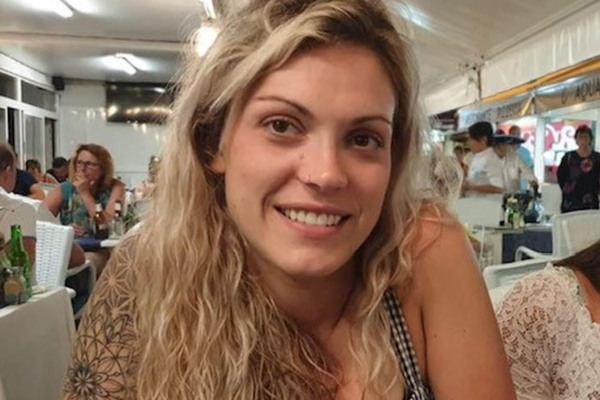
My father Robert Chenciner, who has died aged 76 of cancer, was a scholar and writer on the ethnographic and material cultures of the Caucasus and former Soviet states.
He first obtained permission to visit Dagestan in 1986. Through years of ethnographic fieldwork, and with the help of Dr Magomedkhan Magomedkhanov and local scholars, Robert – known to many as Bob or Chence – visited hundreds of Dagestani villages. He became a senior associate member of St Antony’s College, Oxford, in 1987, and an honorary member of the Dagestan Scientific Centre of the Russian Academy of Sciences in 1990.
My father would talk of how his heart should return to the Dagestan mountains as he loved them so dearly, and wrote definitively on the region in Daghestan Today (1989), Daghestan: Tradition and Survival (1997) and Tattooed Mountain Women and Spoonboxes of Dagestan (2006). This last was shortlisted for the Bookseller’s Diagram prize for oddest title of the year.
For more than two decades he also worked as an immigration expert, championing people fleeing former Soviet states. To meetings at Chatham House and St Antony’s College he brought his characteristic energy and a healthy distrust of authority. As part of this commitment, he worked for OSCE – the Organization for Security and Co-operation in Europe – as an election monitor in Ukraine, Kazakhstan, Azerbaijan and Belarus.
Born in London, Robert was the son of Ellen (nee Perls) and Mark Chenciner, a lawyer. He and his mother joined relatives in Canada after his father’s death, but he returned to Britain to attend Fonthill prep school, in East Sussex, and Epsom College in Surrey, after his mother’s death. He wrote about his early esoteric interests in Dragons, Padlocks and Tamerlane’s Balls in 2012, citing the essay he had written aged 18 on Swedish padlock keyhole covers, for which he was awarded a Trevelyan scholarship to read mechanical sciences at Pembroke College, Cambridge.
My father had an original perception of textiles, objects and people. His understanding of natural dyes and colour was manifest in Madder Red: A History of Luxury and Trade (2000). His collection of Kaitag textiles formed the basis of the books Kaitag: Textile Art from Daghestan (1993) and Kaitag: Daghestani Silk Embroidery, An Italian Collection (2007).
He lectured widely on these interests, and tickled controversy with papers including The Bayeux Tapestry Shish Kebab Mystery, delivered at the Oxford Food Symposium in 1990, which appeared to call the tapestry’s authenticity into question. He would happily accept compensation for lectures in the form of salt-cured sturgeon, Caspian caviar or well-hung horsemeat, depending on the location.
Despite the early loss of his parents, my father had a great sense of generosity, home and food; his lunches were a delight, and such was his warmth that his former home in Shepherd Market, London, was “borrowed” as a fictional safe-house in John le Carré’s Our Game, set amid the first Russian-Chechnya war.
Robert was a force; a beacon; a bracing optimist. He is survived by his wife, Marian Ellingworth, whom he married in 1993, and two daughters, Isabel and me.