American composer Michael Torke is a synesthete who perceives the key of E major as green and D major as blue. It followed that his new Concerto for Orchestra should be marked by some astonishing splashes of colour, even if the thematic palette was somewhat restricted. The 20 minute, seven-movement piece was structured around a single, four-note motif, initially announced by the brass and passed round the ensemble in various permutations. Torke has a distinctly American orchestral accent: transparent, Philip Glass-like textures tussled with the infectious shimmy of Bernstein in mambo mode; while Walt Disney was the presiding influence of a syrupy largo in which the theme broke down and seemingly attempted to reconfigure itself as When You Wish Upon a Star.
Manchester audiences instantly succumbed to the tiny, blind Japanese pianist Nobuyuki Tsujii when he appeared with the BBC Philharmonic last year; the lower-voltage ovation that greeted his Liverpool debut, however, suggests his relationship with the Royal Liverpool Philharmonic may be a more slow-burning affair. Tsujii is a phenomenally capable technician who claims to be able to communicate with the orchestra by listening to the conductor’s breathing. Even so, the busier aspects of his reading of Prokofiev’s Piano Concerto No 3 sounded a little pre-determined. (There will be ample opportunity to deepen the bond when Tsujii joins the RLPO on its first tour of Japan in January next year.)
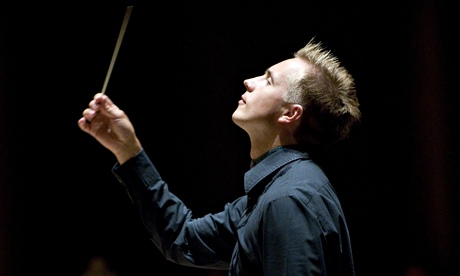
Vasily Petrenko’s season-long cycle of Tchaikovsky’s symphonies has not been programmed in numerical order, although the performance of No 1, Winter Daydreams, sounded like a significant point of departure. Though Tchaikovsky’s youthful combination of folk melodies, balletic interludes and wistful nationalism can be difficult to reconcile, Petrenko fused the disparate influences as if determining what form the Russian symphony, and indeed the RLPO’s 175th season, is going to take.