
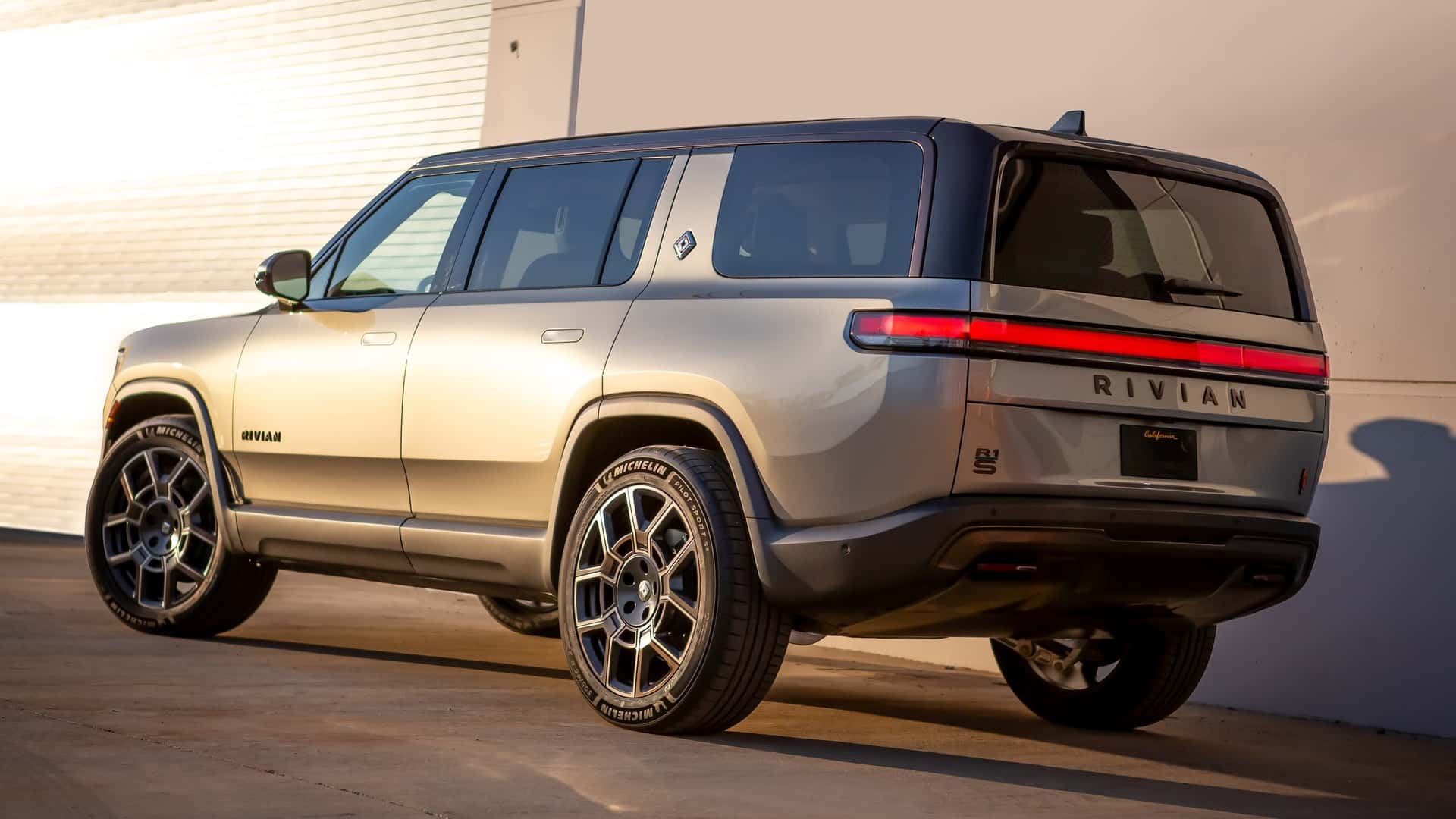
- Rivian delivered 42,247 vehicles in 2025, a drop from 51,579 the year prior.
- The startup automaker took a sharp hit in the fourth quarter, as electric-vehicle tax credits came to an end.
- Rivian is now hanging its future on the more affordable R2, due out this year, as well as improvements to its autonomous driving platform and a technical partnership with Volkswagen.
Tesla wasn't the only automaker to experience a sales drop in 2025 as electric-vehicle tax credits in the United States came to an end. Rivian has released its sales data for the full year, and while the result is in line with its expectations, it's not a pretty picture.
Rivian on Friday confirmed 42,247 vehicle deliveries in 2025, an 18% decrease from 2024's record high of 51,579. In particular, Rivian saw a sharp drop in fourth-quarter deliveries—the electric startup moved 9,745 units in the last three months of 2025, compared to 13,201 in the third quarter.

In other words, a lot of buyers rushed out to secure a Rivian R1S or R1T before the tax credit ended in late September, and then didn't show up for the rest of the year.
Unlike Tesla and other automakers, Rivian only sells its EVs in the U.S. and Canada. But the end of America's $7,500 EV tax credit—which also applied to any leased EV—hit most carmakers hard. The credit was a strong driver of both sales and leases, and so many companies, analysts and experts predicted a drop in EV adoption in the latter part of 2025. That includes Rivian, which said that the company's annual deliveries were in line with its estimates.
Tesla, which operates much more globally than Rivian, announced a 9% sales drop in 2025. Chinese automaker BYD is now the worldwide leader in EV sales.
Gallery: Rivian R1 Borealis Color





However, Rivian CEO RJ Scaringe has said that in the long run, the end of the tax credit could be advantageous if it forces competitors to back off their EV investments. “Narrowly and myopically through the lens of Rvian, it actually creates less competition," Scaringe said in November.
The ultimate test of that theory comes later this year with the debut of the 2026 Rivian R2. That EV, a downsized SUV that rides on an all-new platform, will be more affordable and more profitable than its current R1 models. Those SUVs and trucks usually retail for between $80,000 and $100,000 or more. Rivian has claimed the R2 will start around $45,000, although the "launch edition" vehicles are likely to be more expensive.
Even so, the R2 is expected to be a crucial, long-term volume-selling EV for Rivian, much as the Model Y was for Tesla. Scaringe told the InsideEVs Plugged-In Podcast as much last year. “If you want to buy an electric vehicle for under $50,000 today, I would say in the United States there are well under five great choices,” Scaringe said. The R2, he said, needs to be a promising enough product that can appeal beyond tax incentives.
Gallery: Rivian R2 Live Impressions New York Auto Show






Meanwhile, Rivian has a few other promising irons in the fire. The startup was given the keys to the Volkswagen Group's future electrical architecture and software plans in the West, a $6 billion joint-venture deal. And the company is working to boost its autonomous vehicle technology. In December, Rivian announced that a future R2 variant will include lidar for eventual self-driving, and that the company is becoming a kind of Nvidia competitor by making its own computer chips in-house.
Rivian has said that R2 deliveries are expected to begin in the first half of 2026. Until then, the R1S and R1T will have to hold down the fort.
Contact the author: patrick.george@insideevs.com