'River monster': Huge African dinosaur Spinosaurus thrived in the water
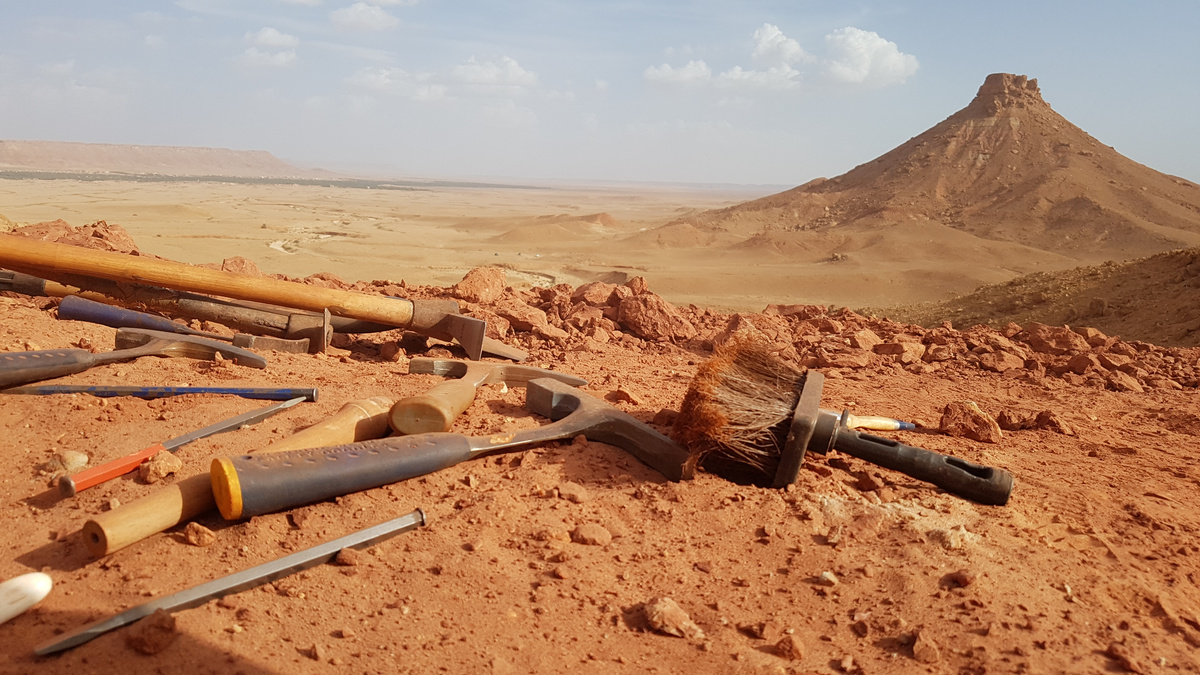
Tools lie at the excavation site of Spinosauru in the Kem Kem region of the Sahara Desert in southeastern Morocco, from the excavation site of Spinosaurus in an undated photograph provided April 29, 2020. Diego Mattarelli/Handout via REUTERS.
The huge African predator Spinosaurus spent much of its life in the water, propelled by a paddle-like tail while hunting large fish - a "river monster," according to scientists, that showed that some dinosaurs invaded the aquatic realm.
Scientists on Wednesday announced the discovery of fossil bones from the tail of Spinosaurus in southeastern Morocco that provided a deeper understanding of the appearance, lifestyle and capabilities of the longest meat-eating dinosaur on record.
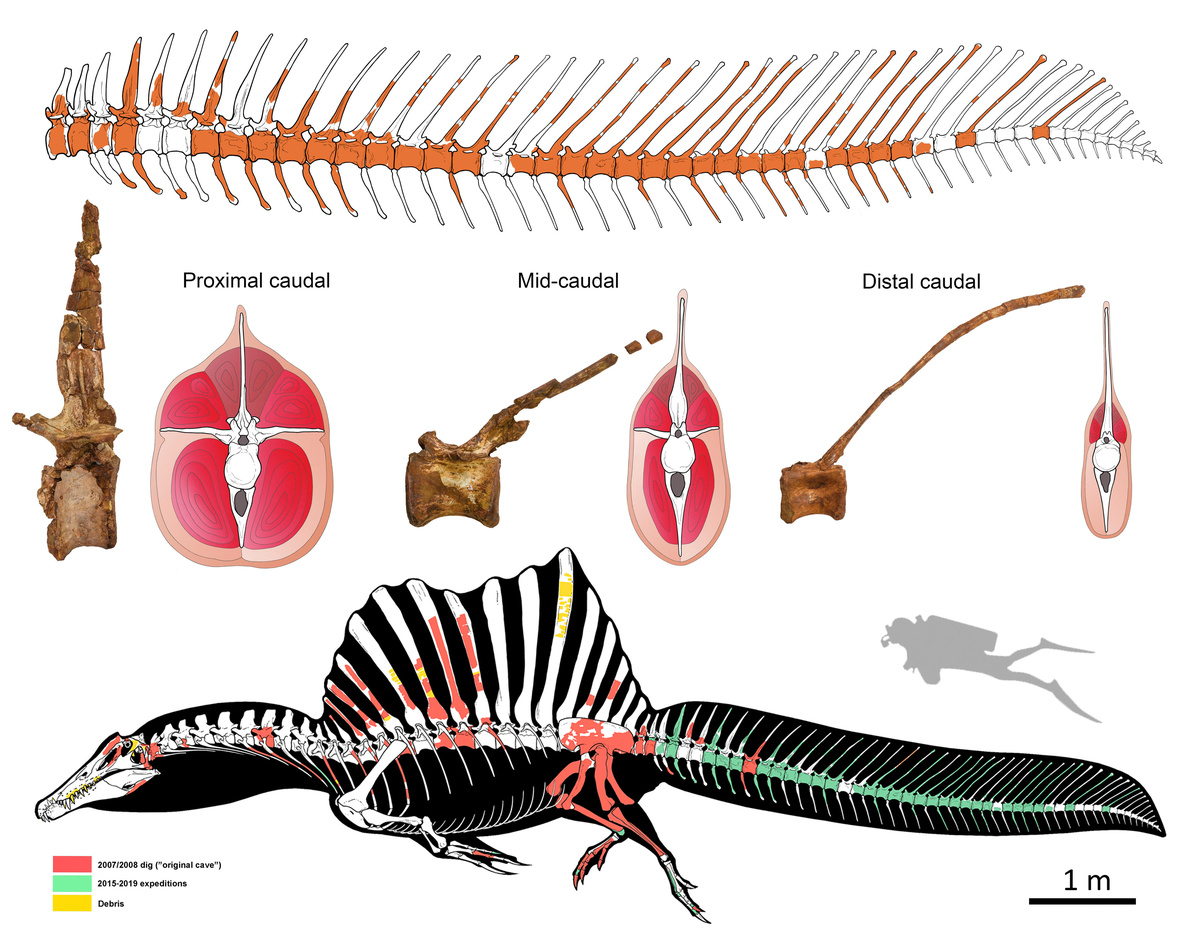
A reconstruction of the tail skeleton of Spinosaurus (missing bones shown in white) at top, cross sections through the tail showing changes in the vertebrae, tail volume, and arrangement of major muscles at center and the new look of Spinosaurus (black, soft parts/body outline; red, bones collected in 2008 by a local fossil collector; green, bones from recent scientific excavations; yellow, bone fragments collected in the debris around the main excavation area) at bottom are seen in an illustration provided April 29, 2020. Marco Auditore, Gabriele Bindellini/Handout via REUTERS.
"Spinosaurus had a highly specialized tail - a propulsive structure that would have allowed this river monster to actively pursue prey in the water column," said University of Detroit Mercy paleontologist and anatomist Nizar Ibrahim, lead author of the study published in the journal Nature.
Spinosaurus, which lived 95 million years ago during the Cretaceous Period, was a highly unusual dinosaur, and not just because of its staggering dimensions - up to 50 feet (15 meters) long and seven tons.
The anatomy of Spinosaurus had remained mysterious for decades after crucial fossils were destroyed during World War Two until the 2008 discovery of the Morocco skeleton, with the additional tail bones dug up since 2015.
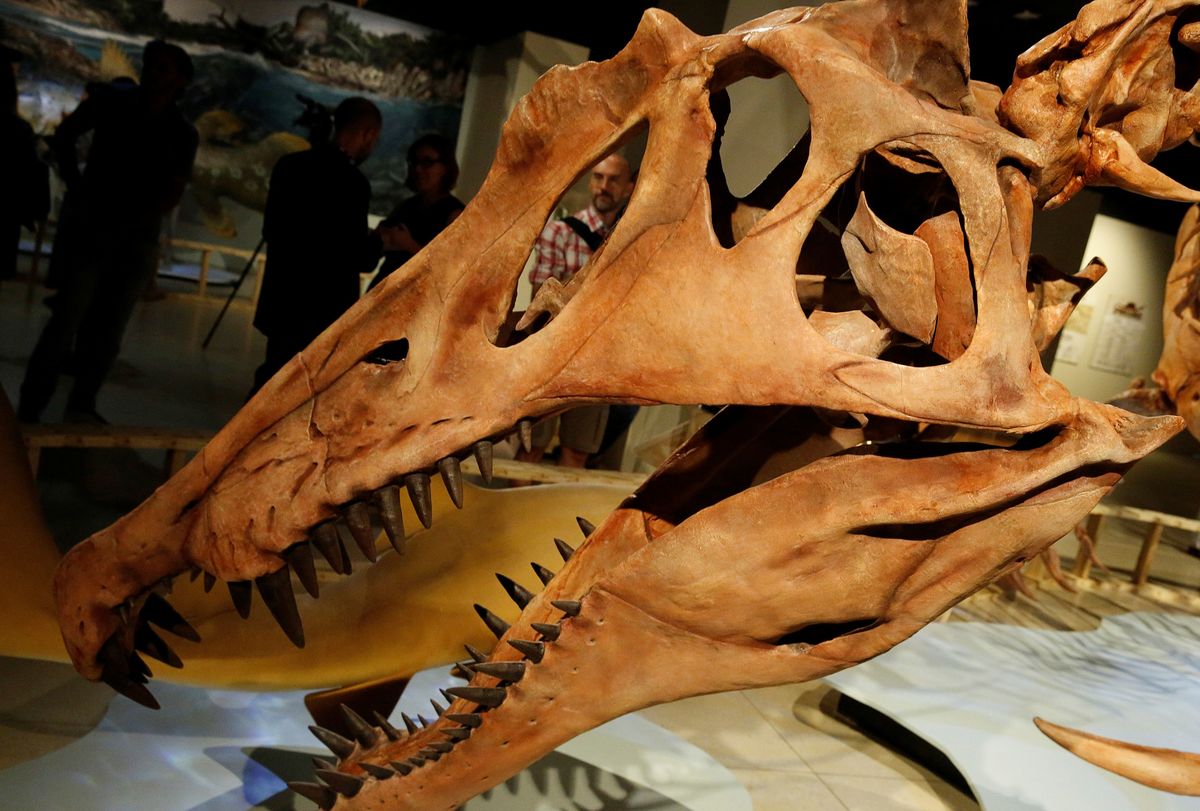
FILE PHOTO: The head of a mounted skeletal cast of the Spinosaurus aegyptiacus, a 50-foot (15-meter) long, seven-ton African dinosaur that is the biggest dinosaur predator to ever walk the Earth is seen during a news conference at the National Geographic Society in Washington, September 11, 2014.REUTERS/Jim Bourg
Its tail was flexible with a large surface area thanks to a series of tall neural spines - different from the stiff and tapering tails of other carnivorous dinosaurs like Tyrannosaurus rex - indicating Spinosaurus and its close relatives engaged in tail-propelled locomotion unlike any other dinosaurs.
Laboratory experiments in which a plastic model of the Spinosaurus tail was attached to a robotic swimming device showed that the tail could move laterally to create thrust and power the animal through water like a crocodile, said Harvard University fish biologist and biomechanist George Lauder, a study co-author.
This indicates Spinosaurus terrorized rivers and river banks as a semi-aquatic animal, not merely wading into the water waiting for fish to swim by. It may have eaten huge fish, including sharks.
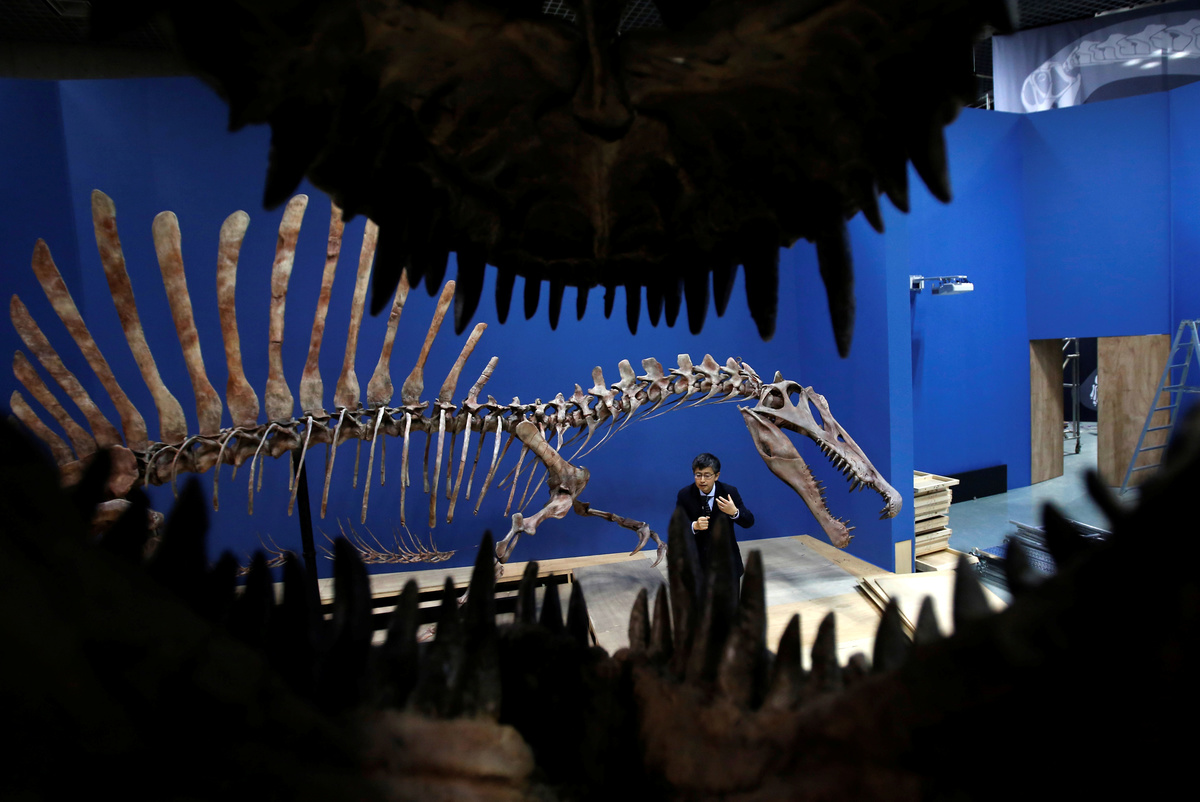
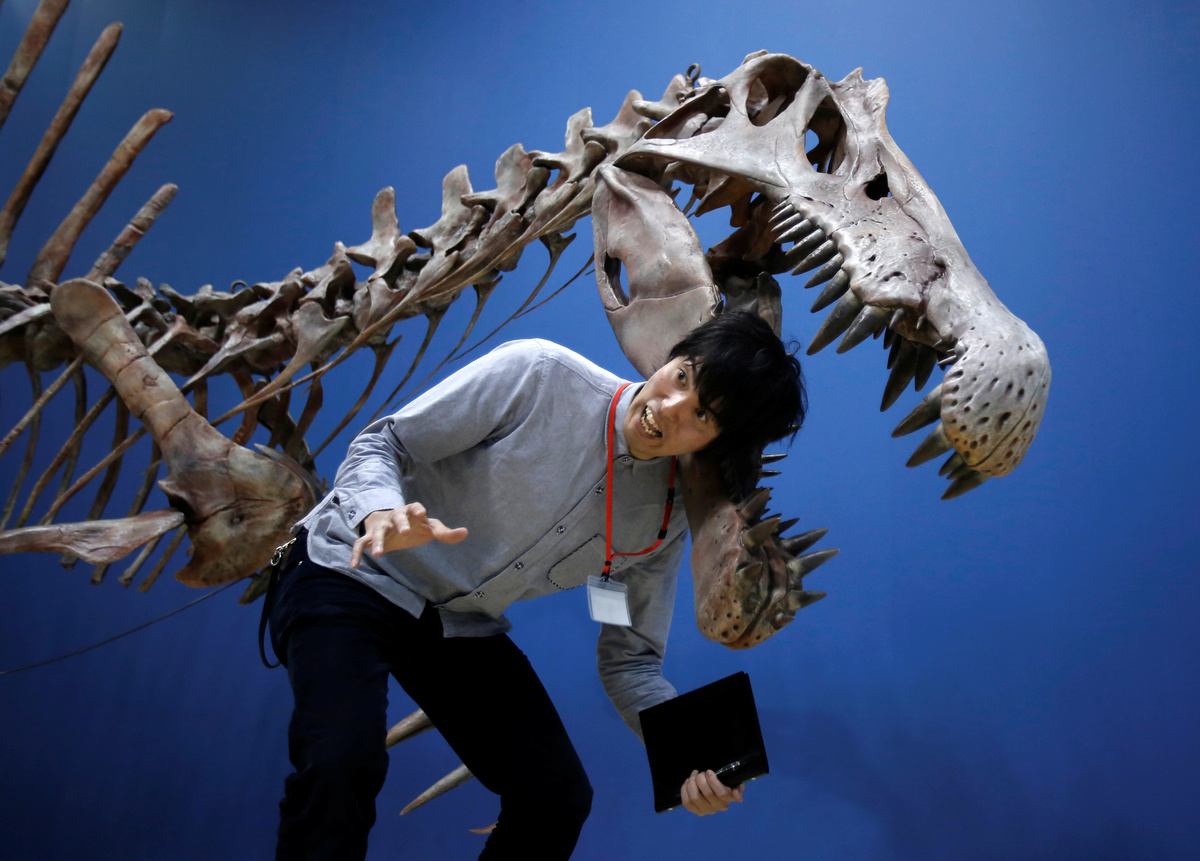
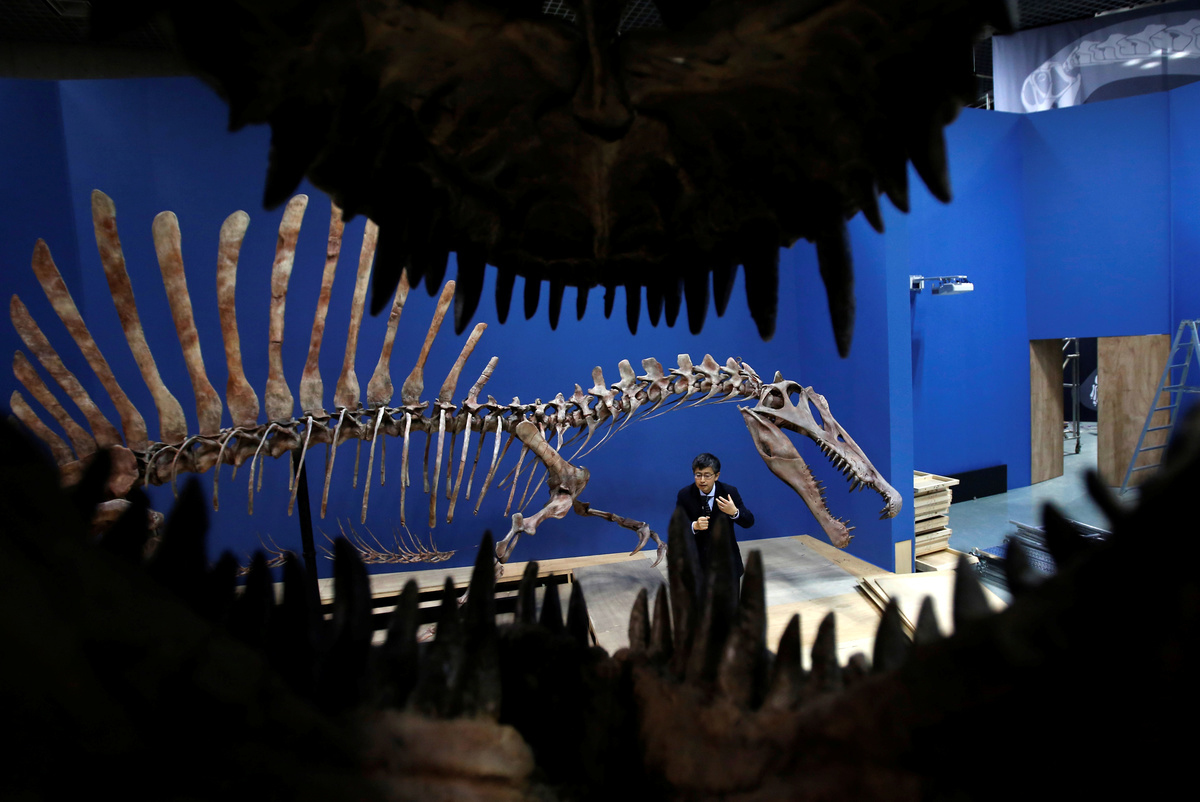
FILE PHOTO: Makoto Manabe, a researcher at the National Museum of Nature and Science, speaks to reporters in front of a Spinosaurus's skeleton replica as he is seen through the Tyrannosaurus's skull replica during a preparation and media preview for the Dinosaur EXPO at the National Museum of Nature and Science in Tokyo, Japan, March 1, 2016. REUTERS/Yuya Shino
"This discovery overturns decades-old ideas that non-bird dinosaurs were restricted to terrestrial environments," said Harvard University vertebrate paleontologist and biomechanist Stephanie Pierce, a study co-author. "So, yes, we believe that this discovery does indeed revolutionize our understanding of dinosaur biology."
Spinosaurus still was able to move on land and lay eggs there, perhaps walking on four legs rather than two like other meat-eating dinosaurs.
"But it had so many adaptations to an aquatic existence - nostrils high on the skull and further back from the tip, flat bottomed-toe bones and claws, dense and thickened bone for buoyancy control, and this newly discovered tail form - that it would have been at least as aquatic as Nile Crocodiles," University of Portsmouth paleontologist and study co-author David Martill said.
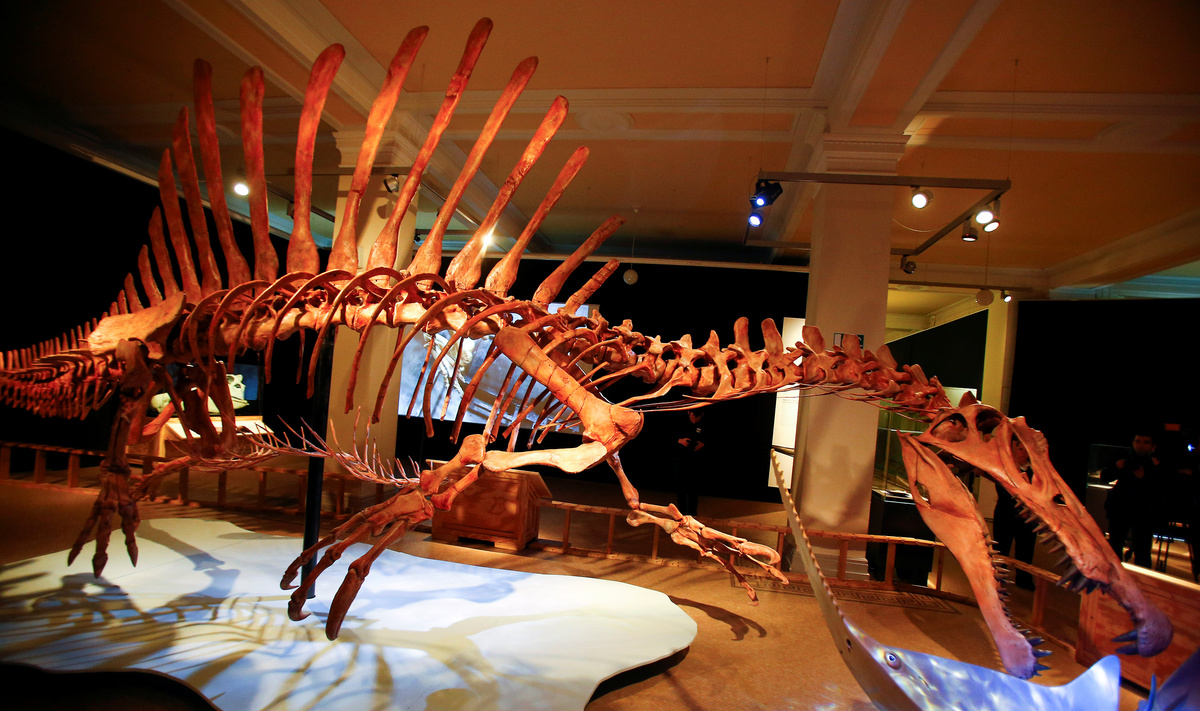
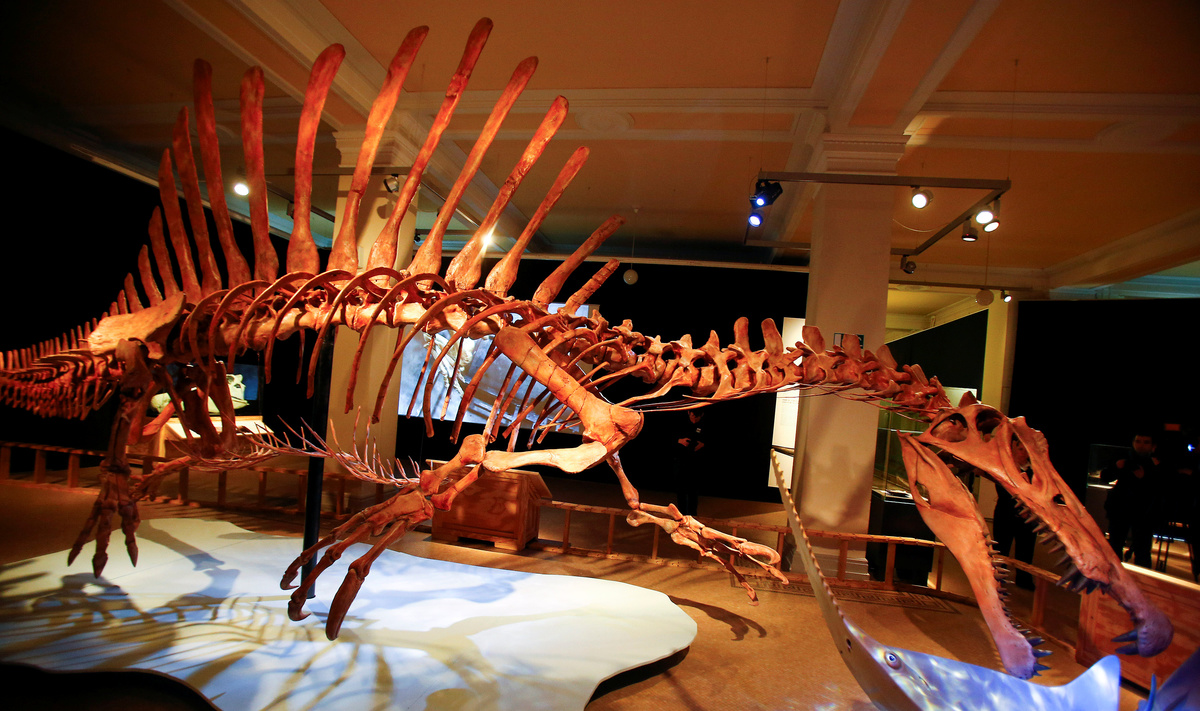
FILE PHOTO: A skeleton model of a Spinosaurus is seen at the exhibition "Spinosaurus" at the Natural History Museum in Berlin, Germany, February 8, 2016. REUTERS/Hannibal Hanschke
"It just might topple T. rex," Pierce said, "as the most famous and exciting meat-eating dinosaur."
(Reporting by Will Dunham; Editing by Sandra Maler)
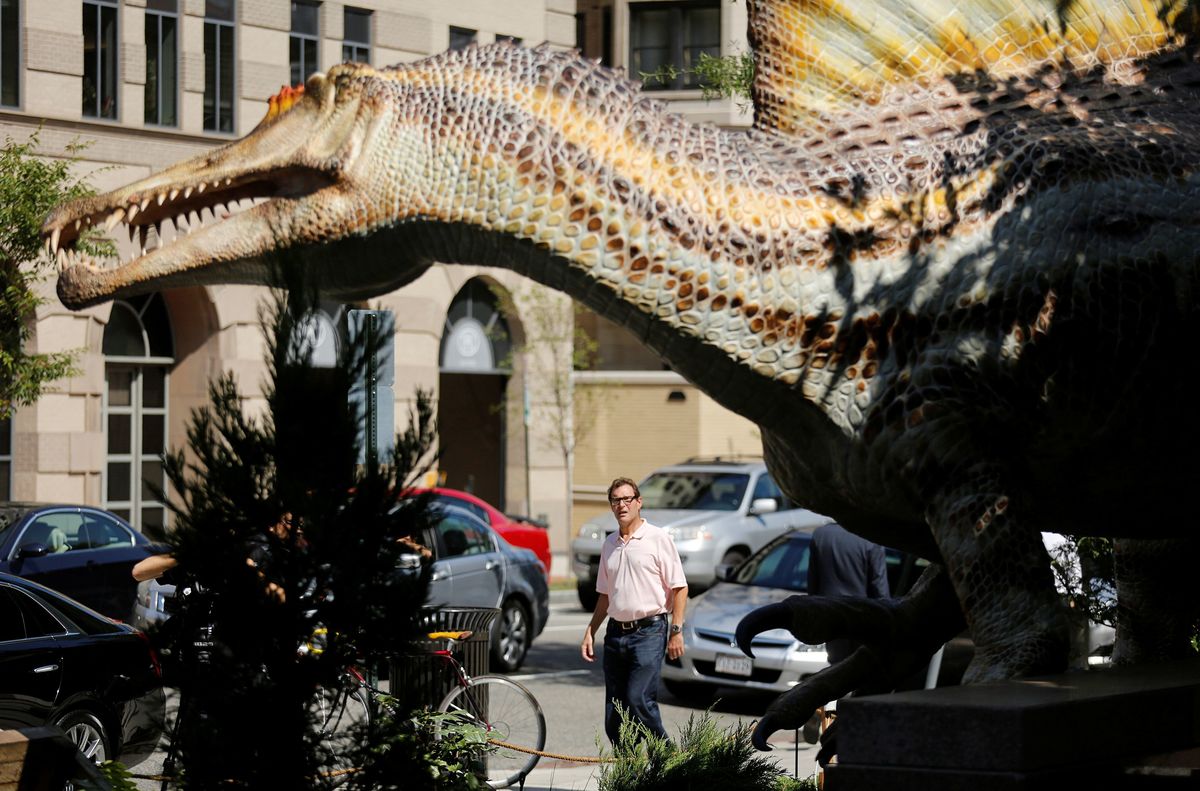
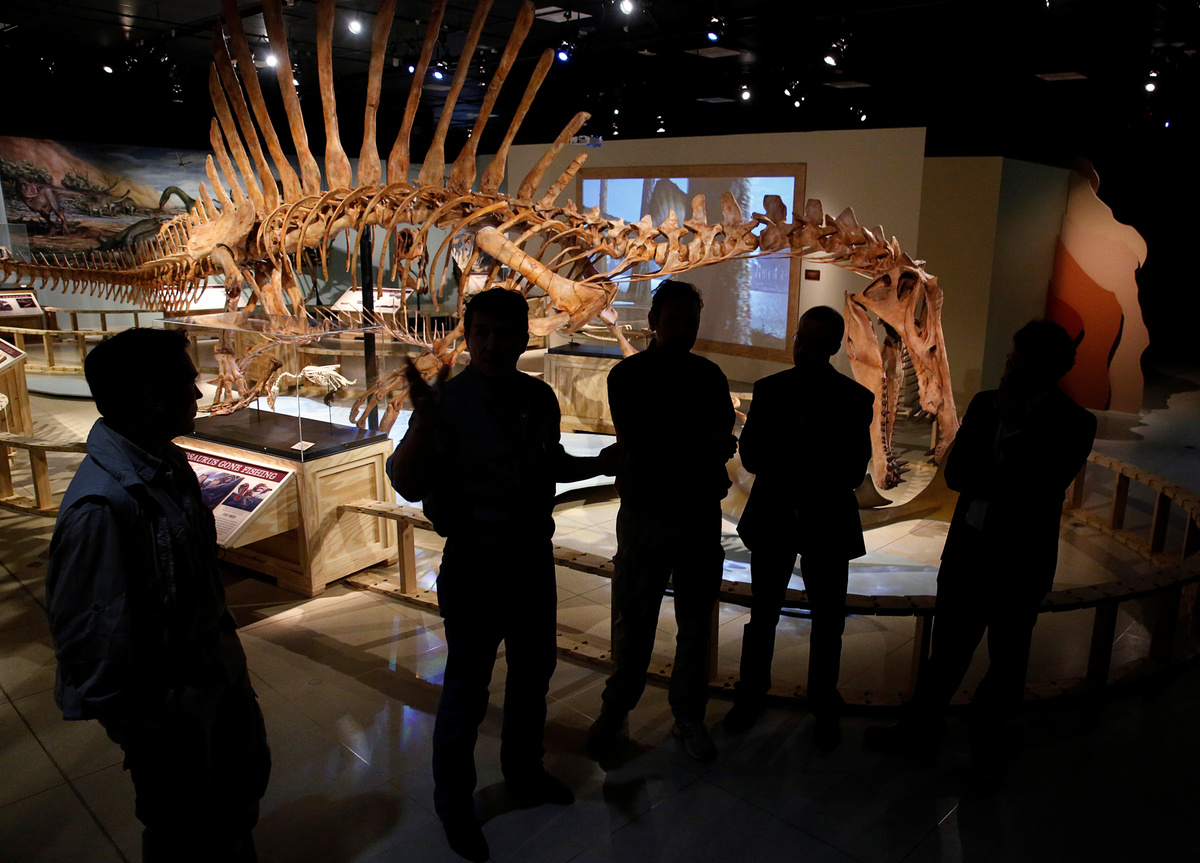
FILE PHOTO: A reporter poses with a Spinosaurus's skeleton replica during a preparation and media preview for the Dinosaur EXPO at the National Museum of Nature and Science in Tokyo, Japan, March 1, 2016. REUTERS/Yuya Shino/File PhotoFILE PHOTO: A pedestrian walks past a life-size model of the Spinosaurus aegyptiacus dinosaur outside the National Geographic Society building in Washington, September 11, 2014. REUTERS/Jim Bourg/File PhotoFILE PHOTO: The scientists who have reconstructed the dinosaur "Spinosaurus aegyptiacus," a 50-foot (15-meter) long, seven-ton African dinosaur that is the biggest dinosaur predator to ever walk the Earth, stand in front its mounted skeletal cast during a news conference at the National Geographic Society in Washington, September 11, 2014. REUTERS/Jim Bourg/File PhotoFILE PHOTO: Makoto Manabe, a researcher at the National Museum of Nature and Science, speaks to reporters in front of a Spinosaurus's skeleton replica as he is seen through the Tyrannosaurus's skull replica during a preparation and media preview for the Dinosaur EXPO at the National Museum of Nature and Science in Tokyo, Japan, March 1, 2016. REUTERS/Yuya Shino/File PhotoFILE PHOTO: A skeleton model of a Spinosaurus is seen at the exhibition "Spinosaurus" at the Natural History Museum in Berlin, Germany, February 8, 2016. REUTERS/Hannibal Hanschke/File Photo
Sign up to read this article
Read news from 100’s of titles, curated specifically for you.