They say all politics is local so this week when scientist John Church published a report in the world’s most prestigious science journal, Nature, about sea level rise, it made me look out my kitchen window.
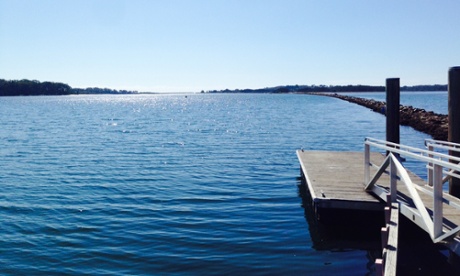
I live in a town where sea level rise is not just academic. My life is spent surrounded by salt water. My home is a very modest south coast fibro cottage on a promontory at Moruya Heads, four hours drive south of Sydney.
Writing about his new paper, Time of Emergence for Regional Sea-Level Change, Church said:
Our new analysis of sea-level projections ... indicates that regional sea-level rise will be generally noticeable before 2030. By then the average sea-level rise globally will be about 13 centimetres higher than the average sea level calculated between 1986 and 2005.
As soon as I had read Church’s report I went and scrabbled through my files for a letter that had arrived in my letterbox a couple of months ago from the Eurobodalla Shire Council.
Across the road from me is the main channel of the Moruya River and my back boundary is a tributary of the estuary, known as Gilmours Creek. At the end of my road are two spectacular beaches that are part of the Batemans Marine Park. I don’t need to consult charts to see whether it is high tide or low – I just look across the water.
It’s the kind of sleepy little place where the postman is the same guy nearly every day, and he waves when he delivers the mail. In August he dropped off an envelope from the council.
I am writing to advise you of a draft report relating to sea level rise that is currently on public exhibition … As the owner of a property that is currently identified as ‘potentially at risk from future sea level rise’ we invite you to comment and give feedback during the exhibition period.
If the report is adopted, it will provide the basis for consideration of sea level rise in future plans and policies including the preparation of the Coastal Zone Management Plan for Eurobodalla which will include public consultation.
Like most people, I have been concerned about climate change as an esoteric issue. I have worried about how it will impact on my children and grandchildren. But here was climate change in my actual letter box – formal correspondence about how climate change was going to impact on me.
The impact would be real and probably financial as well as practical. Who wants to buy property that is labeled “potentially at risk from future sea level rise”?
Still, I am very fortunate. While my property drops down to sea level at the rear, my actual home is probably a good 13 metres above a high tide. That is a long way above Church’s 13 centimetres. But down the road from my house the terrain drops to a long low flat area with houses at current sea level. The road itself is already almost lapped by seawater when there is a summer king tide.
The biggest town in the Eurobodalla, Batemans Bay, is one of the nation’s most vulnerable communities to sea level rise. Once you start looking around even a relatively undeveloped community like mine you start to see that there is a lot of critical infrastructure that already sits on the very edge of being submerged.
And planning mayhem will not just be a problem for the Eurobodalla. This will be a story played out in every local government area around Australia, in every captial city and in every multi-billion dollar port facility and seaside airport – especially Sydney’s Kingsford Smith.
I have always reassured myself that this coast where I live has looked the same ever since I first started coming to this area as a toddler. There are individual rocks on beaches that I have forever known to watch out for when I am catching a wave, sand spits and bays that have, for decades, seemed immutable.
But if Church and his colleagues are right the coastline itself and the first law of Australian real estate – an ocean view is gold - is about to be re-written.
• James Woodford is writing on marine science through a non-profit journalism project funded by the Pew Charitable Trusts