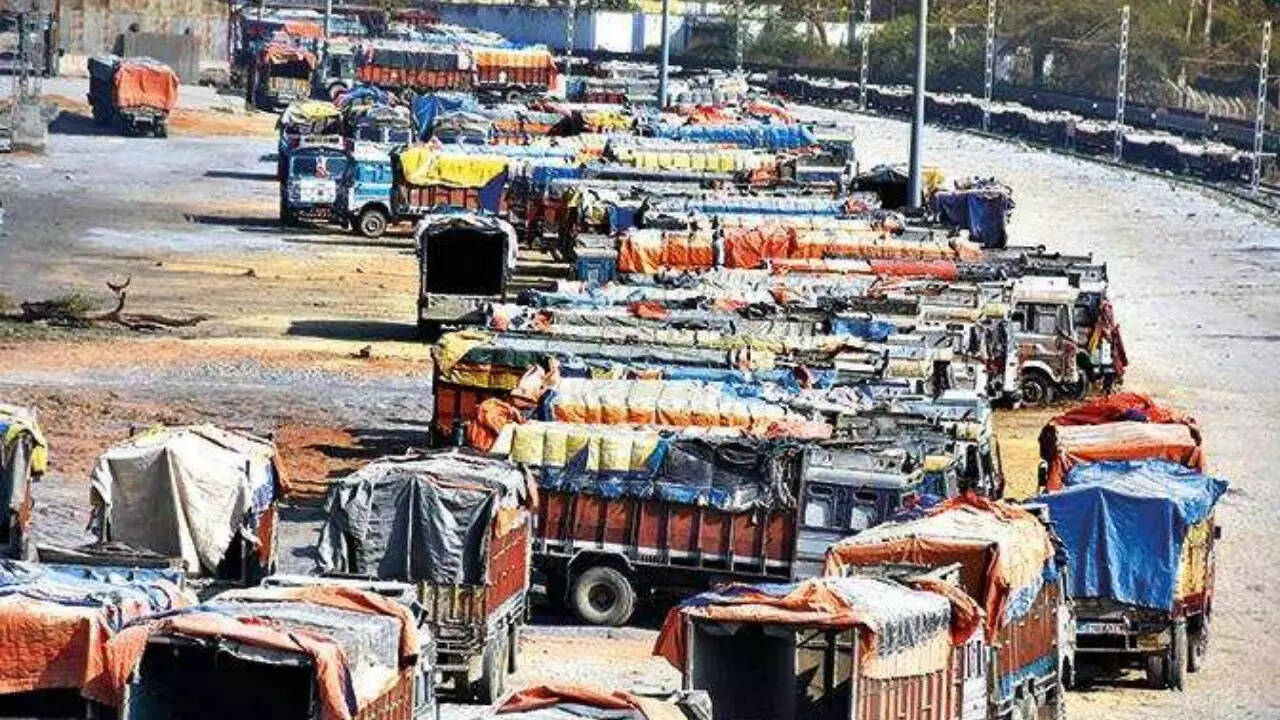
VISAKHAPATNAM: The rising fuel prices have come as a blow to the freight transport sector in the state, particularly in the north Andhra districts of Visakhapatnam, Vizianagaram and Srikakulam. The stakeholders say over 50% of their income is spent on fuel due to the continuous rise in its prices.
Closure of some companies, like Ferro Alloys and the jute mills in the region have also hit the transport sector hard.
Lorry owners of Salur town in Vizianagaram district, which is one of the major road transport hubs in the state after Vijayawada, say they are struggling to pay even salaries to their workers. G Madhava Rao, secretary of Salur lorry owners association, said while the price of diesel has increased by over 30% since March 2020 and has now touched Rs 100 per litre, the fright charges have remained the same as customers are not willing to pay more.
“For instance, freight charge per tonne from Vizianagaram district to Raipur in Chhattisgarh has remained Rs 1,300 for the past two years despite several hikes in fuel prices. Many lorry owners have decided to sell their vehicles and quit the business altogether as it is no more sustainable,” Rao told TOI.
Same is the situation in Vizag. “The increase in fuel prices and decrease in construction activities have hit the industry hard. When the real estate sector is active, it boosts freight activities due to transport of cement, iron, electrical, and plumbing material. But the sector is dull in the region. The pandemic has shattered our business. We have not handled any new vehicles since the lockdown. We are struggling to even pay salary to our workers. The situation is only getting worse by the day,” said Arjun, secretary of Visakhapatnam lorry owners association.
To add to people’s woes, vegetable prices have also spiralled across the state due to incessant rains which have caused widespread damage to the crops. The massive demand-supply mismatch has led to prices of vegetables increasing by nearly 30% in the last few days.
A vast stretch of vegetable farms, which supply veggies to wholesale and retails market across the state, were inundated in the aftermath of cyclone Gulab in the last two weeks of September.
“Standing vegetable crops in hundreds of acres were damaged due to continuous rains. We are not getting sufficient quantities which has led to the rise in prices,” said GK Naidu, a wholesaler at Gnanapuram market in the city.
The demand-supply mismatch may continue till November-end on account of Karthika masam, the auspicious month during which a majority of people stay off non-veg food.
“Low quality items are coming to the markets but the prices are high. Tomatoes are being sold at Rs Rs 36 per kg in rythu bazaars and around Rs Rs 40-50 in the retail markets. Same is the case with onions. Nagpur, Solapur, and Ahmednagar onions are being sold at Rs Rs 40-45 in the retail markets,” says Y Madhu Babu, a local vegetable vendor.
In fact, the prices of most of the vegetables, which were being sold between Rs 20 to Rs 40 a few days back, have more than double in the last one week. The state caters to nearly 11.8 per cent of the country’s total vegetable production.