Rio+20 Earth summit: Amazon deforestation – in pictures
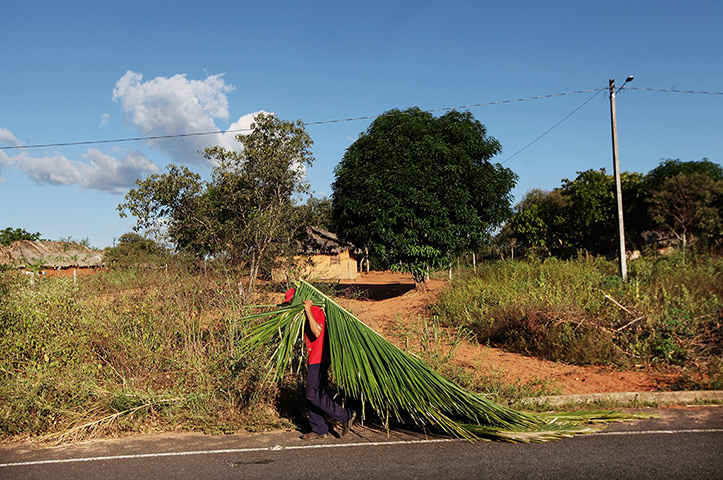
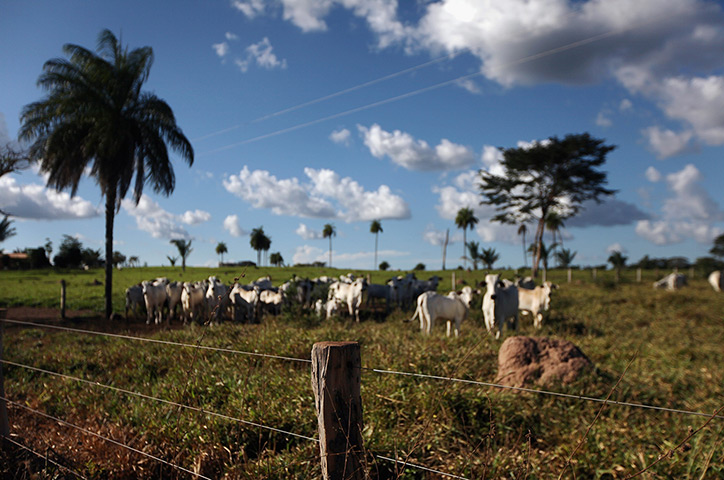
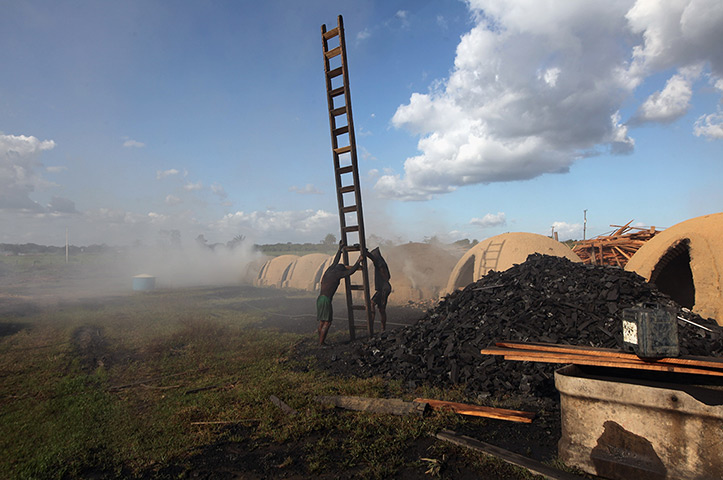
A man carries a palm branch to use for constructing a thatch roof for his home in a deforested section of Amazon rainforest in Para statePhotograph: Mario Tama/Getty ImagesCows graze in a deforested section of Amazon rainforest near Amarante do Maranhão. The cattle industry has taken over much of the deforested land in the AmazonPhotograph: Mario Tama/Getty ImagesWorkers hold a ladder as they prepare to load charcoal produced from illegally harvested Amazon rainforest wood on to a truck in Rondon do ParáPhotograph: Mario Tama/Getty Images
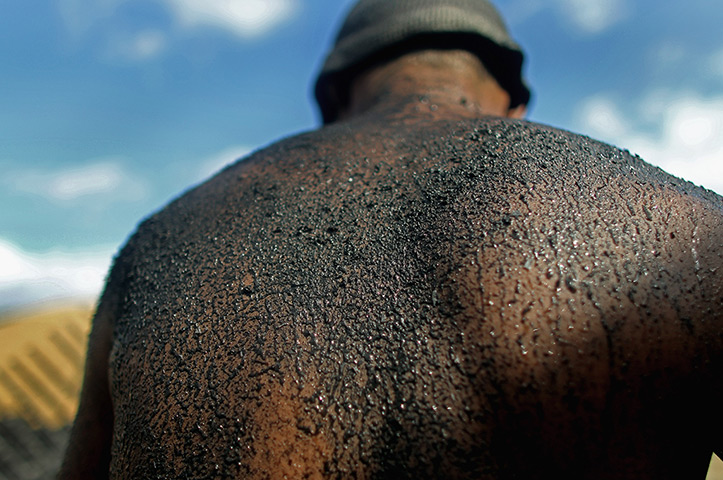
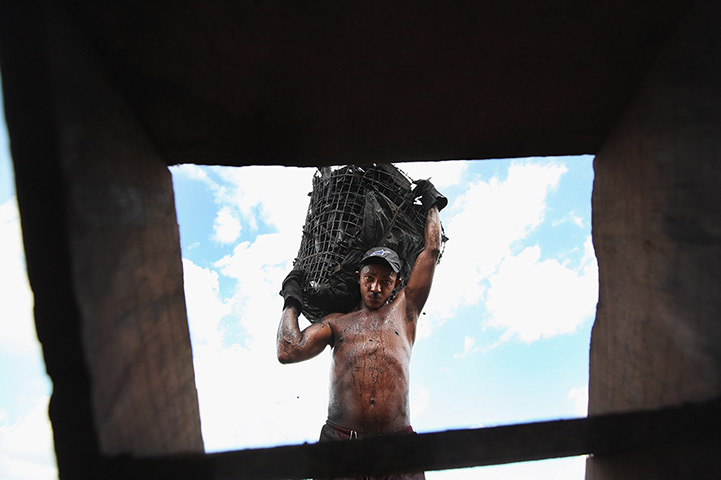
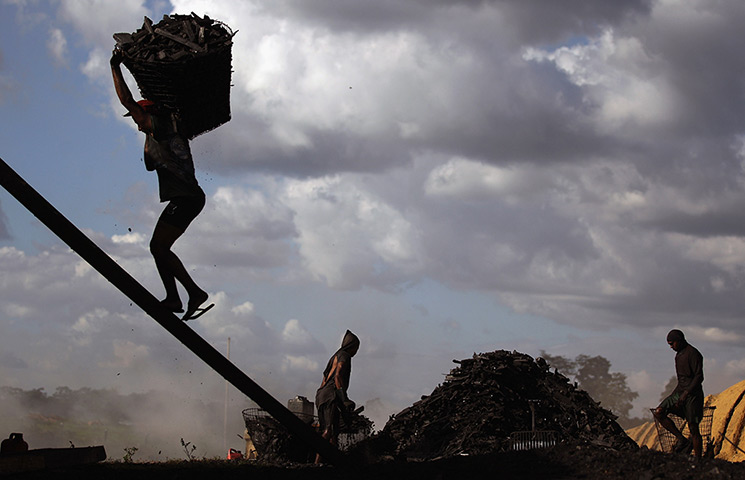
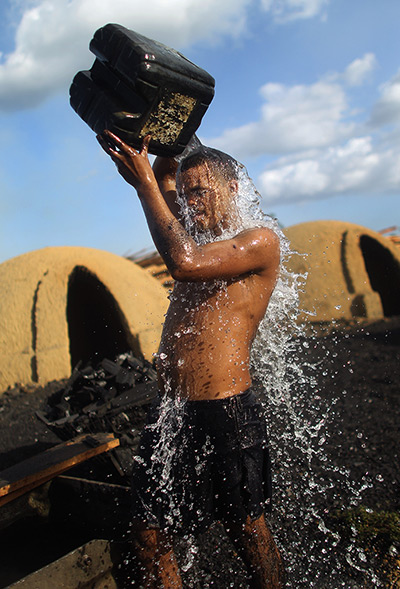
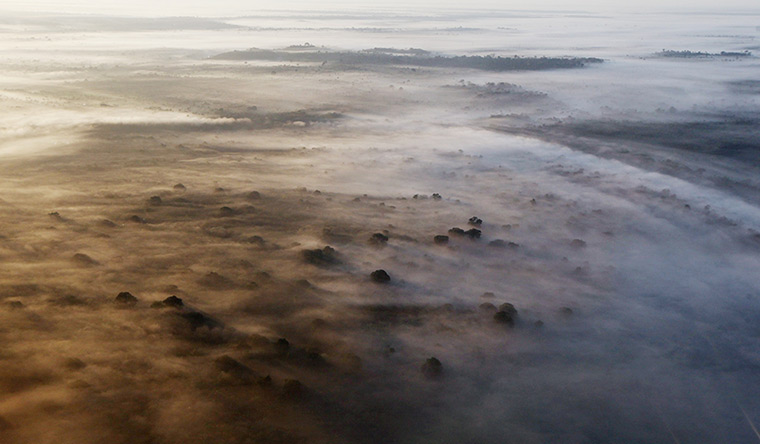
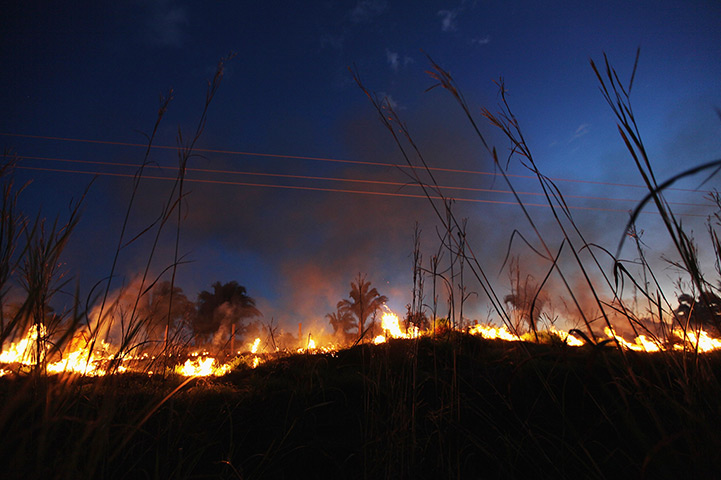
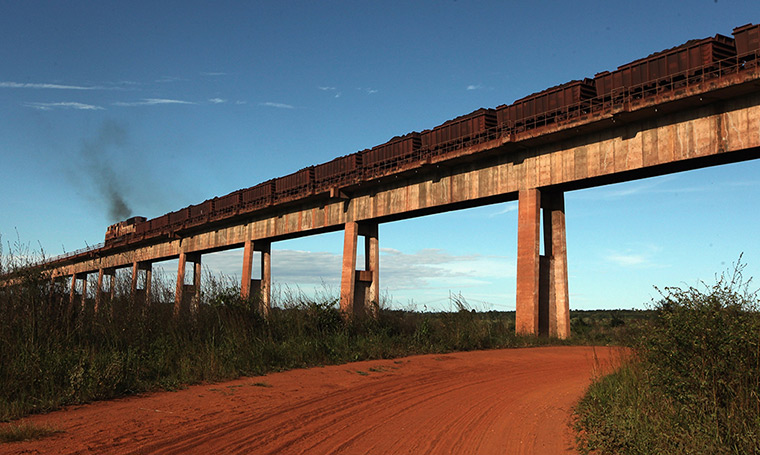
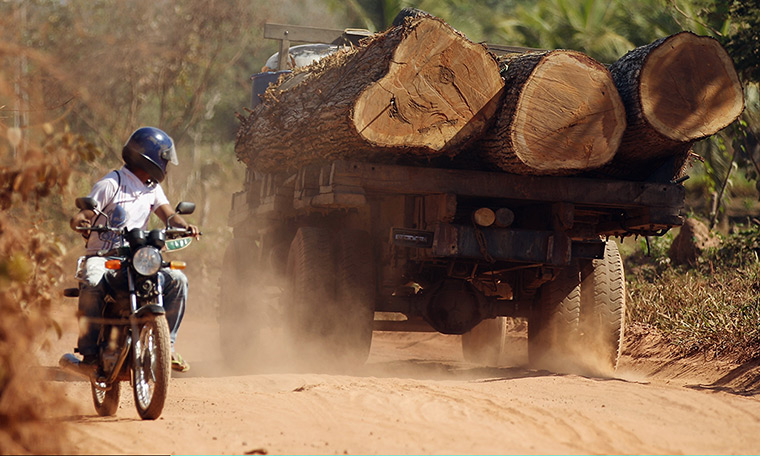
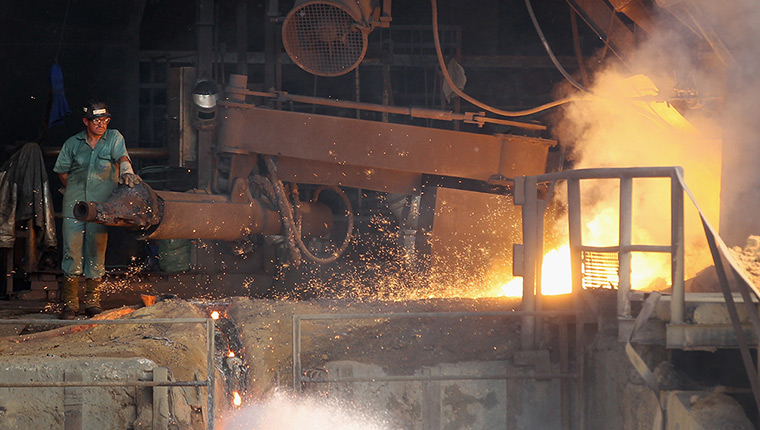
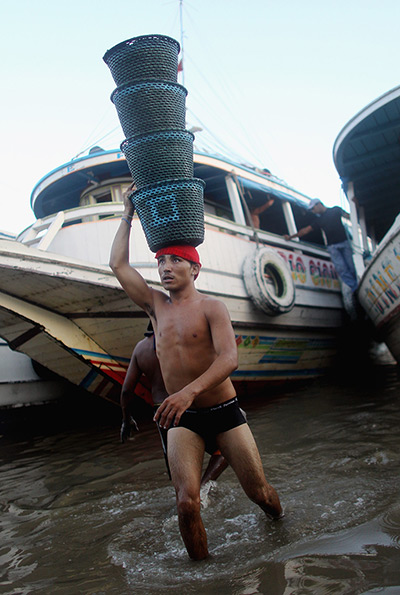
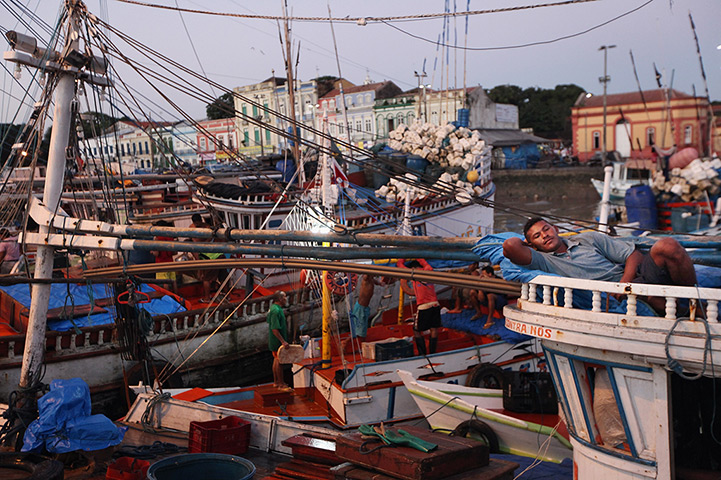
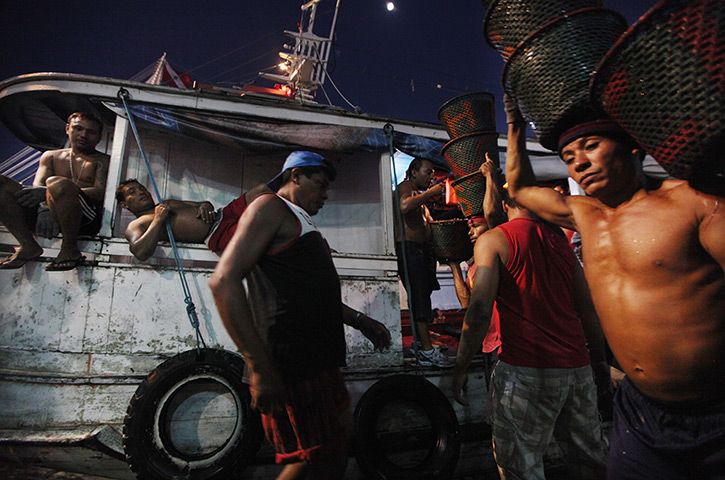
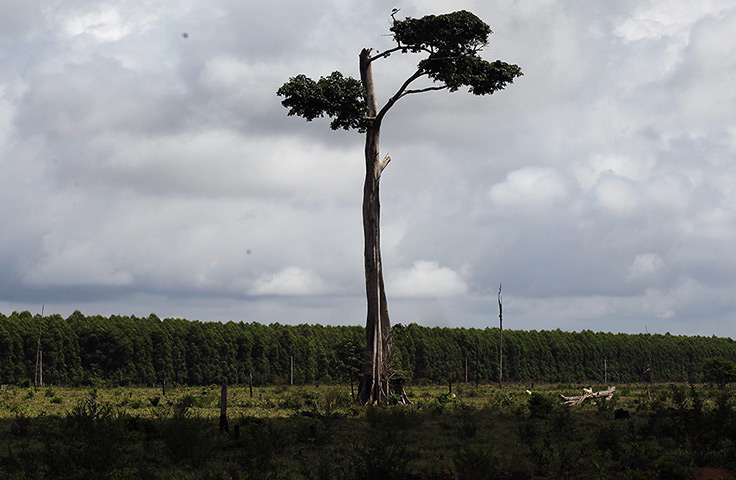
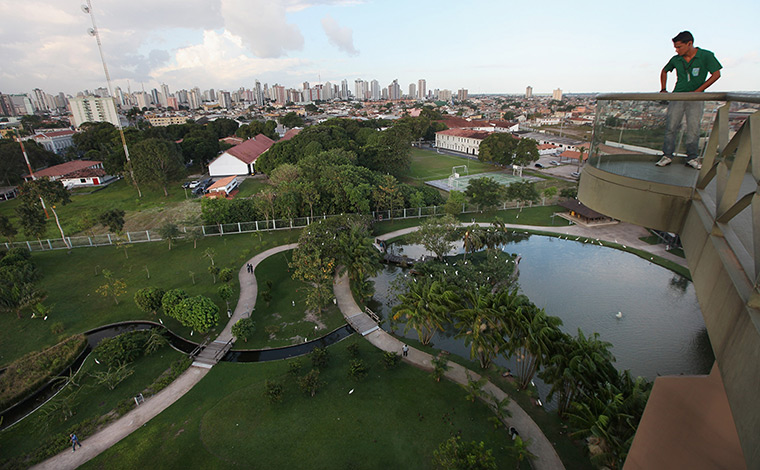
A worker's back covered in charcoal. According to a recent Greenpeace study, illegal wood charcoal is primarily used in Brazil to power smelters producing pig iron, which is used to make steel for industries including US auto manufacturing. Illegal charcoal camps were found to sometimes result in slave labor and the destruction of rainforest on protected indigenous landsPhotograph: Mario Tama/Getty ImagesA worker carries a basket of charcoal. The workers in said they were paid $40 per truckload of charcoalPhotograph: Mario Tama/Getty ImagesA worker hauls a basket of charcoal produced from illegally harvested Amazon rainforest wood onto a truck in Rondon do ParáPhotograph: Mario Tama/Getty ImagesA worker douses himself with water while taking a break from loading charcoal in Rondon do ParáPhotograph: Mario Tama/Getty ImagesA deforested section of Amazon rainforest in Pará statePhotograph: Mario Tama/Getty ImagesIllegal burning clears bushes and small trees in order to clear land for agriculture in an already deforested section of Amazon rainforest in MarabáPhotograph: Mario Tama/Getty ImagesA train operated by Vale, a mining company and Brazil's biggest exporter, crosses a bridge in Açailândia. The railroad transports iron ore from the world's largest minePhotograph: Mario Tama/Getty ImagesA man on a motorbike looks at a truck as it transports illegally harvested Amazon rainforest logs near protected indigenous land near the Araribóia Indigenous Reserve, Maranhão state. Guajajara tribe members on the reserve say their forests are being plundered by illegal loggersPhotograph: Mario Tama/Getty ImagesA smelter produces pig iron fired by charcoal produced from illegally harvested Amazon rainforest wood in AcailandiaPhotograph: Mario Tama/Getty ImagesA worker offloads baskets at the historic Ver-el-Peso market in Belém. Belém is considered the entrance gate to the Amazon and for more than 300 years and is the main port for international shipping in the AmazonPhotograph: Mario Tama/Getty ImagesA fisherman rests on his boat docked at the historic Ver-el-Peso market. 'Ver-el-Peso' means 'see the weight' and was named after the colonial Portuguese mandatory weighing of merchandise to be taxedPhotograph: Mario Tama/Getty ImagesWorkers offload baskets of acai berries before sunrise at the historic Ver-el-Peso market. Fishermen and others who make their livelihood on the waters of the Amazon basin face a variety of environmental hazards including pollution from mining, agricultural runoff and silting of the waters caused by deforestationPhotograph: Mario Tama/Getty ImagesA teenager jumps into the water in front of a railroad bridge operated by Vale, a mining company and Brazils biggest exporter in AcailandiaPhotograph: Mario Tama/Getty ImagesA lone tree stands in a deforested section of rainforestPhotograph: Mario Tama/Getty ImagesA man looks down on an ecological park showcasing Amazonian foliage in BelémPhotograph: Mario Tama/Getty Images
Sign up to read this article
Read news from 100’s of titles, curated specifically for you.








.png?w=600)