
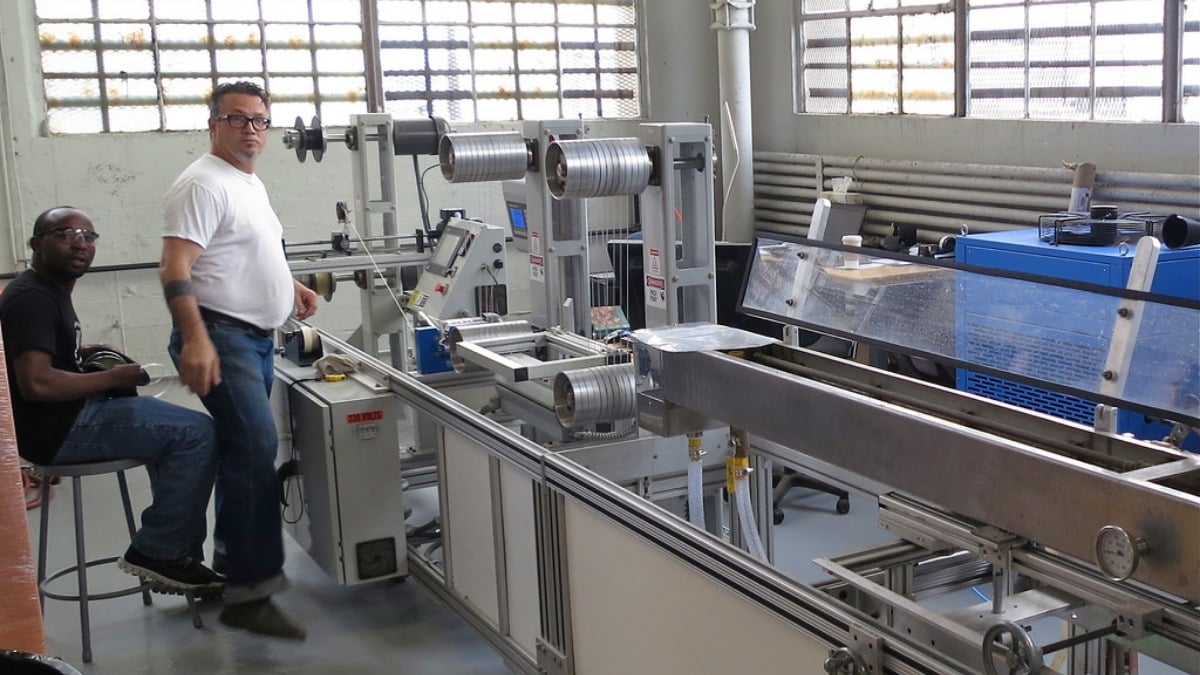
The U.S. has lost a staggering 89,000 manufacturing jobs since President Donald Trump’s administration announced its major tariff agenda in April 2025. This significant decline, detailed in a Center for American Progress (CAP) analysis released on March 17, 2026, also saw 123,700 transportation and warehousing jobs vanish, hitting industries that are particularly exposed to these trade policies.
Americans For Tax Fairness, in a March 30 post on X, called this situation a “rigged economy.” They pointed out that corporations often just pass on the higher costs to consumers or cut jobs instead of bringing production back home.
According to The Washington Examiner, Trump initially rolled out these tariffs, which he dubbed “Liberation Day” tariffs, on April 2, 2025, with a clear promise: to revitalize American manufacturing, bring jobs back to the country, and ultimately lead to stronger competition and lower prices for consumers. He believed that by making imported goods more expensive, domestic manufacturers would gain an advantage, encouraging investment in new factories and operations.
Trump really thought he was on to something with the ‘Liberation Day’ tariffs
However, the data from the Bureau of Labor Statistics tells a different story, with manufacturing employment actually falling in the year since these tariffs were put in place. Across Trump’s entire time in office, we’ve seen a loss of 100,000 manufacturing jobs. One of the big problems, as many experts see it, is that these tariffs, while meant to protect domestic industries, have actually driven up the cost of raw materials for manufacturers here at home.
Sean Higgins, research fellow, Competitive Enterprise Institute, said manufacturing is “suffering from the fact that the cost of inputs has gone up, in other words, raw materials — and that’s a function of the trade wars.” For instance, tariffs on steel, aluminum, copper, and lumber mean that while a furniture maker might benefit from tariffs on imported furniture, that advantage can quickly disappear when they’re paying significantly more for the wood and metal they need.
Rep. Blake Moore, a member of the House Ways and Means Committee, echoed this, noting that higher input costs make it “more difficult to reshore in that situation.” Beyond just the direct cost increases, the constant back-and-forth with tariffs creates a ton of uncertainty for businesses.
Trump has surprised markets by imposing massive tariffs, only to sometimes scale them back later. Even when his Liberation Day tariffs were struck down by the Supreme Court, he quickly found other ways to reimplement them.
This kind of unpredictability makes it really tough for companies to plan for the future, whether it’s investing in new equipment or even just setting product prices, as Higgins pointed out. Dean Burrows, president and CEO of Gear Motions, a precision gear manufacturer, mentioned that this uncertainty leads companies to put “capital investments on hold, especially if they source a lot of product internationally.”
Now, it’s worth noting that the U.S. has been losing manufacturing jobs for decades, a trend economists often link to automation and globalization. But Trump specifically pledged to reverse this long-standing trend, putting a lot on the line, especially since surveys suggest voters aren’t too keen on higher tariffs.
Despite the current numbers, some argue that it’s too early to judge the tariffs’ full impact
Scott Paul, president of the Alliance for American Manufacturing, acknowledged the recent slide but pointed out that manufacturing numbers have been declining for “the last couple of years” and this predates some of the recent tariff increases. Nick Iacovella, executive VP, the pro-tariff Coalition for a Prosperous America, emphasized that reshoring complex industrial sectors like semiconductors isn’t an overnight process. He called it a “massive” effort and cautioned against quick judgments.
There are a few statistics that some proponents of Trump’s policies point to as potential early signs of a manufacturing turnaround. For example, job openings in the manufacturing sector have actually increased in recent months, with over 100,000 new openings from November 2025 to January, according to the BLS’s Job Openings and Labor Turnover Survey. This suggests that while hiring might not have caught up, the demand for workers is there.
Acting Council of Economic Advisers Chairman Pierre Yared also highlighted that manufacturing productivity saw its fastest growth in two decades last year under Trump and that the pace of job losses has slowed compared to previous administrations. He sees the effort to revitalize manufacturing as a three-pillar approach, combining tariffs with tax cuts and deregulation.
Additionally, indices of factory activity, like the Institute for Supply Management’s Purchasing Managers’ Index, have shown expansion in January and February of this year, indicating a potential uptick in the sector. Nicole Wolter, president and CEO of HM Manufacturing, observed a “noticeable uptick in purchase orders after Trump won reelection,” noting an “excitement that, OK, manufacturing is back.”
She also highlighted a growing skills gap, where the industry needs more skilled workers who can program and set up machines, rather than just “button pushers,” which contributes to the mismatch between openings and employment. Dean Burrows also noted “upward pressure on wages” as a challenge in filling these roles.
Have a tip we should know? [email protected]