Riot Games has rolled out the first-ever ban list for Riftbound, targeting a set of overperforming cards and strategies that quickly came to define the game’s early competitive meta at events.
The update removes seven cards from Standard Constructed, including four normal cards and three battlefields, as part of an effort to restore balance and improve gameplay experience.
The bans arrive at a crucial stage for Riftbound, with several archetypes already proving “more prevalent and stronger than we’d consider healthy,” according to the developer. While the developer acknowledged that bans are not something it takes lightly, it emphasized that its approach has always been to do what it believes is best for Riftbound’s players, even when it’s difficult.
Miracle decks and Draven builds lead early dominance
Much of the update is aimed at dismantling Miracle decks, Chaos-based strategies that rapidly cycle through their deck while playing multiple undercosted units in a single turn. Riot said these decks had been “highly successful,” but also led to issues beyond raw power.
“These strategies have proven highly successful, and they take a large amount of game actions that take a very long time to execute,” Riot said. “In tournament play, these decks have also contributed to significant round delays.”
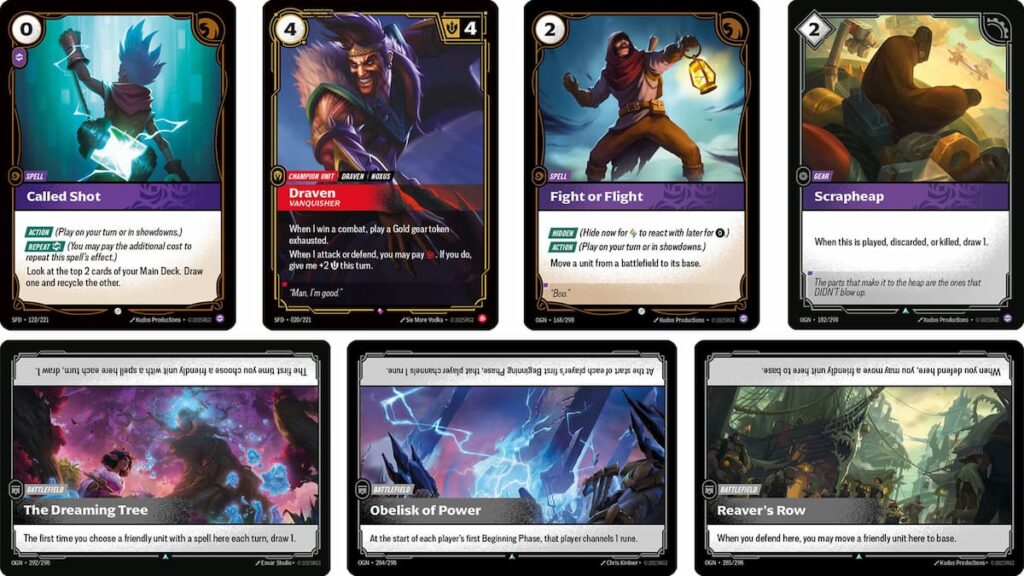
To address this, Riot has banned Called Shot and Scrapheap, two cards that enabled players to filter through their deck while gaining resources too efficiently. The developer added that as the card pool grows, “cards that support this type of strategy will only become more powerful,” reinforcing the need for early action.
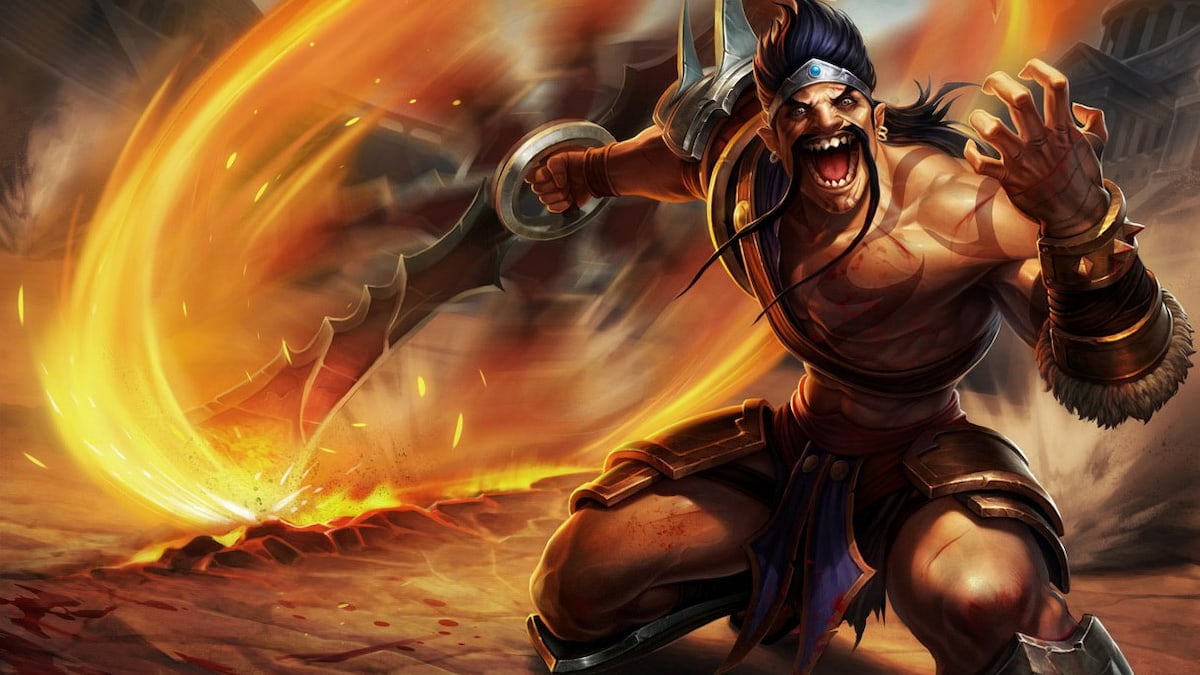
Draven-based midrange decks were also singled out as major power outliers. The champion was introduced with the Spiritforged set. Rather than banning the Legend outright, Riot opted to hit supporting pieces instead. “To be clear, we made a mistake with Draven’s Legend, and the power of the Draven decks,” Riot admitted, noting the complexity of balancing a new game.
Draven has been banned to reduce the deck’s early-game pressure, while Fight or Flight was removed for being “best in class in too many scenarios,” giving Chaos decks too much flexibility in combat.
Battlefields removed for warping gameplay and deckbuilding
Three battlefields: Dreaming Tree, Obelisk of Power, and Reaver’s Row have also been banned due to their outsized impact on gameplay and deckbuilding. Riot said these maps had crossed the line from supporting strategies to “defining the game,” leading to repetitive and unhealthy play patterns.
Reaver’s Row was highlighted for promoting non-interactive gameplay, while The Dreaming Tree provided “an excessively high level of consistency” through its card flow. Obelisk of Power, meanwhile, reduced meaningful deckbuilding decisions by allowing players to bypass normal energy curve constraints.
Alongside the changes, the developer outlined its broader philosophy on balance, confirming it prefers bans over more complex interventions. “It’s also important to us for clarity that whatever intervention we make… is straightforward to describe, ‘you can’t play that anymore’ is a lot clearer and simpler,” the developer said. They also noted it does not plan to rely on restrictions, warning that limiting cards can “make the problem sharper” by increasing randomness.
The developer’s firm stance on bans over reactive balance changes also reflects Riftbound’s physical design constraints. In our interview with executive producer Chengran Chai, he noted that “everything we put out into the world more or less is permanent,” adding that “once a card is printed, there is no way for us to hotfix a card.”
Riot relies heavily on “rigorous competitive balance testing internally” and long-term planning, with multiple sets developed in parallel, allowing future releases to naturally address dominant strategies rather than rewriting them after the fact. That philosophy is already reflected in this first ban wave, which prioritizes long-term health over short-term fixes and sets the tone for how Riftbound’s competitive meta will evolve moving forward.
With this first wave of bans, Riot hopes to curb the dominance of Miracle and Draven strategies while opening the door for a more diverse and competitive meta.