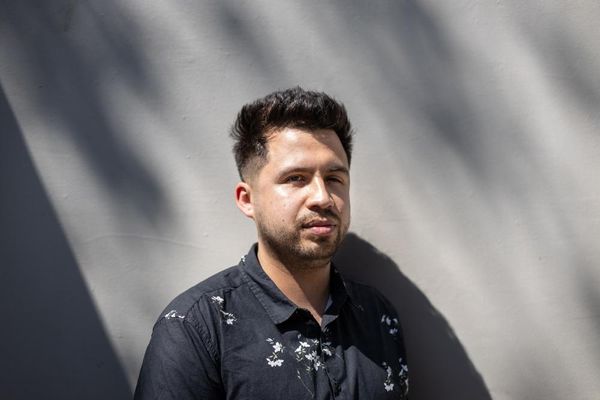
My friend and colleague Richard Noblett, who has died aged 70, was an expert on vernacular black music from the Caribbean.
He trained as a sociologist and was also an administrator in the police force, but from 1969 onwards he earned his living in education, teaching until 1996 at the various incarnations of Brixton, Lambeth and Vauxhall colleges, before taking early retirement.
He also occasionally worked in the folk department of Collet’s record shop in Shaftesbury Avenue, central London, and more regularly at its successor Ray’s Jazz Shop in the same location.
The son of Frank Noblett, a car salesman, who died when Richard was six, and his wife, Joan (nee Hale), a seamstress, he went to Battersea grammar school and gained his degree in sociology at Regent Street Polytechnic (now the University of Westminster) and took his master’s in education at Garnett College, in Roehampton, south-west London.
Richard was one of a group of enthusiasts for black American folk music who began documenting the genre in the 1960s. His accomplishments included an interview with the guitar-playing evangelist the Rev Gary Davis and a major study of the black American folk hero Stavin’ Chain. His interests in vernacular music included popular styles from diverse traditions many of which were represented in releases dating from the early days of the 78rpm record.
His focus on the English-speaking Caribbean (including Guyana) was his principal contribution to the history of popular and folk music and its performers from the region. He was skilled at researching on artists and recordings using local newspapers at the British Library, government documents and travelogues.
Such work led to a number of pioneering essays in the 316-page book published on the release, by Bear Family Records, of a compilation of calypsos recorded by American Decca in Trinidad between 1939 and 1940, called West Indian Rhythm (2007). At the time of his death, we were working together on a similar, large-scale project covering the New York recordings by the same performers between 1934 and 1945.
His topics ranged from 50s Jamaican mento, recorded on location, to London calypso and other Caribbean styles performed by migrants during the same period. He had a special interest in Guyanese music from the 30s and a keen understanding of the calypsos composed by Trinidadian singers who documented the second world war.
In 1981 he married Mandi Hassan; the couple divorced in 1994. He is survived by his daughter, Karrimanissa, and son, Frank, who looked after him while he was suffering from multiple sclerosis.