My friend Richard Brown, who has died aged 79, left behind him two widely praised legacies: uplifting education in prisons, in his 30-year career based largely at Holloway and Pentonville, in London; and, in his retirement in St Albans, his contribution to the the cultural life of the city.
His biggest achievement, in the 1970s, lay in ending the strict Home Office rules that prevented teachers from keeping in touch with prisoners on their release. Richard discovered that those staff were not Home Office employees but that of separate education institutes. The department conceded, and prison teachers were able to continue to help their proteges after release.
Born in Ilkley, West Yorkshire, to Celia (nee Miles) and her husband, Thomas Brown, Richard was one of eight children. In 1945 his father moved the family to Bradford, bought a 21-room Victorian house, and was co-owner of a wool mill as well as running a wool-grading business. His father died two years later from cancer, when Richard was only eight, and the business collapsed. His mother suffered from a psychiatric illness and she was eventually moved to a hospital in York in 1954, where she stayed for 35 years until her death.
Richard had to leave school to help support the family. He worked at a bread factory, a paper mill and on an apprenticeship with the De Havilland Aircraft company, before returning to higher education, aged 24, to study for a diploma in philosophy, politics and economics at Ruskin College, Oxford. He then went to New College, Oxford University, to gain a full degree.
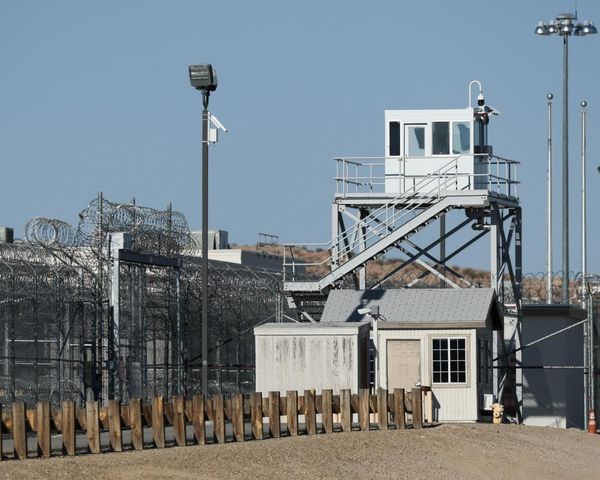
In 1973 he joined the prison education service as an hourly lecturer, and after three years was head of the department. He led a team covering both the Holloway women’s prison and Pentonville, for male offenders, and widened the remit to include practical skills such as healthcare and parenting as well as the more traditional studies. He brought a female chef into Holloway to run a cookery course.
On his retirement in 1982, he took on more challenges in his home city of St Albans, Hertfordshire. After advertising in the local paper for a meetup of those working at home in the arts, more than 100 arrived at a local pub, and so began the St Albans Creative Homeworkers Alliance.
In 2004, Richard helped to found Start (St Albans Art), to campaign for a cultural centre to be built. “St Albans has no core … We want to put the cultural heart into St Albans,” he said at the time.
While the group did not achieve its stated ambition of an “arts and entertainment complex complete with major theatre, cinema, art gallery, a museum with studios for artists, and grand piazzadesigned by an acclaimed architect”, it did create a momentum that led the council to offer up a renovated town hall, which now houses a museum, and there is also a new cinema in the city.
One other service to which Richard was dedicated was the Samaritans: every week for 15 years, Richard manned helplines through the night. He was also interested in metaphysics and scientific issues. His final book, Something to Believe (2013), explored these ideas.
He is survived by six of his siblings, John, Cicely, Tom, Molly, David and Charles.