Robert F. Kennedy Jr. said President Donald Trump’s willingness to acknowledge both Ukrainian and Russian casualties in the ongoing war makes him “an empath.”
During a Saturday interview at the Conservative Political Action Summit, the HHS secretary repeatedly praised Trump for highlighting the human cost of armed conflict, as thousands of U.S. troops were deployed to the Middle East amidst the escalating war in Iran.
“President Trump is exactly the opposite of everything that I believed him to be,” Kennedy said on stage in Texas. “And I basically drank the Kool-Aid that he was this bombastic narcissist who didn’t read books, was ill-informed.”
“You’ll see that every time he talks about the Ukraine war, he talks about the casualties on both sides,” the secretary added. “You will not hear any Democrat ever talk about that. And he talks about the Russian kids who are dying. He gets the reports every week, and they make a huge impression on him about the death rate.”
Since taking office, Trump has repeatedly tried to resolve the conflict he once vowed to end within 24 hours on the campaign trail, when he styled himself as the “candidate of peace.” He’s hosted diplomatic summits with Russian President Vladimir Putin and Ukrainian President Volodymyr Zelenskyy, which have so far proved unsuccessful.
The European war has now ground on for more than four years — following Putin’s February 2022 invasion — leading to the deaths of 325,000 Russians and 140,000 Ukrainians, according to a recent estimate from the Center for Strategic and International Studies.
“A thousand kids a day are dying,” Kennedy said. “He understands that these are people’s children.”
During the same interview, the HHS secretary also spoke about Trump’s handling of the war in Iran, this time commending his apparent deep knowledge of the region.
“One time, he grabbed a placemat, turned it over, took a Sharpie, and drew a perfect map of the Middle East,” Kennedy claimed. “Then he marked the troop strength of every country along each border on that map. It challenged a lot of the assumptions I had been told about him.”
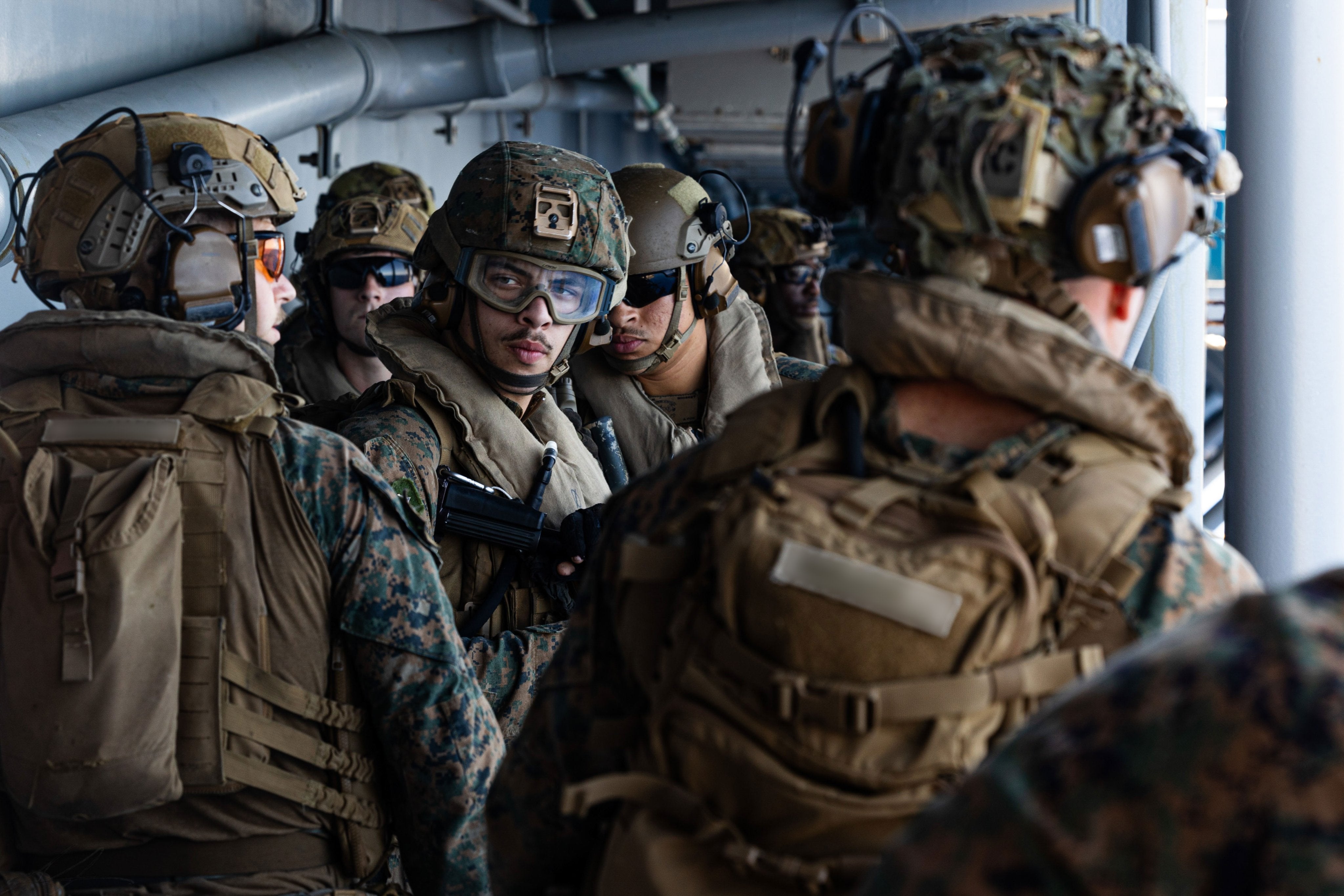
The Iran war, which has engulfed large swaths of the region in violence, has now stretched into its second month, showing no signs of abating.
The U.S. has struck more than 15,000 targets in Iran, the Pentagon has said. Last week, Trump promised to “keep bombing our little hearts out” if a peace deal cannot be struck with Iran’s leaders, whom he has described as “evil.”
Tehran, which has described the war as illegal, has retaliated by bombarding numerous nearby nations with missiles and drones, including Israel, Qatar, Kuwait, and Saudi Arabia.
To date, more than 1,500 Iranians have died, including at least 175 killed in a strike on a girls’ school near the Strait of Hormuz, Iranian officials have said. Thirteen U.S. service members have been killed, according to the Pentagon.
Trump has offered no clear timeline for when the war will be resolved, and recent developments indicate the U.S. may be preparing for a protracted campaign. On Saturday, U.S. Central Command announced that about 3,500 Marines and sailors had arrived in the region.
Multiple recent polls show that the majority of Americans do not support the war.
Fifty-nine percent of respondents in a recent Pew Research Center survey said the U.S. made the wrong decision by using military force in Iran, while just 38 percent said it made the correct choice. At the same time, 65 percent of Americans believe Trump will launch a ground war in Iran, according to a March 19 Reuters survey. Just 7 percent support this idea.
Israeli police prevent Catholic leaders from celebrating Palm Sunday Mass at Jerusalem church
CPAC voters pick between Vance and Rubio for 2028 presidential nominee in straw poll
Pope Leo condemns Trump over Iran war in thinly veiled Palm Sunday message
When TSA agents will be paid and what it means for airport wait times
Anger at Iran War is growing among ‘more right-wing’ White House staffers: report
Calls for investigation after well-timed trades anticipate Trump’s announcements