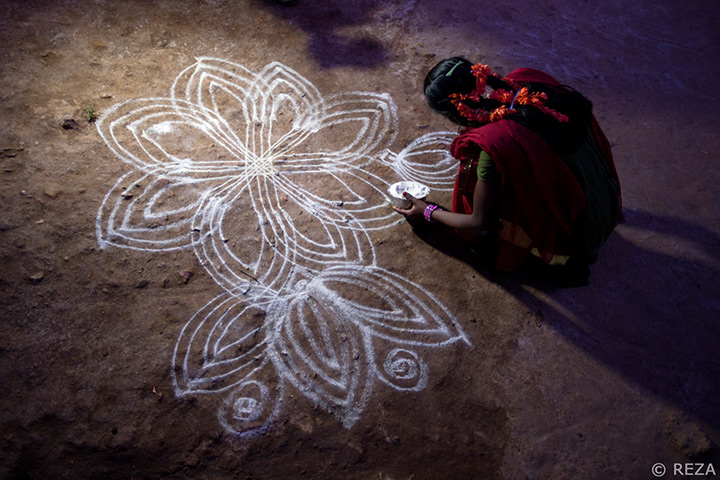
At dawn, this small village and its lines of houses come to life with the whisper of the women’s saris as they emerge from their homes. Each woman performs a ritual that is passed down from mother to daughter. She starts her drawing with the white powder at a particular point and delicately improvises her way down, creating a beautiful pattern. The drawing fades during the day, while bringing good luck to pedestrians as they pass by. The next day, the ritual is repeated Photograph: REZA
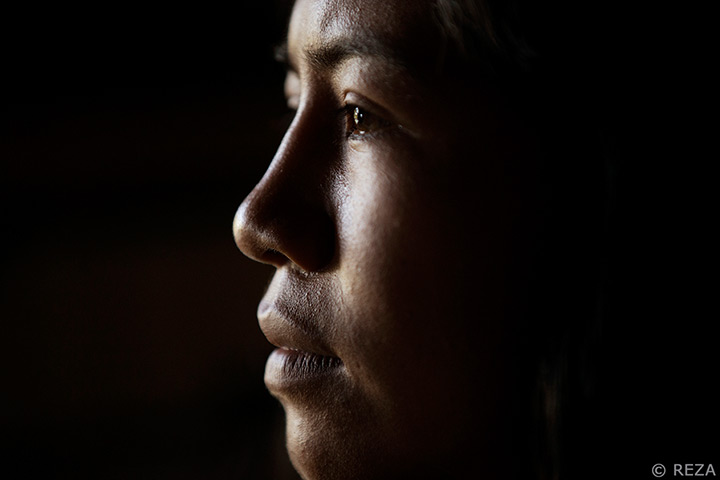
This is Gerardina Caldon, a member of Buscando Futuro – an association of female farmers and plantation owners who grow their coffee on small plots of land in Colombia. Most of them have lost their husbands, their fathers, their brothers, often in tragic circumstances. The upheavals of Colombia’s history have deeply affected the lives of these women, who have learned to fend for themselves by working in coffee cultivation Photograph: REZA
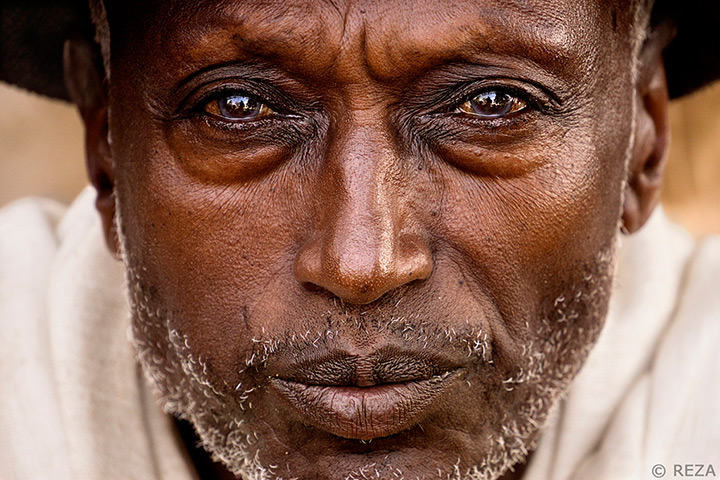
Some say the cultivation of coffee originated near the Nile river. In Ethiopia, Nespresso’s sustainable development programme is still in its early stages but those receiving the coffee company's AAA label are guarantees them a stable income Photograph: REZA
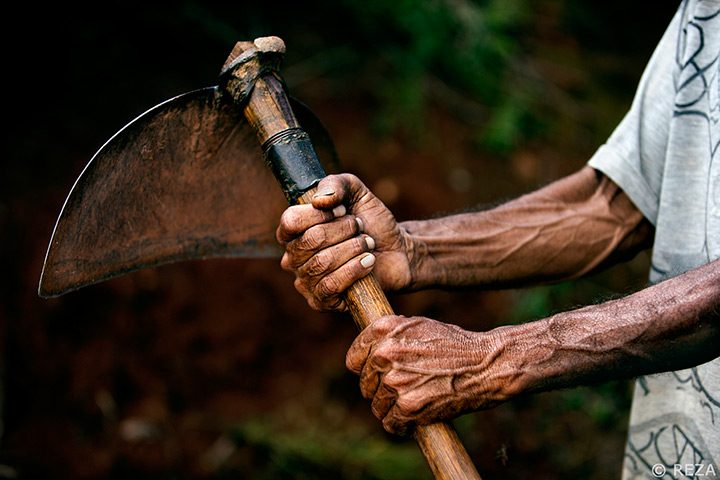
Reza travelled in six countries in four months. From India to Colombia, Brazil to Guatemala, Ethiopia to South Sudan, he shared moments with farmers, coffee producers, and owners, while also spending time with agronomists, technicians, tasters and engineers. Throughout his journey he focused on the tools, which change from one country to another, depending on the climate and the work conditions on that particular land, soil or coffee plant. In Brazil, a man stopped digging for a moment to show me this tool Photograph: REZA
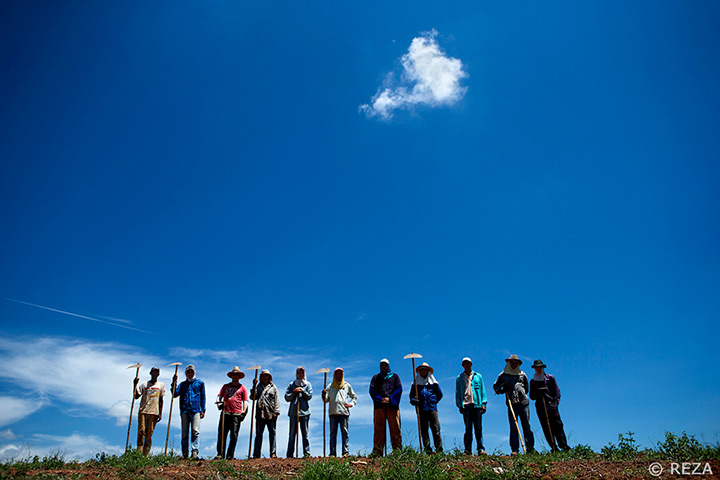
Brazil is a leading coffee producer. It was a day of celebration on São Roque Curitiba Mariano’s plantation when the Rainforest Alliance certificate was delivered. We encountered these men, who repair the damage caused by rough weather conditions and natural disasters. A torrential downfall of rain had recently washed away the planted coffee seeds Photograph: REZA
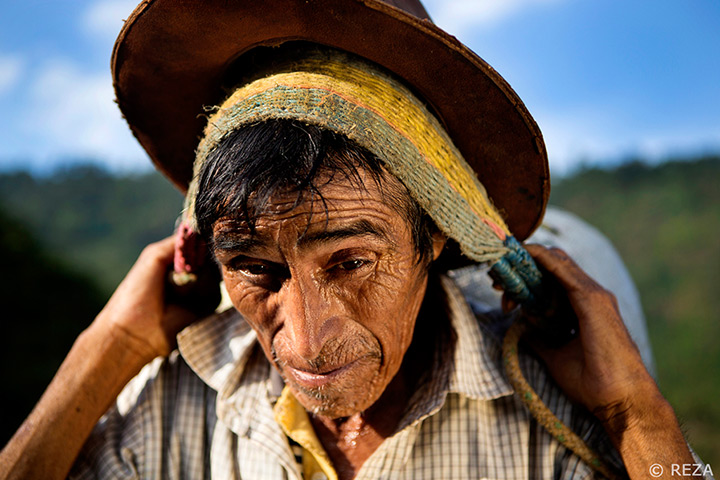
Tied to this man’s head is a strap supporting at least 60 kilos of coffee cherries on his back. The moment they release the burden, which is then weighed, they return down the slopes in search of another bag to fill. The sun begins to set during the last trip of the day, and in turn the men also settle. The families return to their shacks built by Ariel Palacios and his two sisters, who have inherited not only the plantation but a love for coffee and those who cultivate it Photograph: REZA
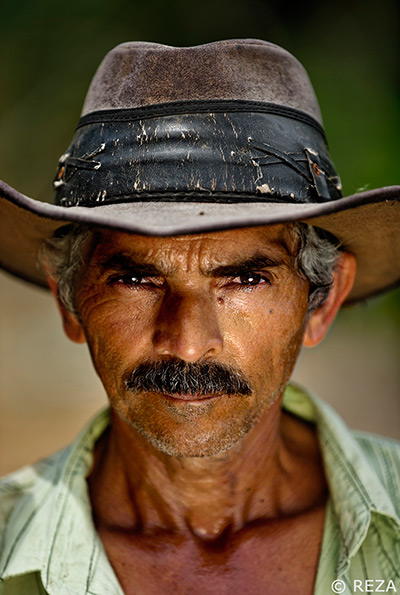
On the Brazilian plantation of Campestre, the farmers depart by bus in the early hours of the morning to head down to the coffee fields. Eight hours pass by under the blazing sun. At night, completely worn out, fatigued and eager to be home, they return. Joao Aparecido Leite, like his comrades, spent the day preparing the soil around each coffee plants. 'Here, we do not work hard for survival, but we work hard to live a better life; that is what I’ve learned from working on this plantation.' Photograph: REZA