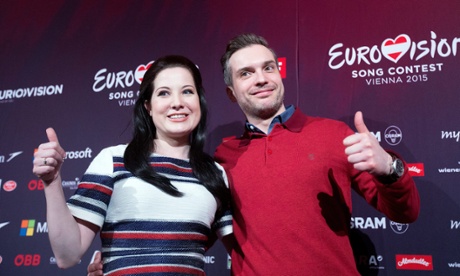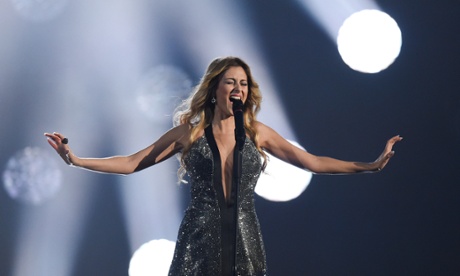
Let’s start by making one thing clear; the Eurovision Song Contest was created as a “light entertainment programme”, bringing countries together, and has a strict policy against political content.
“No lyrics, speeches, gestures of a political or similar nature shall be permitted … No messages promoting any organisation, institution, political cause or other, company, brand, products or services shall be allowed ... A breach of this rule may result in disqualification.” - 1.2.2.h, Public Rules of 60th Eurovision Song Contest (pdf).
Many entries in the past have walked pretty close to the line with this rule. There was Ukraine’s 2007 entry Verka Serduchka with Dancing Lasha Tumbai, sounding almost like “Russia: goodbye”, and San Marino’s The Social Network Song of 2012, about a website which rhymed with “look”. Not to forget Georgia’s We Don’t Wanna Put In by Stephane & 3G, which sounded suspiciously close to “we don’t want a Putin” when performed in Moscow in 2009.
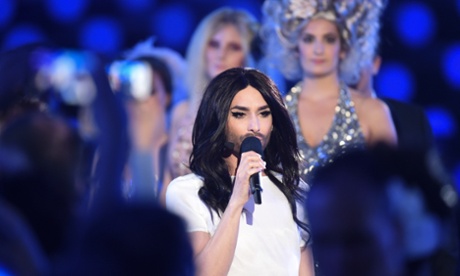
So just how political does 2015 get? There aren’t any obvious cheesecake songs or Russian grannies (Graham Norton won’t be happy) but instead a bleak display of tracks steeped in black; Eurovision has gone serious. The mood could be a response to the theme “building bridges”, set by last year’s winner, Austria’s Conchita Wurst, but much also speaks in favour of bigger, underlying issues.
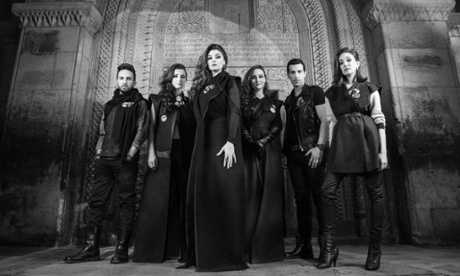
Armenia is represented by Genealogy, a group of singers from six different countries. Officially promoting peace, unity and love, their track Face the Shadow was criticised when it first appearedunder the title Don’t Deny, and it had to be renamed when the organisers deemed it too political. Why?
2015 is the 100-year anniversary of the Ottoman Empire’s mass murder of 1.5 million Armenians, an event which many countries, including Germany and France, have recognised as genocide but which Turkey (as well as the US and UK) contests. Genealogy’s lyrics continually repeat the words “don’t deny” and the official video features a family portrait that slowly becomes empty. Is it about love, or about murder?
An entry with a more obvious agenda is Romania’s entry Voltaj and De La Capat/All Over Again. Working with child protection charities, they are raising awareness for children left behind by parents working abroad. The message will no doubt hit home with the many Europeans who have seen an influx in foreign-born workers. What do people sacrifice to create a better life for their families?
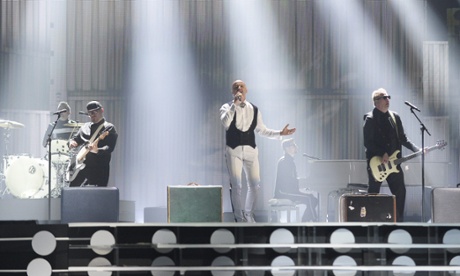
Hungary’s Wars For Nothing is a dystopian view of the world if ever there was one. “Do you know our world is a mess … it never ends,” sings Boggie and her message should make even the most raucous Eurovision party reflect. Here’s hoping she’ll be able to return with a more positive message one day.
It is hard not to read Greece’s entry One Last Breath, allegedly about a divorce, as a comment on the country’s on-going financial troubles. “Come back and save me,” sings Maria Elena Kyriakou – although she is one of few women pleading for help this year.
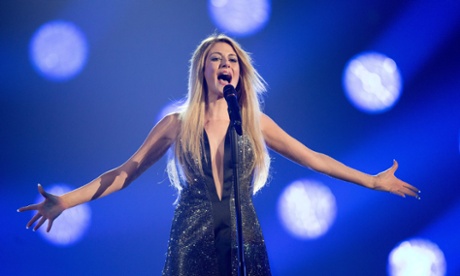
Both Georgia and Malta are sending black-clad women singing songs called Warrior, while Iceland’s María Olafs says she is Unbroken and Switzerland’s Mélanie René chants about her Time to Shine. “I’ve been in danger for too long,” “I had no choice but to become a warrior”, “One step at a time out of the darkness,” and “The sky’s the limit” is the message that emerges. Are women across Europe thinking of revolution – or preparing for war?
The songs that do have a more traditional message of reciprocated love stand out like a sore thumb. Look at Lithuania, or Russia. Polina Gagarina sings A Million Voices, a gorgeous song with lyrics that fit this year’s theme but that some may feel contradict current Russian policies.
But it’s not just other countries that get accused of secret lobbying. Is it too much of a stretch to suggest that the UK’s Electro Velvet are preparing for the upcoming referendum by almost-singing Still In Love With EU?