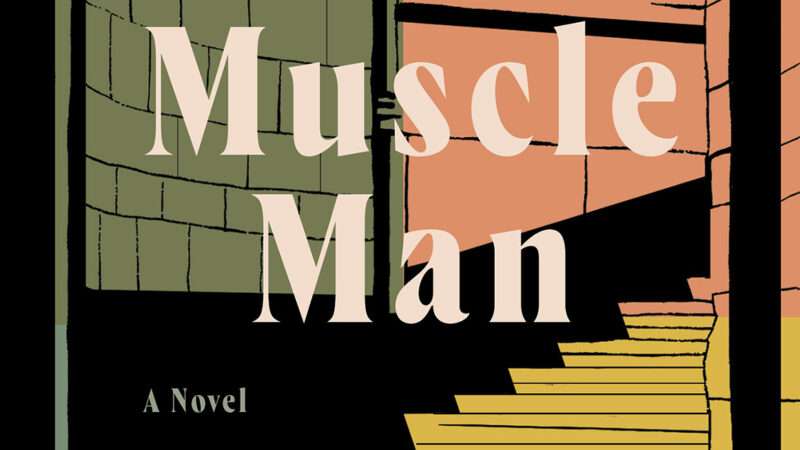
In the years since the pandemic, weightlifting has frequently been associated with right-wing and even neofascist politics. In the media, guys—and it's always guys—who lift are regularly portrayed as authoritarian thugs, toxic dudes, and MAGA maniacs, or worse. "Getting fit is great," reads a 2024 Guardian headline, "but it could turn you into a right-wing jerk."
So it's not surprising to see Jordan Castro's new novel, Muscle Man, hailed as a literary response to the gym bro–ification of the right. But Castro's story is trickier, subtler, and funnier than any thinkpiece about the manosphere's favorite workout regimen.
The book's main character, an English professor named Harold who teaches at a small liberal arts college, feels stifled by wokeness, fatness, femininity, social media, and bureaucratic machinations at his college. The conformist pressure is almost Orwellian, and the book's ending nods to 1984.
Yet Harold himself is no exemplar of masculine excellence. He's a neurotic head case, obsessively in his own thoughts, which he often renders as an imaginary podcast in which he expounds expansively on the world around him. He's a permanent guest on a show that runs entirely in his own head.
Castro excels at rendering the interior monologues of today's elites, the trains of paranoid, self-aggrandizing thought that chug relentlessly through the minds of wannabe tastemakers. Harold spends most of his time judging everyone around him, critiquing their personas, their politics, their mere presence. He's attracted to lifting because it offers another vector by which to judge others—their bodies—but mostly it's a reflection of his own psychological frailty.
The bodily purity of pumping iron, Castro seems to suggest, is at best a salve for mental instability, an escape from the brutal pressure of thought. Lifting, contra The Guardian, might be the one thing that helps make Harold a little less of a jerk.
The post Review: A Novel About Masculinity and Weightlifting appeared first on Reason.com.