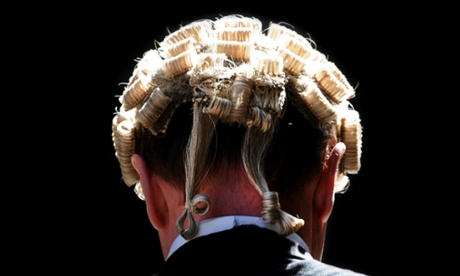
Normally anything as humdrum as the annual election of the governing council of a local guild would pass as inconsequential. Not the 2014 election for the council of the NSW bar association, which has seen the old order swept from control of the barristers’ union in favour of a ginger group pledged to restore the ornamentation of Queen’s counsel.
The outgoing council opposed the restoration of QCs, but the rank-and-file clearly loved the idea of a return to the old silken adornment - or at least the choice between Queen’s counsel or senior counsel. The Australian is reporting that “12 of the 21 available positions” have been seized by the monarchists.
The bar is wracked with division and plotting. Tickets for a new executive have been drawn up and redrawn. The monarchists are gunning for the executive director of the association, Philip Selth. Others in the new guard feel that the seizure of power has gone too far, while some incumbents who served on the old council have thrown in their lot with the barbarians who have stormed the citadel.
One of the issues that will be under consideration by the new bar council is the role of its professional conduct committees, and whether the bar association should be confined to trade union-style activities as opposed to acting as a regulator. If trade unionism is the preferred option, the bar would lose about $4m in statutory revenue and about half its staff.
There is now talk of calling an extraordinary general meeting to seek to restore a semblance of decorum.
The rallying cry for the new agenda was that SCs from Sydney faced unfair competition from newly plumed Queen’s counsel in Victoria and Queensland. It was also claimed that consumers were confused by the difference between SC and QC, that solicitors were branding themselves as “special counsel” and there was the additional worry that people might think SC stood for “star of courage”.
Further, SCs from Sydney are said to be suffering at the hands of properly festooned QCs from the UK, who are making a meal of the Hong Kong bar trade.
So with that thin veneer of reasoning the restorationists have taken control of the dominant bar in Australia, unified only on one point: bring back QCs with letters patent from the Viceroy.
It is unknown what members of the putsch think about a range of other policy issues affecting the work of barristers and their clients, like mandatory sentencing, bail laws, litigation reform, security laws, refugees, etc.
One of the organisers of the revolt wrote to members to say that you might not know or even like people on the QC ticket – but vote for them anyway.
The passion with which this single issue has consumed members of the guild has stunned the legal community beyond Phillip street. Unlike Queensland and Victoria, the reintroduction of the appointment of Queen’s counsel in NSW cannot to consummated with a wave of a monarchist attorney general’s pen.
It requires an amendment to a section of the Legal Profession Act, which prohibits official schemes for the recognition or status of lawyers. Lawyers are quite entitled to have their own vanity baubles, hence senior counsel appointed by the bar council itself.
The abolition of the appointment of QCs by the government followed an issues paper in 1992 from the attorney general’s department, which arose as a result of controversy surrounding the appointment of non-barrister attorneys general as Queen’s counsel. There were also studies by the NSW law reform commission recommending that the appointment of QCs be opened to litigation solicitors and legal academics.
In 1993 the Fahey Liberal government introduced legislation to reform the structure of the legal profession, which included a provision for the abolition of the appointment of QCs.
The then attorney general John Hanford said, “The government does not believe it is appropriate or relevant in today’s society to maintain a system of patronage for selected lawyers.”
The legislation was passed in November 1993. Now, an intensive lobbing campaign is to be conducted by the bar to unwind this reform and restore the royal decoration. It maybe an uphill battle persuading a government led by a premier who is an avowed republican to give Sydney silks back their “competitive edge”.
It also raises the dilemma of whether the bar can be truly independent if it is currying favour with the government for special privileges. The rot started in Queensland in December 2012, with the royalist Newman government reintroducing QCs - in fact all new silks in that state don’t have a choice, they are required to be QCs.
It was as a result of the changes in Queensland that George Brandis became a “QC”, having been added in November 2006 to the list of new SCs by the chief justice, Paul de Jersey, after the bar council failed to give him silk because he was by then a full-time politician. When QCs were introduced by attorney general Jarrod Bleijie, Brandis immediately traded in his SC for a bright, shiny “QC”.
This wave of self appointed monarchist adornments is a depressing spectacle for those hoping for a more confident, self-reliant, less class conscious Australia. The titles and flourishes that are dear to the heart of the prime minister have now caught on like wildfire in the courtroom advocacy business.