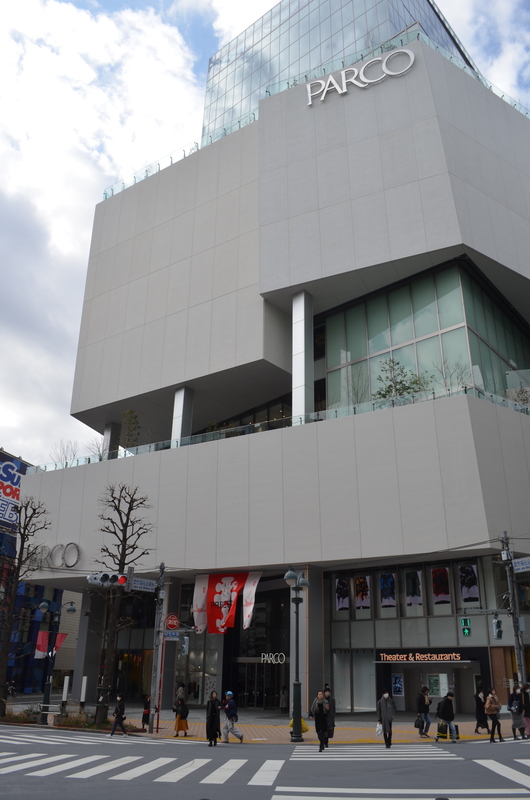
The redevelopment work in Shibuya, Tokyo, which centers around Shibuya Station, is touted as a once-in-a-century renovation.
In 2013, the Tokyu Toyoko Line, a commuter line that starts at Shibuya, was connected to the Fukutoshin subway line, which has stops at Shinjuku Sanchome and Higashi-Shinjuku stations. Since then, many Tokyu Toyoko Line users who used to get off at Shibuya Station began continuing on to Shinjuku instead.
Indeed, before the two lines were connected, 412,000 people got aboard trains at JR Shibuya Station daily in 2012, which made the station the third most-used station in the areas covered by JR East Railway Co., trailing only JR Shinjuku and Ikebukuro stations. In fiscal 2018, however, the figure dropped to 370,000, and JR Shibuya Station was sitting in sixth place on the table, behind Tokyo, Yokohama and Shinagawa stations. The past seven years have been a hard time for Shibuya, mainly because of the effect of the redevelopment work.
And finally, Shibuya is roaring back.
Most of the Shibuya redevelopment work is over, with Shibuya Hikarie completed in 2012, Shibuya Cast in 2017, Shibuya Stream in 2018, and Shibuya Scramble Square as well as Shibuya Fukuras in 2019. The work will be finished with the completion of Miyashita Park, a commercial and hotel complex on the site of the former park of the same name redeveloped by Mitsui Fudosan Co., and of the area around Shibuya Station's Sakuragaoka exit, which is scheduled to be completed in 2023.
The biggest draw of the redevelopment has been the renovation of the Parco shopping complex, which reopened in November at the site of the former Parco 1 and 3 buildings by Koen-dori avenue.
"We deliberately refrained from doing marketing research this time," said Takashi Sensui, a Parco executive in charge of the renovation work. "Even if we decided that our target customers are women enjoying fashionable lifestyles, something was not quite right, we thought. We asked people in many fields what they expected from and hoped for Parco. But at the end of the day, we decided to go on with our ability to deliver and believe our discerning eyes in the choice of merchandise."
His words are remarkably bold and aggressive, given the increasingly hard times in the market.
The policy is well reflected in the restaurant area called Chaos Kitchen on Parco's newly renovated first basement floor, which houses a variety of establishments. They include Campy!bar, a drag queen bar open until 5 a.m., and Kome to Circus, a restaurant serving game and insect dishes. Here is a pioneering spirit to introduce ordinary people to something unusual, even if they call it bizarre.
As for fashion, the new Parco offers a pleasantly surprising selection of shops in the Geyser Parco area on the third floor and the Port Parco area on the fourth floor, both designed to give opportunities to new brands and designers. The shops in the areas were chosen solely for being interesting and original, regardless of their size or name recognition. To be honest, they are not very profitable. Of course, more lucrative shops are placed in a well-balanced manner as well. Among them are Gucci, Loewe and other luxury brands on the first floor as well as the popular Mash Holdings Co. and a selection of brands affiliated with Baycrew's.
Meanwhile, the Parco Museum Tokyo on the fourth floor and Gallery X on the first basement floor inherit DNA from the first Parco, which opened in 1973 as a fashion building getting across messages on art and culture.
Effective use of digital technology is always a major consideration for newly constructed commercial facilities today. At the entrance of the Parco Cube section on the fifth floor, there are large panels on which merchandise data for the section's 11 shops are on display. As the signage is interfaced with the e-commerce sites directly run by each shop, the shops can reduce the amount of merchandise they stock even while preventing the loss of sales opportunities. Customers wishing to look at a product in real life can go to the shop in the section.
Since Parco reopened, the number of people coming to Koen-dori avenue is said to have more than tripled. It must be partly attributed to the reopening boom, meaning the true verdict on the renovation will be given from the second year onward. I hope to see the revamped Parco put up a good fight, because other commercial facilities today tend to be homogenized.
Miura is the editorial adviser of WWD Japan.
Read more from The Japan News at https://japannews.yomiuri.co.jp/