The idea came to Futoshi Nakamura in the aftermath of a devastating typhoon in October 2019 that damaged his house and apple orchard in Nagano City. Using branches broken off by floodwaters, he made a fire to bake sweet potatoes for volunteers to ward off the cold.
Could there be other ways to use unwanted wood?
Now, two years later, a movement among apple farmers in Nagano, as well as peach farmers in Fukushima City, to find a use for wood obtained from pruning trees has coincided with a boom in camping and other outdoor leisure activities.
With people taking to nature to get away from crowds during the coronavirus pandemic, firewood for bonfires and other purposes is in hot demand. In Nagano, the 40-year-old Nakamura is a member of a group involved in filling the void.
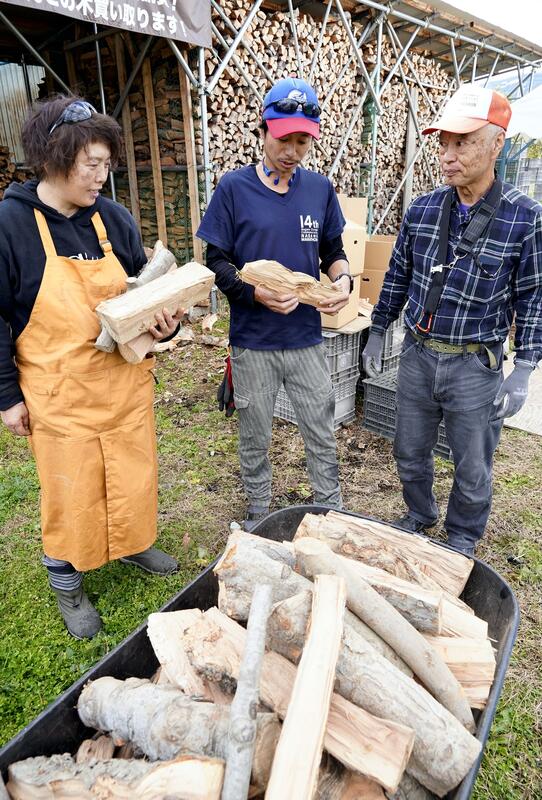
Every year, in addition to damaged fruit trees, pruning by fruit farmers produces unwanted trunks and branches. With the help of volunteers, Nakamura devised a system to buy the wood from other apple growers, process it into firewood and sell it.
Last summer, the group test-marketed 50 boxes of firewood under the brand name "Ringo no Akari" (Light of apples) at a camping supply store in the city. Each box contains 10 kilograms of firewood and sold for 2,000 yen. They quickly sold out.
Their product is more expensive than ordinary firewood, but as it comes from hardwood apple trees, it generates more heat and burns longer. Nakamura said it also emits a faint sweet smell while burning.
Once sales of the firewood started in earnest on the internet and other outlets, orders began continuously pouring in. He even receives an increasing number of inquiries from restaurants and others in the Tokyo metropolitan area looking for fuel for wood stoves.
Riding the tailwind of popularity in camping amid the pandemic, sales of the firewood for the past year reached about 50 tons.
The group purchases waste wood from about 60 local fruit farmers, providing them with a valuable source of additional income.
"Our next goal is to expand this cycle to the entire region," Nakamura said. "I'd like to work with other group members to create 'enriched agriculture' so that our community can continue to be an apple-producing region."
Peach trees in Fukushima
A similar enterprise has evolved in Fukushima City, whose local specialty is peaches. Last month, it launched a project to connect users both in and outside the city seeking firewood with fruit farmers who have trouble disposing of pruned branches.
In the system, both the users and fruit farmers register with the city's website, and users are provided with contact information of farmers in their area, then go directly to the farm to pick up firewood. There are no fees for either side. Registration is open until Jan. 26 next year.
According to the city's agricultural promotion division, more than 800 tons of pruned branches are estimated to be generated in the city every year. The farmers must either pay to dispose of it as "industrial waste," or crush and mix it into the soil.
The city came up with the plan to reduce the burden on farmers, but, at this point, most of the 70 or so registered parties are firewood users.
"There are many people who want to use it for camping or wood-burning stoves, and some have even registered from outside Fukushima Prefecture," a city official in charge said. "We'll make the project more widely among farmers in the new year to promote the effective use of pruned branches."
Read more from The Japan News at https://japannews.yomiuri.co.jp/