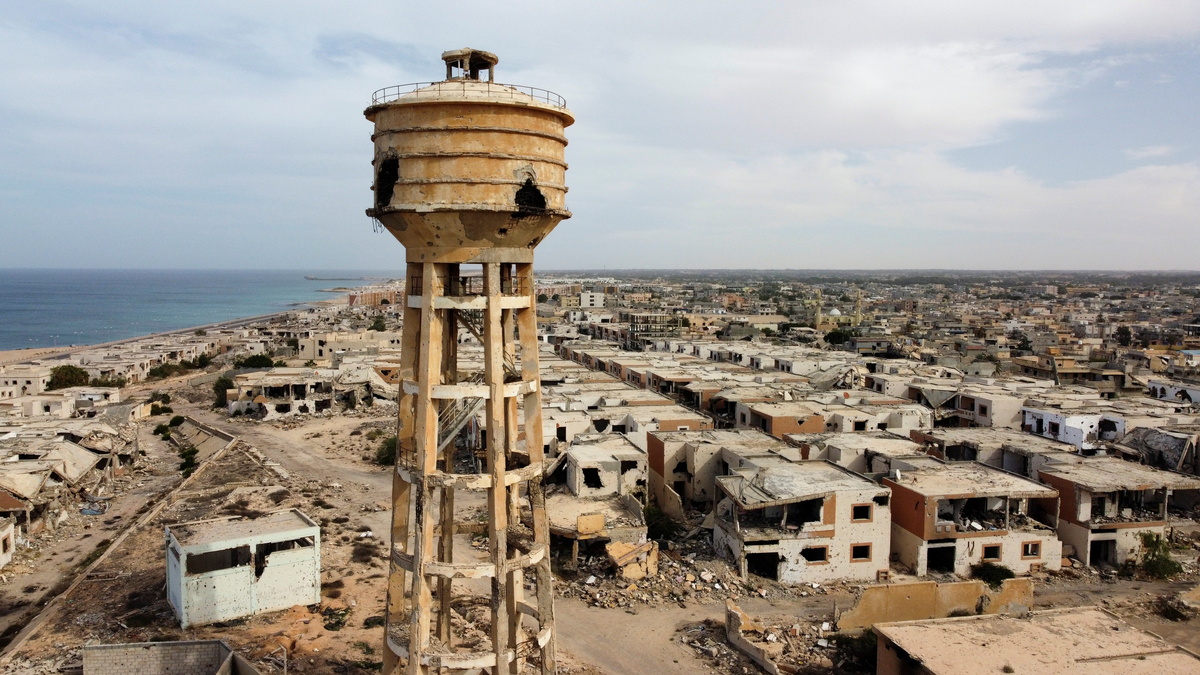
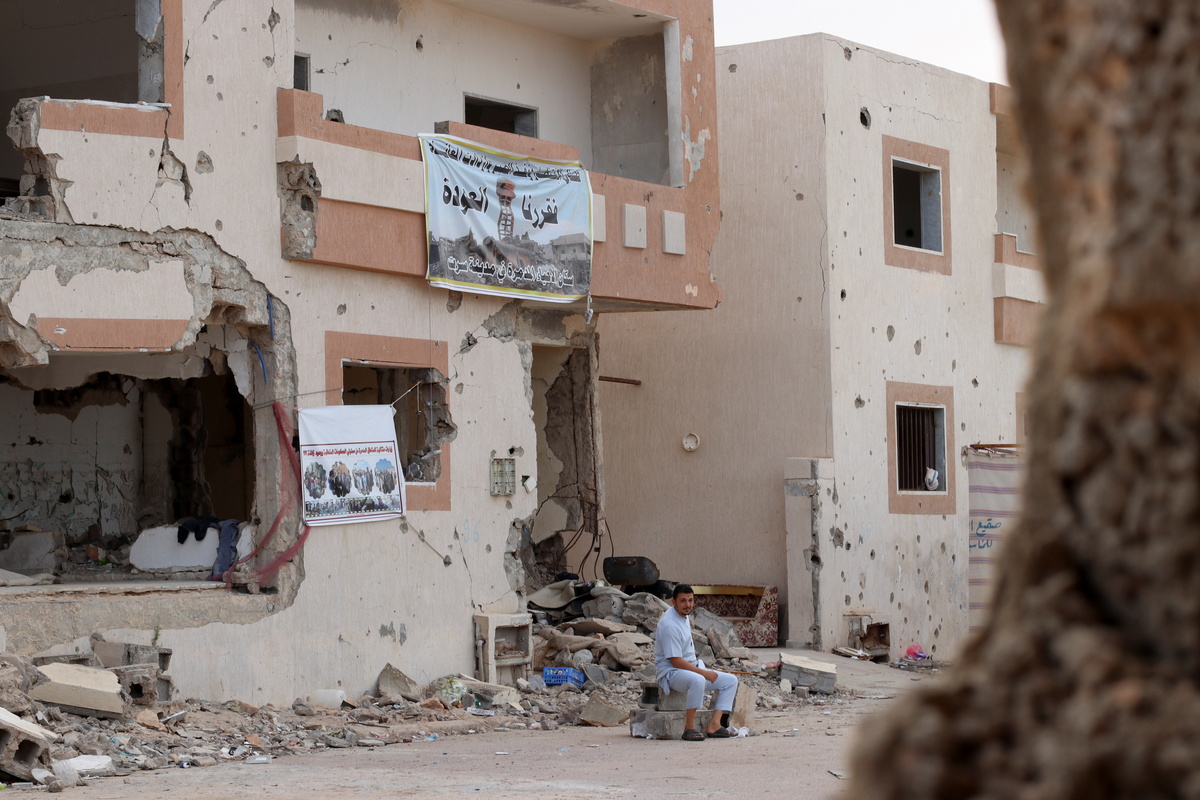
Displaced for years by war, the Mokhtar family is set on reoccupying their home in Libya's ruined city of Sirte but bitter that they are repairing the shell-cratered apartment with almost no help.
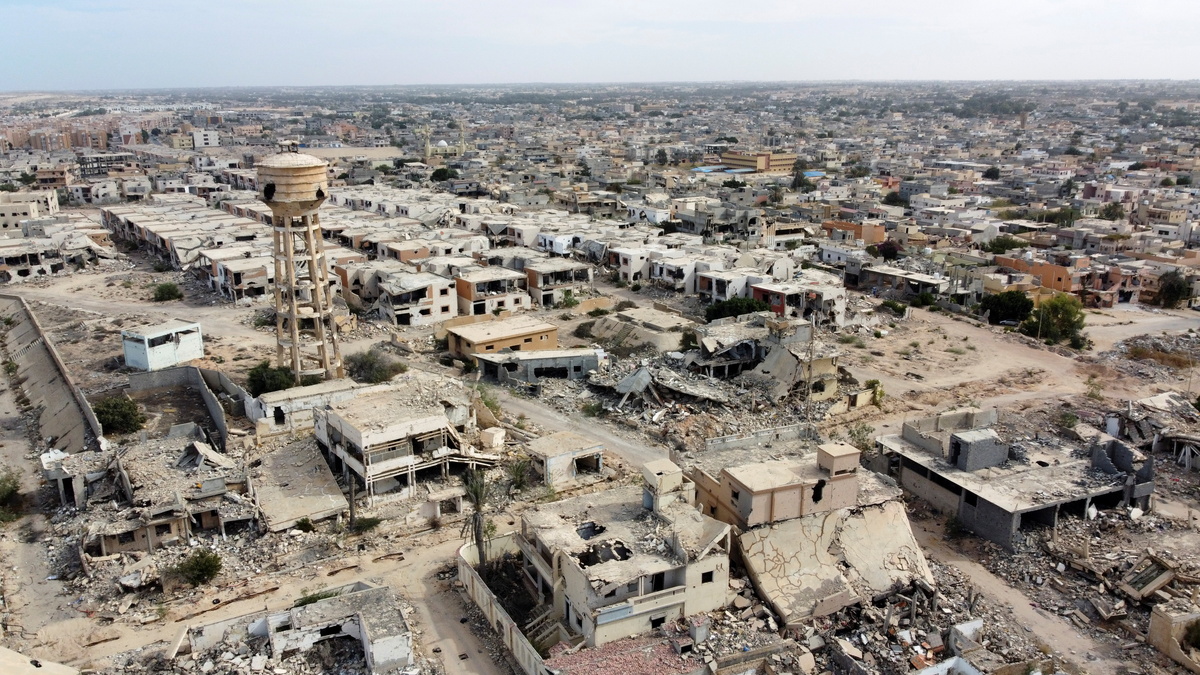
The central coastal city, once home to 80,000, was smashed repeatedly as it passed from one side to another in the decade of violence since the 2011 uprising against Muammar Gaddafi. More than 3,000 families fled.
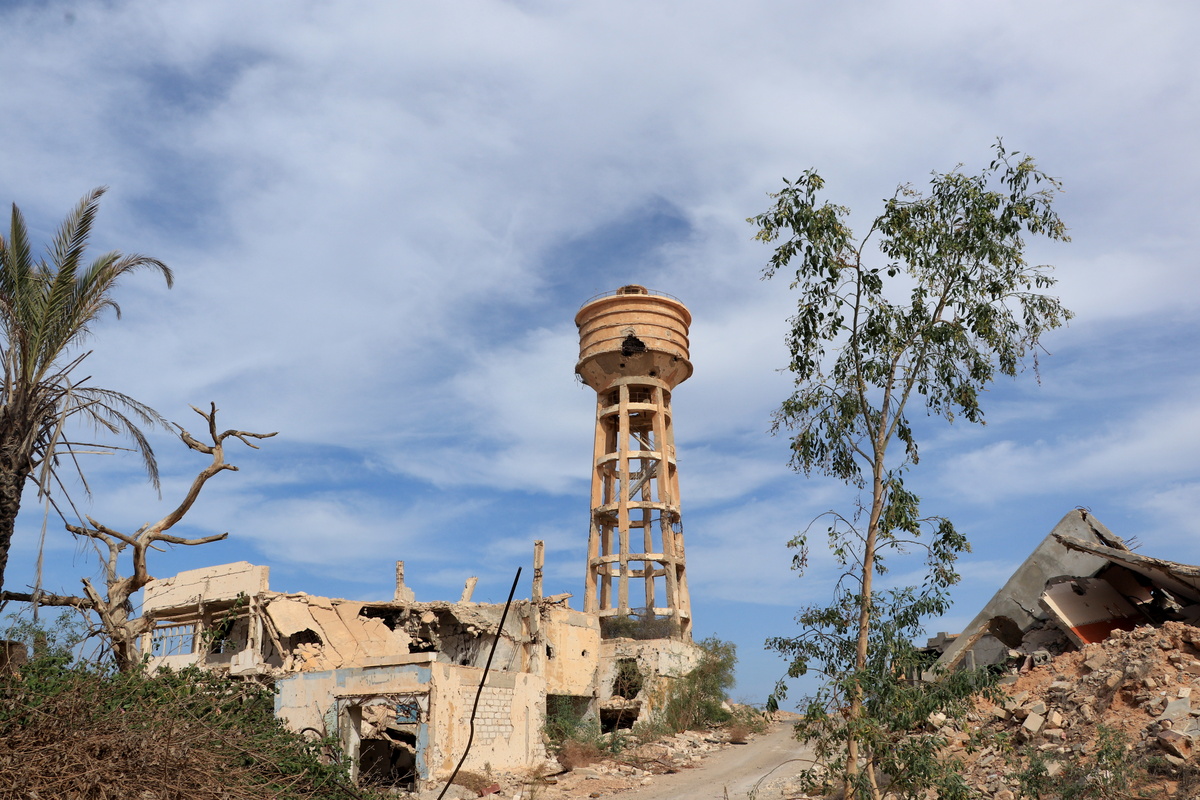
The Mokhtars are one of a dozen families now labouring to rebuild and repair in an area shattered by a battle with Islamic State. Four years after being cleared of IS gunmen, many buildings remain flattened, as if by a giant fist.
"I am in utter despair," Mognaiah Mokhtar said at the bullet-pocked building where she was working with her husband Abdallah. "They (the government) need to see the state we are in, they need to consider our circumstances."
"I am in great distress from the state that my home was in ... I am psychologically tired, to be honest."
Their plight underscores the importance for civilians of efforts to resolve Libya’s conflict that include an international meeting in Paris later this week and U.N.-backed elections called for the end of the year.
Armed with brooms, new mattresses, and bedsheets, they work day and night to make their home habitable.
With their 12-year-old daughter and 6-year-old son, the couple returned to Sirte in 2017, renting an apartment in one of the city’s less damaged districts with Abdallah's mother as well as his brothers and their families.
"RESOURCES ARE SLIM"
Four years on and now with a newborn baby, the pair are working to return to their two-bedroom apartment on a second floor of a now destroyed building in the Ghiza Bahriya district.
"We and our neighbours decided to return to our homes, to fix them in any way, and to try to live in them," Abdallah Mokhtar, a 42-year-old telecoms employee said.
Apart from 2,000 Libyan dinars ($440) given to each displaced family in 2019, there has been no significant state support to aid their return, he said.
"I feel great disappointment in those responsible for the city," he added.
Sirte’s mayor, Mukhtar Khalifa al Maadani, says the current government provided his municipality with 7 million Libyan dinars ($1.5 million) to rebuild, an amount he believes is too small to fund the many construction projects needed.
"Seven million (Libyan dinars) for a destroyed city,” Maadani said. "Do we use that to build a road or install sewage or a water tank? What can this amount pay for, unfortunately?"
"Resources are slim so far," Maadani said.
Asked for comment, Taha Jaafari, media adviser to the Government of National Unity's local government minister, said the GNU had allocated more than one billion dinars ($219 million) for the Sirte Reconstruction Fund to tackle sectors including transport, housing and construction.
Maadani said Sirte was still waiting for the one billion dinar allocation, which he said he not yet been released.
Despite the uncertain path ahead, the Mokhtar family have found brief comfort in being home again, in spite of the state it is in.
“When you return to your house and home, you can psychologically say: I am in my home, in the well of my memories, in my hometown,” Abdallah Mokhtar said. “Every corner of this house reminds me of my childhood.”
($1 = 4.5456 Libyan dinars)
(Additional reporting by Ahmed Elumami in Tripol; writing by Nadeen Ebrahim, editing by William Maclean and Philippa Fletcher)