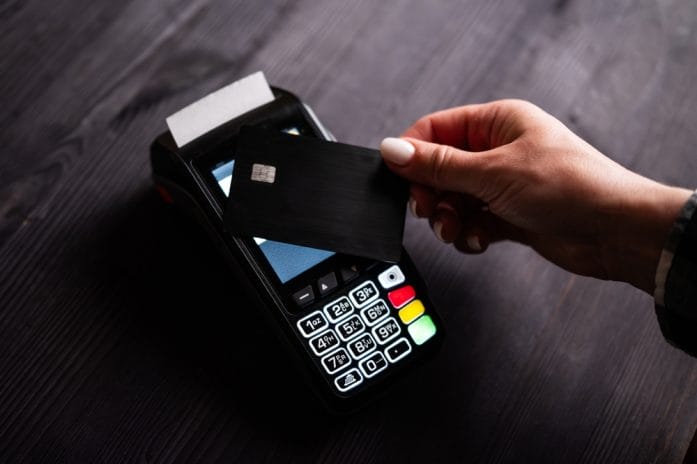
Once upon a time, retail store credit cards felt like a harmless little perk. You’d get 10% off your purchase, maybe a birthday coupon, and the occasional “exclusive” sale invite. It felt friendly. Convenient. Almost cozy.
But today, that friendly plastic card in your wallet is starting to look more like a financial landmine. Across the U.S., store credit cards are now charging interest rates that hover around 30% APR on average, turning everyday shopping into one of the most expensive ways to borrow money. This isn’t just a finance nerd issue—it’s a real-life, everyday money problem that affects millions of shoppers who just wanted a discount at checkout and ended up paying triple-digit interest over time.
How Store Credit Cards Quietly Became Some of the Most Expensive Debt You Can Carry
Retail credit cards were originally designed as loyalty tools, not serious lending products. But over time, they’ve evolved into full-blown credit products with interest rates that rival—or even exceed—some of the most expensive consumer credit options available. Many major store cards now advertise APRs that land close to 30%, especially for customers who don’t qualify for top-tier credit pricing.
What makes this tricky is how these cards are marketed. The focus is always on the discount: “Save 15% today!” or “Get $40 off your first purchase!” Meanwhile, the APR is buried in fine print that nobody reads while standing in a checkout line with a cart full of clothes. Psychologically, it feels like a reward card, not a loan. Financially, though, it behaves like high-interest debt, and that disconnect is where people get hurt.
Why Interest Rates on Retail Cards Are So High Right Now
The rise in store card APRs didn’t happen in a vacuum. Over the last few years, overall interest rates in the U.S. have climbed as the Federal Reserve raised benchmark rates to fight inflation. When base rates go up, borrowing gets more expensive across the board—from mortgages to credit cards to auto loans. Retail credit cards feel this pressure more than most and have been rising steadily year after year.
There’s also the business model itself. Store cards are often issued by third-party banks that specialize in retail lending, and they assume a higher risk of default because many applicants have fair or average credit, not excellent credit. Higher risk equals higher interest rates. On top of that, store cards typically lack the competitive pressure that general-purpose credit cards face.
The result is a perfect storm: rising national interest rates, higher-risk borrowers, and a business model that doesn’t prioritize low APRs.
Smarter Ways to Use Store Cards Without Getting Burned
Store cards aren’t automatically evil—they’re just dangerous if used casually. If you’re going to use one, the smartest approach is to treat it like a debit card with a delay, not a credit line. That means only charging what you can pay off in full before interest hits. If you’re using a store card for a one-time discount, set up an immediate payoff plan so the balance doesn’t linger.
If you already carry balances on store cards, prioritizing them in your debt payoff strategy can make a huge difference. High-interest debt should usually be paid down faster than low-interest debt because it’s actively draining your money every month.
What This Says About Consumer Spending and Debt Culture
The rise of 30% APR store cards says something bigger about modern consumer culture. We’ve normalized borrowing for everyday life—clothes, home goods, electronics, even basic essentials. Credit has become frictionless, invisible, and easy, which makes it dangerously seductive. Store cards sit right at the intersection of convenience and temptation.
This isn’t about shame or blame. It’s about understanding the system. Retailers want loyalty. Banks want interest income. Consumers want affordability. The tension between those goals creates products that look helpful on the surface and expensive underneath.

The Real Win Isn’t the Discount—It’s Control Over Your Money
The biggest takeaway isn’t “never use store cards.” It’s “don’t let store cards use you.” When you understand how these products work, you stop making emotional money decisions at checkout and start making strategic ones. You realize that a 10% discount doesn’t matter if you’re paying 30% interest later. You stop confusing convenience with value. And you start treating credit as a tool instead of a trap.
Have you ever opened a store credit card for a discount and regretted it later, or do you use them strategically without paying interest? Talk about your experiences in the comments section.
You May Also Like…
Why Credit Card APRs Only Dropped 0.35% Even After Three Fed Rate Cuts in 2025
8 Times Retailers Don’t Owe You A Refund
6 Sneaky Ways Retailers Make People Overspend
7 Ways Credit Card Debt Builds Faster Than Expected
10 Reasons Your Credit Card Fraud Claim Was Denied—and What You Can Do About It
The post Retail Store Credit Cards Now Charging 30% APR on Average appeared first on The Free Financial Advisor.