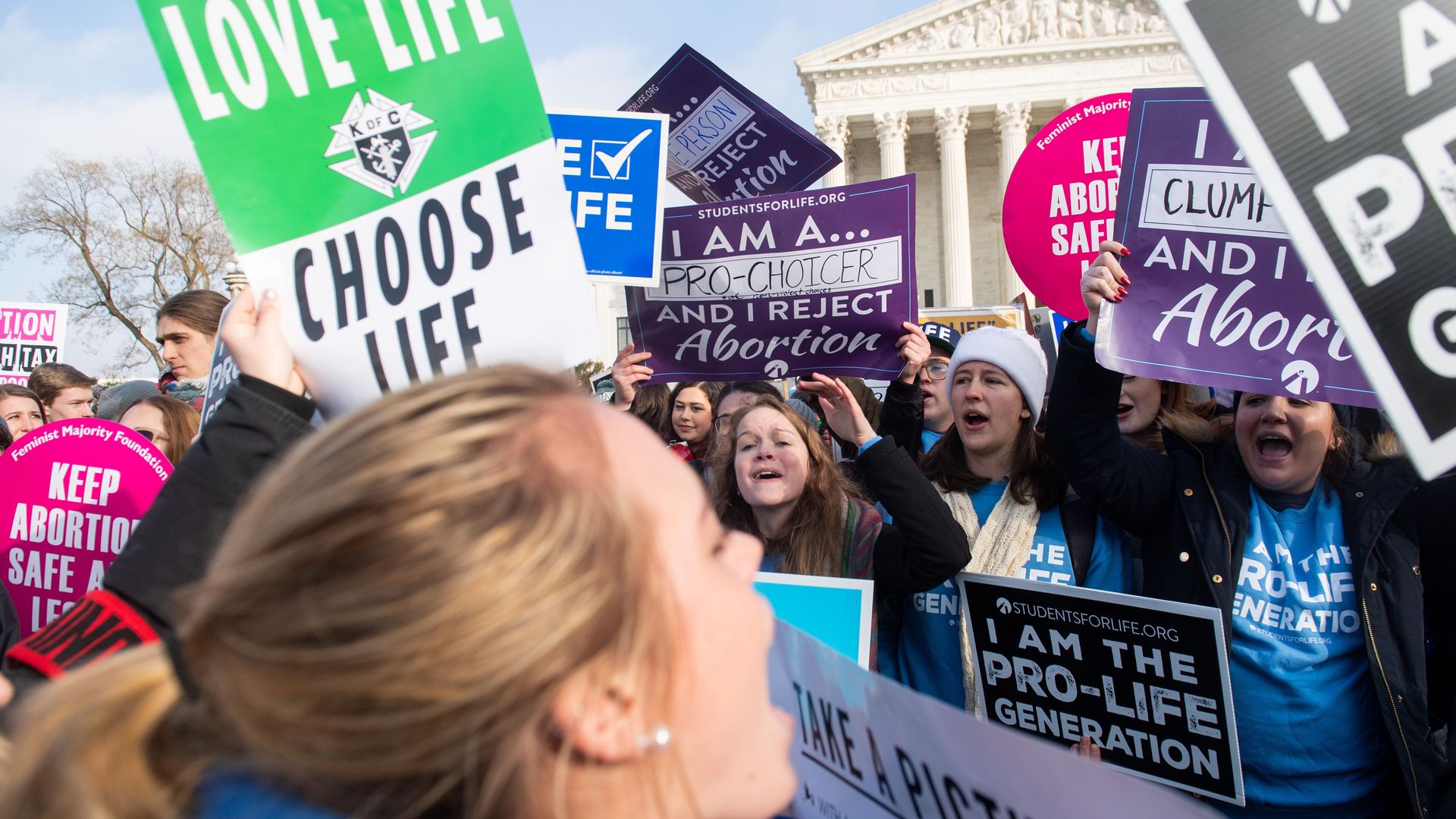
The most restrictive abortion laws in generations are currently spreading across America's red states, setting up what could be a precedent-smashing Supreme Court challenge to the abortion status quo.
Quick take: Alabama's state legislature is considering a bill that would ban abortions, with exceptions for the health of the mother. The state legislature is still debating whether rape or incest would also receive exceptions. Women would not be criminally liable for getting an abortion, but providers would face felony charges.
- Georgia, Ohio, Kentucky and Mississippi passed fetal heartbeat laws this year, banning abortions at around 6 weeks, before many women know they are pregnant.
- Similar motions have been introduced in Florida, Louisiana, South Carolina, Illinois, Maryland, Minnesota, New York, West Virginia, Missouri and Tennessee, the pro-choice Guttmacher Institute notes.
Why it matters: Supreme Court rulings have been cited to allow abortions up to 24 weeks during pregnancy when the fetus is not viable — or when a woman's health or life is at risk.
- But conservatives have been advancing much more restrictive policies in the past few years, hoping to spark a fresh Supreme Court case now that Justice Brett Kavanaugh has replaced Anthony Kennedy.
What they're saying:
- "For pro-life folks, these are huge victories," Sue Liebel, state director for anti-abortion group Susan B. Anthony List, told AP. "And I think they're indicative of the momentum and excitement and the hope that's happening with changes in the Supreme Court and having such a pro-life president."
- “The gloves are off” among abortion opponents, NARAL Pro-Choice America's Kristin Ford told Vox.“They feel like they have the wind at their backs and they don’t have to dance around their true intentions anymore.”
The bottom line: We're one major Supreme Court case away from a new era on abortion rights, an unthinkable idea before the election of President Trump.