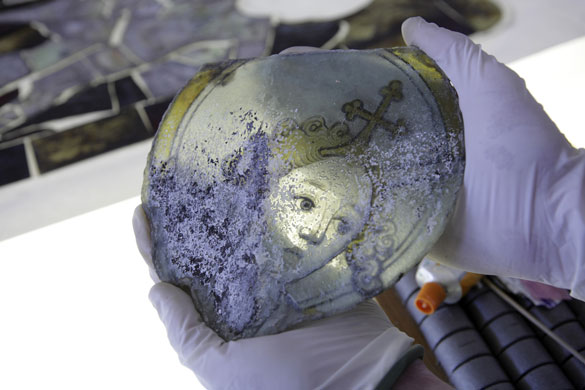
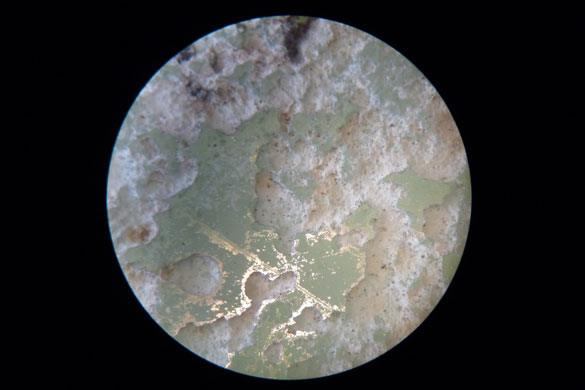
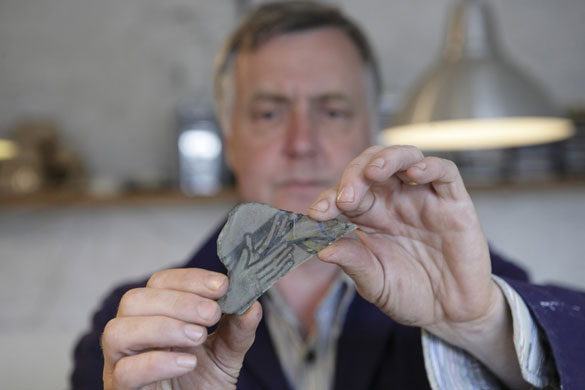
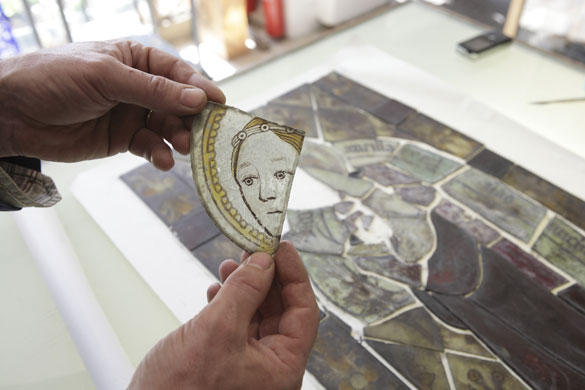
Stained glass was in widespread use in Britain from the medieval period until Victorian times. This glass, from St Winnow's church in Cornwall, dates from the 15th century. St Michael's face clearly shows the damage caused by centuries of condensation eating away at the glassPhotograph: Sam Frost/Sam FrostThe view through a microscope of the reverse of a piece of medieval glass Photograph: Sam Frost/Sam FrostSteve Clare, the company's founder, shows off an invisible repair to a broken piece of glass. Modern epoxy adhesives mean that old repairs using lead can be replaced and the integrity of the window's design restoredPhotograph: Sam Frost/Sam Frost
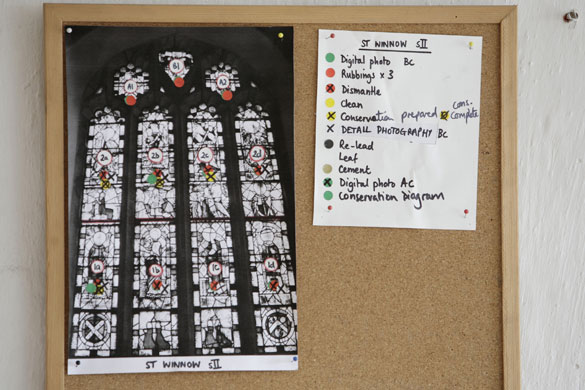
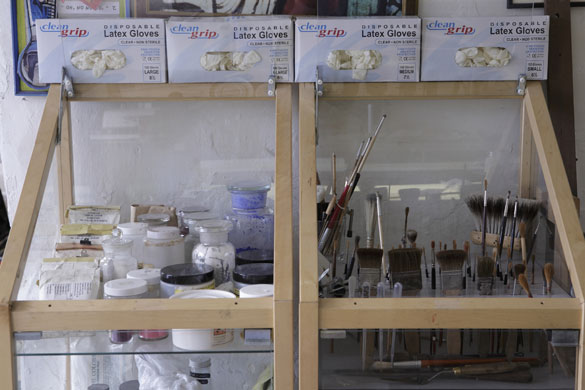
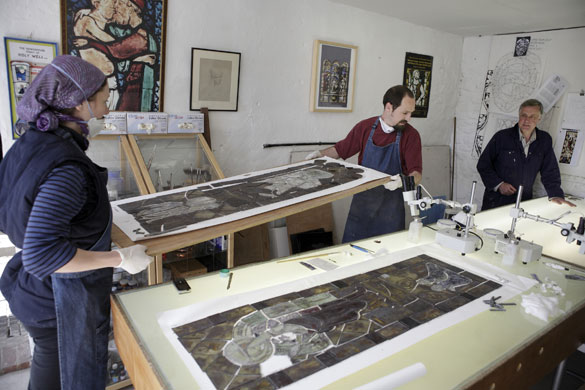
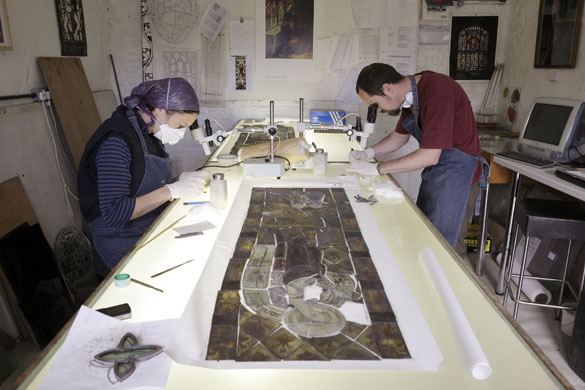
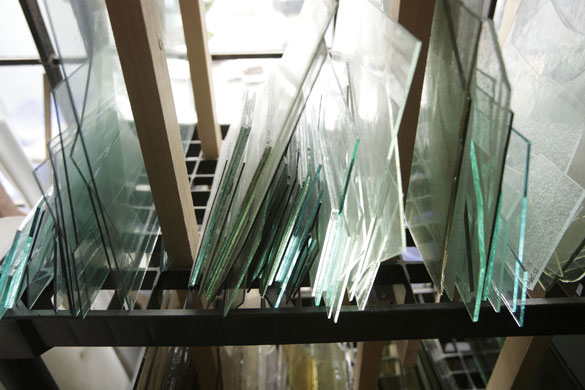
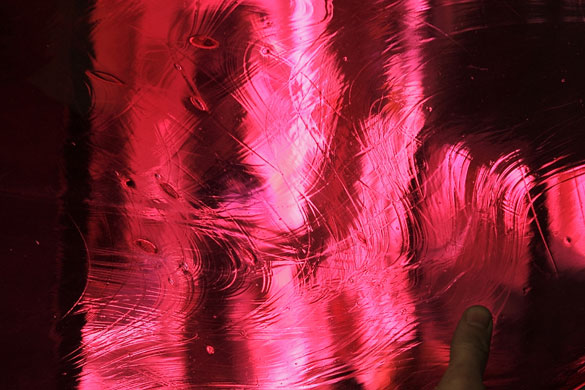
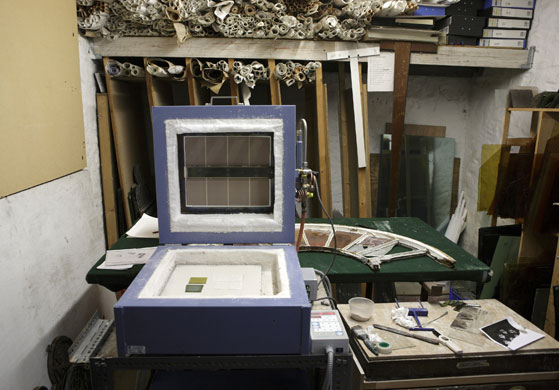
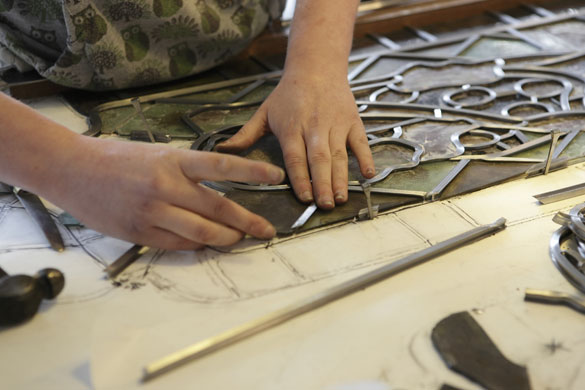
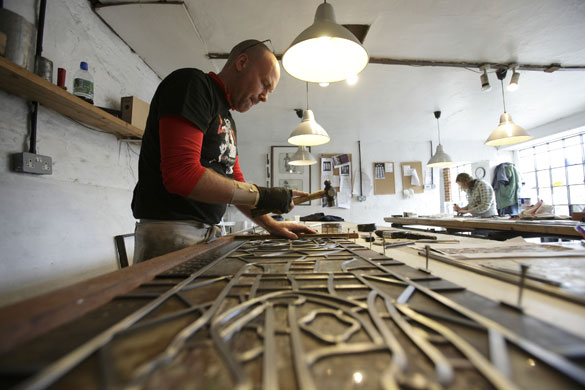
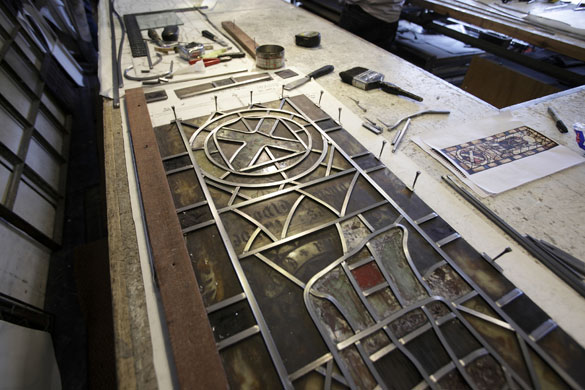
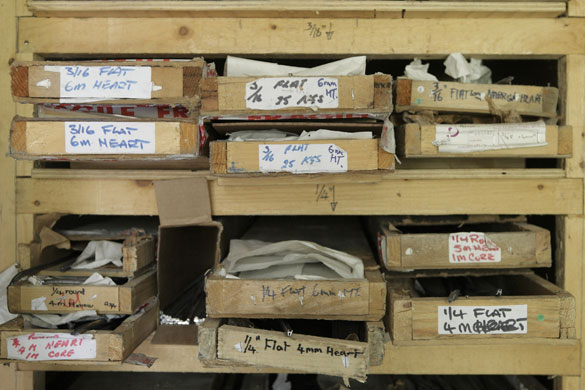
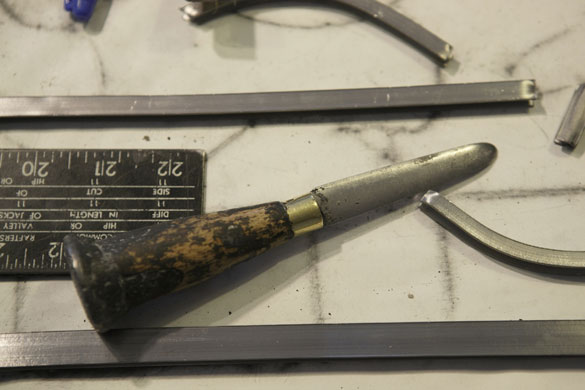
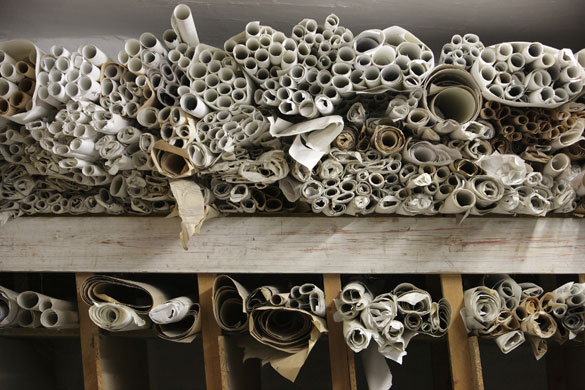
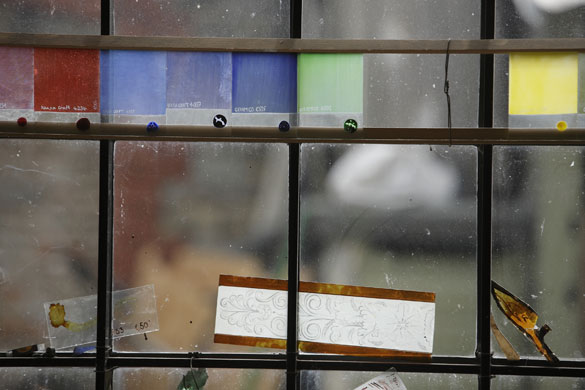
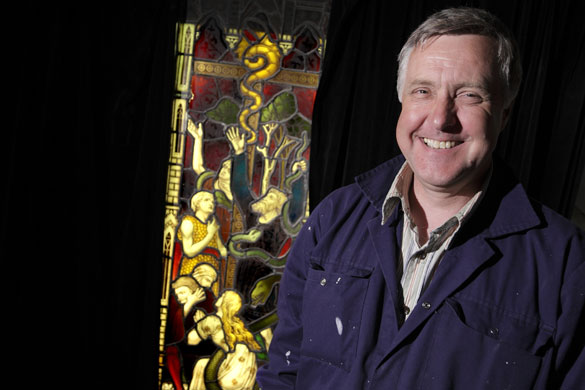
Clare shows off one of the pieces of a medieval stained glass window his team is working onPhotograph: Sam Frost/Sam FrostAll work done to every window is meticulously recorded so future restorers will know exactly what has been done and whenPhotograph: Sam Frost/Sam FrostAn awful lot of latex gloves and brushes: some of the tools of the tradePhotograph: Sam Frost/Sam FrostClare watches as conservators Helen Bree and Gary Graves carry in a window, like a patient on a stretcherPhotograph: Sam Frost/Sam FrostBree and Graves at work on a window. Each pane is carefully dismantled and the glass painstakingly restored using special fluids, brushes and scalpelsPhotograph: Sam Frost/Sam FrostNew glass is used only as a last resort, where old pieces are beyond repair. Colours and paint are used to blend in the repair, but new pieces are date-marked to indicate their presence – there is no attempt to deceivePhotograph: Sam Frost/Sam FrostA sheet of handmade red glass. The colour comes from the addition of gold oxides to the molten glass and will not fadePhotograph: Sam Frost/Sam FrostAny new detail painted on to the glass during restoration will need to be fired in a kiln Photograph: Sam Frost/Sam FrostOnce the glass has been cleaned and any broken pieces repaired, the window is reassembled. If the original lead is present it will be reused where possible, but many windows have been releaded several times and new lead is commonly usedPhotograph: Sam Frost/Sam FrostGreville Thorne works on the leading of a windowPhotograph: Sam Frost/Sam FrostA window is pinned in place while being reassembledPhotograph: Sam Frost/Sam FrostDifferent sized leadsPhotograph: Sam Frost/Sam FrostAn oyster knife, used for easing the glass into the leadPhotograph: Sam Frost/Sam FrostCharts and records of some of the pieces Holy Well Glass have worked onPhotograph: Sam Frost/Sam FrostOff-cuts and glass mementoes and samples and test firings of different glass paints line the windowsPhotograph: Sam Frost/Sam FrostClare stands beside a window awaiting restorationPhotograph: Sam Frost/Sam Frost
Sign up to read this article
Read news from 100’s of titles, curated specifically for you.