The spread of the novel coronavirus has manifested the risks facing the restaurant industry. There is no doubt that one of the burdens is the high fixed costs that business owners have to pay regardless of sales.
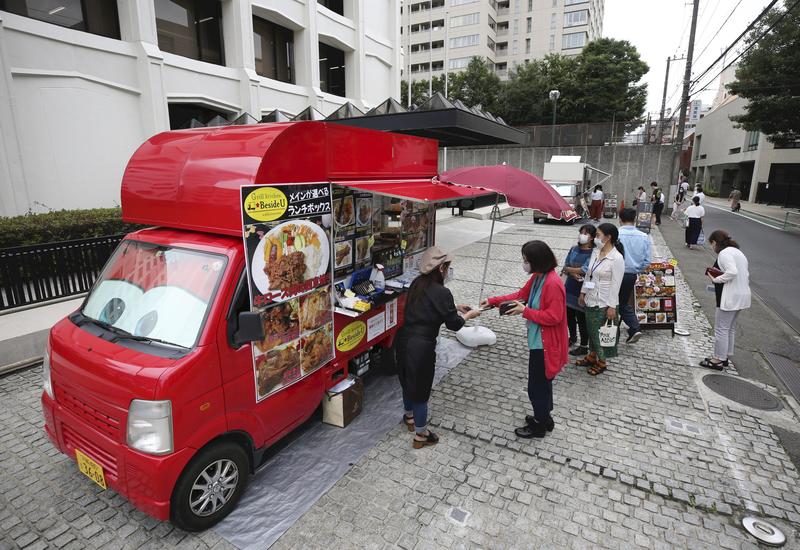
The main operating expenses for the restaurant industry consist of ingredients, wages and rent. One solution for reducing the rent factor is the use of kitchen cars that sell foods and drinks in vacant spaces in dotting business districts and residential areas. While there is no need to pay recurring rent, a kitchen car operator has to fork out an average of 5 million yen in initial investments for a truck and cooking tools -- significantly cheaper than that for a brick-and-mortar outlet. Another advantage is the freedom to decide when and where to work.
"After the spread of the new coronavirus, the number of consultations from restaurant owners has tripled from the preoutbreak level," said Tsuyoshi Mukai, a producer at Mellow Inc., a start-up that helps kitchen car operators. Mellow takes a 15% commission on sales, while negotiating with landlords to provide places where kitchen cars can park to conduct business, and distributing flyers to help attract customers.
The paths to kitchen car success are varied and can be achieved fairly swiftly. One former restaurateur trained at a ryotei luxurious Japanese restaurant before opening his own eatery in Saitama City.
"When I was running a restaurant, the monthly rent was more than 1 million yen. It was quite a burden," he said.
He started operating a kitchen car in Tokyo in mid-May, serving bento boxed lunches using Saikyo-marinated gindara sablefish and other Japanese cuisine of his strict choice. His truck proved popular and gained repeat customers in about two months' time. He said he sells about 60 bento a day on average, and up to 100 sometimes.
-- Sushi in a locker
Akindo Sushiro Co., the operator of the Sushiro sushi-go-round restaurant chain, is investing in labor- saving upgrades.
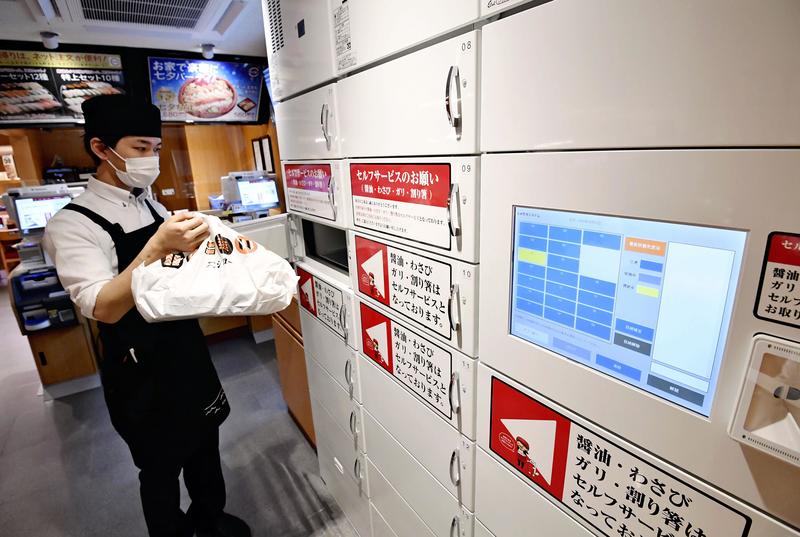
At the Sushiro outlet in Yurakucho, Chiyoda Ward, Tokyo, which opened last month, lockers were set up so that customers could buy sushi for takeout without having to interact with employees. Some outlets have installed a device to guide customers to their seats using an automatic reception machine.
Food ingredients account for about half of Sushiro's sales, higher than the industry average. On the other hand, the company is making efforts to keep prices low.
-- Word of mouth
Advertising is another facet of the food industry being jostled by the coronavirus outbreak.
Many restaurants had long been paying gourmet websites such as Gurunavi and Tabelog to attract customers, but this is no longer yielding results to justify the expense, as people have refrained from going out the way they used to.
Italian restaurant uraniwa 8528 in Shibuya Ward, Tokyo, appealed to its frequent customers for help in maintaining the restaurant while it was forced to close. It sent fresh pasta to those who offered help and released a video explaining how to prepare and eat it, collecting about 4 million yen in the effort.
"It is difficult to attract customers without advertising. I want to focus on social networking sites and word of mouth," said Zenko Hata, president of 8528's operator Barrel Inc.
Read more from The Japan News at https://japannews.yomiuri.co.jp/