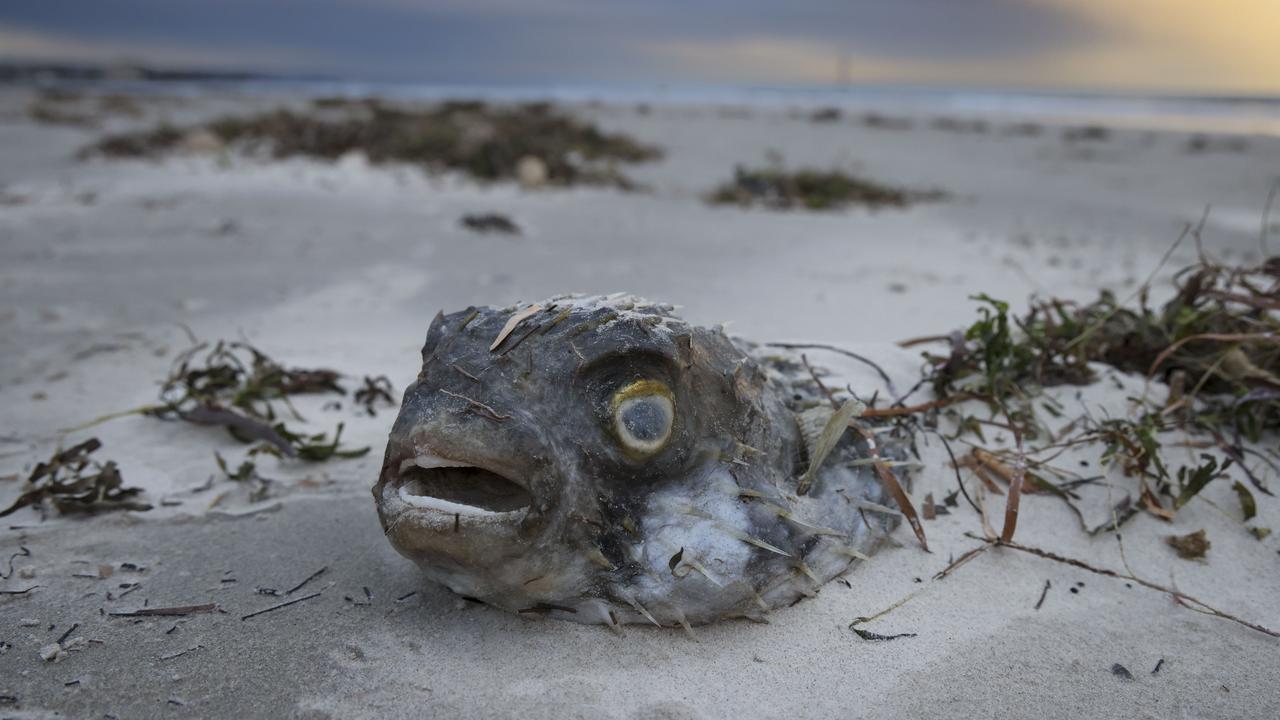
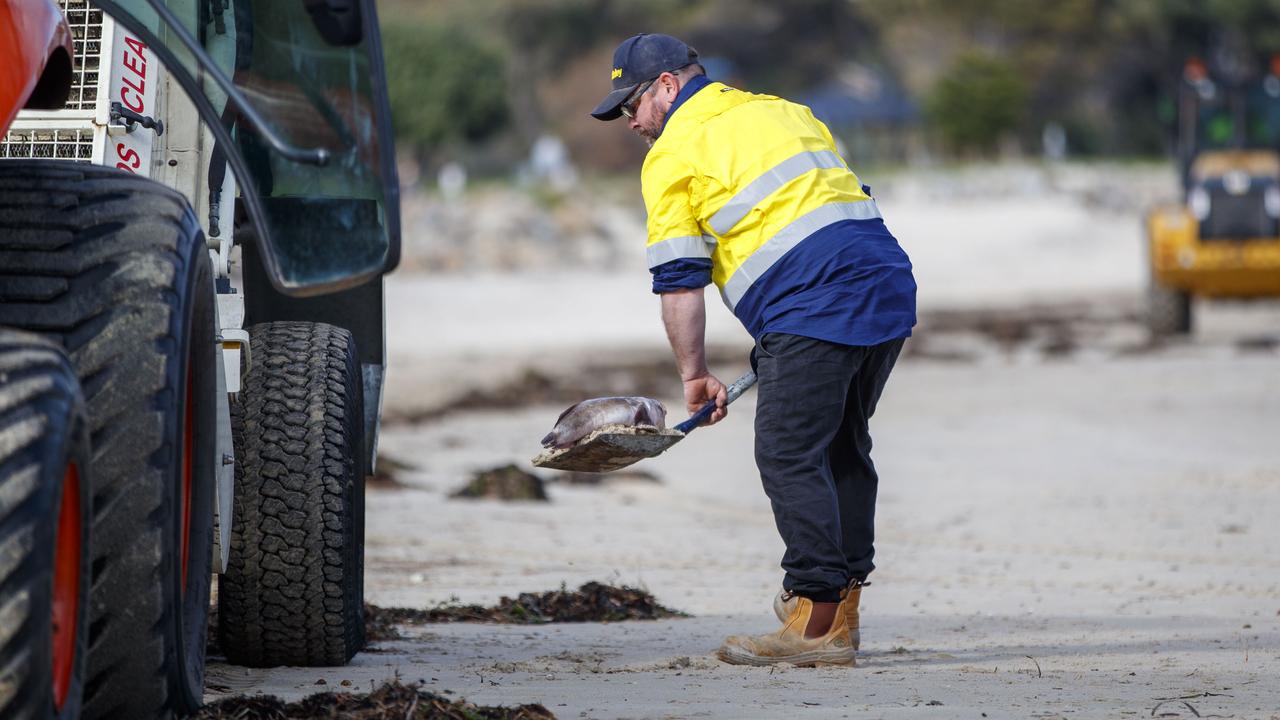
Communities were abandoned by authorities as thousands of marine animals washed up dead on beaches following a devastating algal bloom, a parliamentary committee chair says.
South Australia's toxic algal bloom has affected more than 30 per cent of the state's coastline since it was identified in March, with more than 13,000 recorded animal deaths, an inquiry into the causes, frequency, scale and duration of the event found.
"The state and federal governments were far too slow to respond to the unfolding crisis," chair Sarah Hanson-Young said in a statement included in Senate committee's final report, which was tabled in parliament on Tuesday.
"It was months between when the bloom was first detected and when governments took it seriously and took any kind of meaningful action."
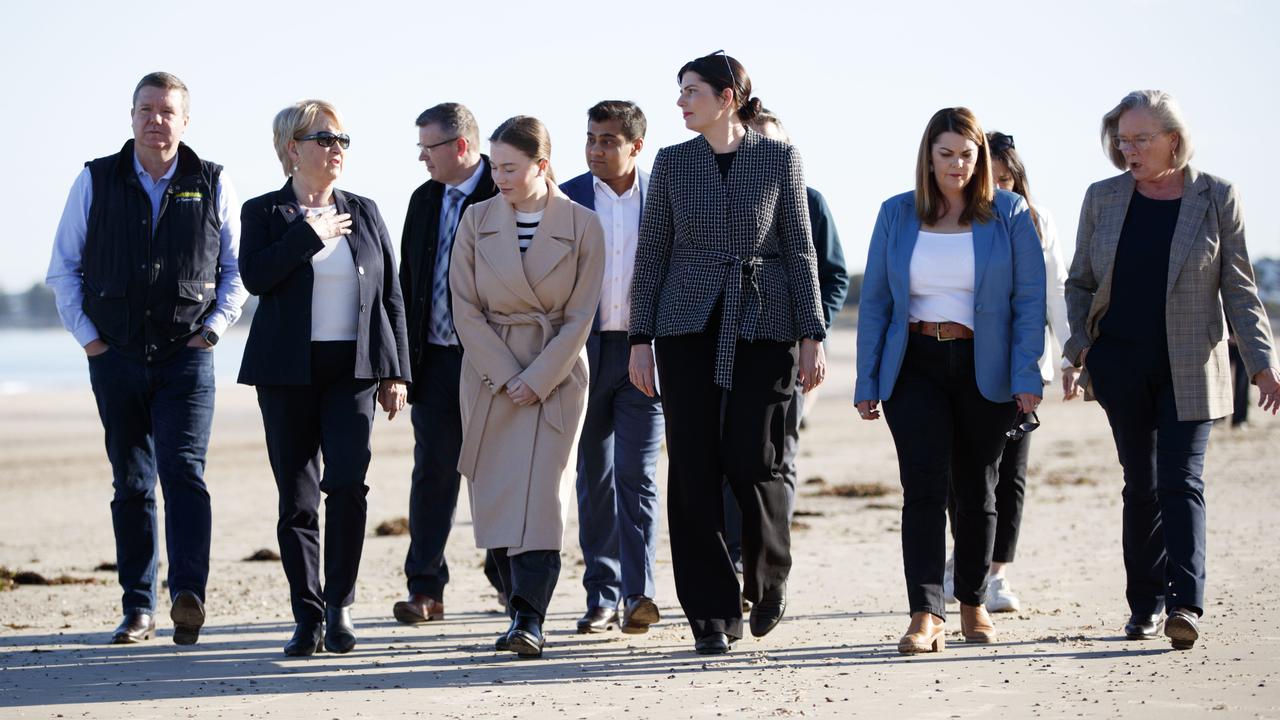
Witnesses told the inquiry they needed more help and funding, raising concerns about delays in government action and the co-ordination of its response despite the SA and federal governments pledging $102 million for a recovery plan.
The funding provided to date did not reflect the scale of the challenge, the Conservation Council SA said in its evidence.
About 400 fisheries, aquaculture, tourism and recreational businesses that rely on the ocean for their livelihood were affected by the algal bloom, the inquiry heard.
The impacts ranged from direct financial losses due to closures of fisheries and harvesting areas and stock mortality, to longer-term reputational harm and business uncertainty, the report said.
Regional areas reliant on tourism also suffered through revenue loss, cancellations and operational disruptions, as well as concerns about reputational damage.
Witnesses also pointed to the "limitations" of the federal Disaster Recovery Funding Arrangements, saying that algal bloom events should be recognised as natural disasters in order to unlock further Commonwealth funding.
"If the damage caused by the algal bloom had come from a flood or a bushfire, it would have been declared a national emergency," Greens Senator Hanson-Young said.
SA Liberal senator Leah Blyth said the report did not adequately detail the federal Labor government's failure to accept responsibility for management of the algal bloom.
"If the federal government had acted rather than deferring responsibility, South Australians would perhaps have more faith that the algal bloom was being taken seriously," she said in the report.
The committee made 14 recommendations, including that the federal government develop a framework for research, monitoring and responses to climate-induced ecological events such as algal blooms.
It also said the federal government should investigate how it could support the SA government on long-term resilience and recovery programs for marine-related industries.
This could include targeted income support program, voluntary lease or buyback scheme for fishing licences, and a tourism recovery fund.