What will your Earth-minded New Year’s resolutions be for 2015? Will you resolve to produce zero garbage? Eat 100% vegan? And never drive a car again?
Easy peezy, right? Wait, come back! Just kidding! As any lifestyle expert can attest, the New Year’s resolutions most likely to become habit are those that aim for incremental change. The good news is that collective commitment to small actions can have a big effect.
Below are 10 resolutions that will help build a brighter future. Start small until you feel the habit take hold, then turn it up by increasing the frequency or intensity of your endeavours.
But first, take a look at what ideas readers have shared. Be sure to share your progress (and advice) here by using #FollowTheFrog and #NewYearsResolution on Twitter, Facebook and Instagram.
1. Walk, bike, or carpool to work at least once a week. Or work at home (yes, you can show this to your boss).
If only everyone would turn their cars into giant lawn ornaments and never drive again. But not only is that unrealistic, for some commuters it’s not even possible. Still, consider these stats: if you drive 30 miles to your office, even in a fuel-efficient car, you’re releasing 4,500 kg (10,000lb) of carbon dioxide, which is one of several greenhouse gases that contribute to global warming, into the atmosphere annually. Walking, biking or carpooling once a week reduces your carbon output by nearly 1,000 kg over the course of a year. Increase frequency once you find a routine that works.
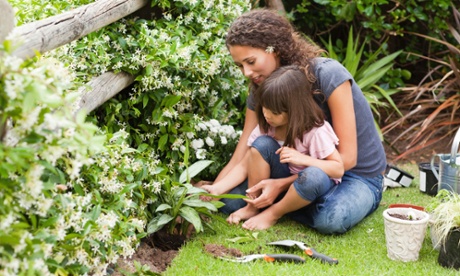
2. Love to garden? Switch to native plants that save water and protect local biodiversity
The typical suburban lawn consumes 45,500 litres of water each year (not including rainwater). If you replace grass with native plants, you could cut your water use– and water bill – by up to two-thirds, while maintaining habitat for local wildlife. And not only are native plants more resistant to local pests, they tend to grow deeper root systems that help prevent erosion.
3. Light your home efficiently
You’ve probably heard the buzz – governments around the world are phasing out incandescent light bulbs in favour of energy-efficient options. So now is the perfect time to make the switch to LED lights, which last 25 times longer than incandescent bulbs and don’t contain mercury like compact fluorescent light bulbs (CFLs). Although LEDs cost more up front, the investment will benefit your pocketbook, as well as the planet, over time since water is required to produce electricity. Here’s a cool tool to help you calculate your lighting usage.
4. Go vegetarian once a week
Livestock farming causes about 18% of current greenhouse gas emissions – more than every car, train and plane on the planet combined, according to this report released by the UN If you just can’t face the prospect of life without beef stew or chicken teriyaki, then start small: go vegetarian – or vegan, if you can – one day a week. In addition to curtailing greenhouse gas emissions, you’ll save water: for every burger you pass up, you’ll save2,400 litres (634 gallons) of water. Another profound benefit from passing up animal products: farmers often use as much as 7 kg (15lb) grain to produce about one half kg (1lb) beef, which can fill the bellies of two people for a few hours, but the same amount of grain can feed more than 13 people for a day. In other words, the less meat you eat, the more grain you’re making available to humans. According to the United Nations World Food Programme, about one in nine people on Earth do not have enough food to lead a healthy, active life.
5. Buy only the food you need
UK households throw out 7 million tons of food and drink each year, more than half of which could have been consumed. And the US wastes 40% of the food it grows, produces and sells. That’s a crying shame, when you think about the resources that go into producing it (like 25% of all the freshwater in the US) – and worse, the number of people suffering hunger and malnutrition.
Nearly all of that uneaten food ends up rotting in landfill, accounting for a hefty share of methane emissions, which is another greenhouse gas that contributes to climate change.
If all that doesn’t move you to change your food buying habits, consider this: the typical American family of four loses $1,365 to $2,275 per year on food they never eat. Wouldn’t you rather save that money and take a vacation?
6. Carry your own glass or stainless steel water bottle– and just say no to plastic
Between 1994 and 2013, the UK bottled water market grew from 690 million litres to just over 2.3 billion. The average American consumes 145 litres of bottled water per year, which adds up to approximately 1,500 plastic water bottles per second. It takes an estimated three litres of water just to produce and transport a single bottle. Then there’s the oil used: the manufacture of every ton of polyethylene terephthalate (PET), which is typically what water bottles are made of, generates 3 tons of carbon dioxide. Sadly, 66 million of these bottles end up in landfills or in the ocean.
Don’t forget, drinking from plastic bottles poses health risks too. So use a reusable container and take your tap water with you.
7. Tweak your toilet tank
If all the old toilets in the US were replaced with water-efficient models, we could collectively save 2,350 billion litres (520 billion gallons) of water per year– that’s the equivalent to the amount of water that flows over Niagara Falls in a 12-day period. Can’t switch out your old water-hogging toilet? No problem! By placing a 2 litre (half gallon) plastic jug filled with sand, marbles or rocks – inside the tank, you can save 11 litres (2.5 gallons) of water daily, or 335 litres (75 gallons) per month. And while you’re at it, check for any leaks from your tank by adding a few drops of food coloring to the tank when it is in resting mode. If any coloring leaches into the toilet, replace the rubber flapper – the part that lifts open in the tank when you flush.
8. Don’t run the tap
Turning off the tap while you shave, brush your teeth and lather up in the shower can save up to 340 litres (75 gallons) per week. And by taking shorter showers with a water-saving showerhead, you can reduce your water consumption by 40%.
9. Watch your wardrobe
In the UK, the average consumer wastes £142 a year on items they never wear. The average American spends $1,800 a year on clothes and shoes and goes through 15 kg of new cotton clothing annually. Conventionally grown cotton uses more insecticides than any other single crop, accounting for more than 10% of total pesticide use and nearly 25% of insecticide use worldwide – all of which potentially puts the health of farm workers at risk. But not all organic cotton is created equal, so shop wisely: it could take more than 2,350 litres (520 gallons) of irrigation water to grow 50g (1lb) of organic cotton fibre in India, while organic cotton grown in Brazil is almost entirely rain-fed. When you consider, too, the prevalence of human rights abuses in clothing factories abroad, it just makes sense to stop buying new clothing and shop vintage. Just think, you could up your fashion game with a real 1950s fedora or a silk 1970s shift and be kind the Earth and her people.
10. Support to the Rainforest Alliance
One of the simplest ways to amplify the benefits of your New Year’s resolutions is to support organisations such as the Rainforest Alliance that work for sustainable transformation on the ground. The Rainforest Alliance has a proven track record over 25+ years of working with communities to protect biodiversity, curb climate change and improve livelihoods all over the world, such as the forest community of San Juan de Cheni, which has worked hard to regain its footing after Peru’s violent civil conflict.
Content on this page is provided by the Rainforest Alliance, supporter of the Vital Signs platform.