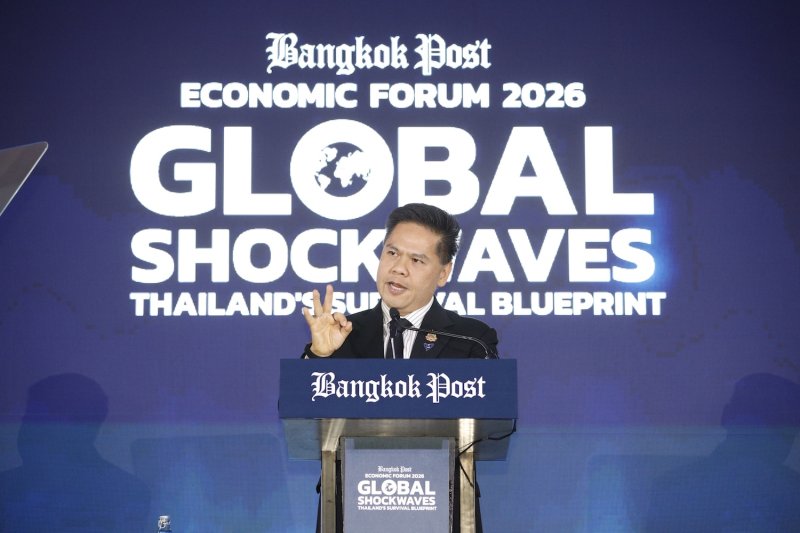
A comprehensive vision is needed for strengthening Thailand’s resilience and competitiveness, says Industry Minister Varawut Silpa-archa, who warned of mounting global challenges while emphasising the need for human development, innovation, sustainability and inclusive growth.
People remain the country’s greatest driving force in navigating periods of volatility and transformation. “Our greatest strength is our ability to adapt,” he said at the Bangkok Post Economic Forum 2026 on Wednesday.
Drawing from his previous roles as minister of natural resources and environment, as well as minister of social development and human security, Mr Varawut highlighted the growing risks posed by what he described as a “polycrisis” — a convergence of interconnected challenges including geopolitical conflict, climate change, biodiversity loss, pollution, economic inequality and an ageing society.
As Thailand transitions from low-cost manufacturing towards innovation-led industries, he said he sees opportunities for the country to position itself as a trusted global food-security partner through sustainable, high-value agricultural products supported by innovation and smarter production systems.
At the same time, he said, environmental, social and governance (ESG) standards must be upheld to meet international expectations while supporting long-term economic growth.
To achieve these ambitions, Thailand plans large-scale reskilling and upskilling initiatives targeting more than 100,000 workers to meet the demands of advanced manufacturing and AI-driven industries, he said.
Mr Varawut also pointed to the importance of systemic restructuring and stronger cooperation among government agencies, the private sector, academia and local communities under a “multi-sector synergy” approach.
While Thailand continues to attract foreign direct investment and is strengthening economic integration with both the OECD and Brics blocs, the minister acknowledged regulatory reform remains essential.
He pointed to the government’s “regulatory guillotine” initiative aimed at removing hundreds of unnecessary, outdated and duplicate laws and rules that hinder investment and innovation.
To improve competitiveness, he proposed a “super licence” mechanism while strengthening support systems for Thai startups and innovation ecosystems.
Public consultation remains central to policymaking to deliver more responsive solutions for both citizens and industry stakeholders, said Mr Varawut.
Earlier initiatives such as dust-free sugar cane farming and a 20-billion-baht SME D Bank relief package reflected efforts to foster resilience, while the green transition has now become an essential obligation as the country aligns with evolving international sustainability requirements.
Pilot projects are already under way in the Map Ta Phut Industrial Estate and Laem Chabang Port industrial zones.
Under the ministry’s direction, Thailand’s “five new engine industries” are expected to strengthen future growth sectors, including advanced agriculture and food innovation aimed at positioning the country as a global medical-food hub, alongside the herbal, wellness, smart craft and creative industries that elevate Thai expertise to international markets.
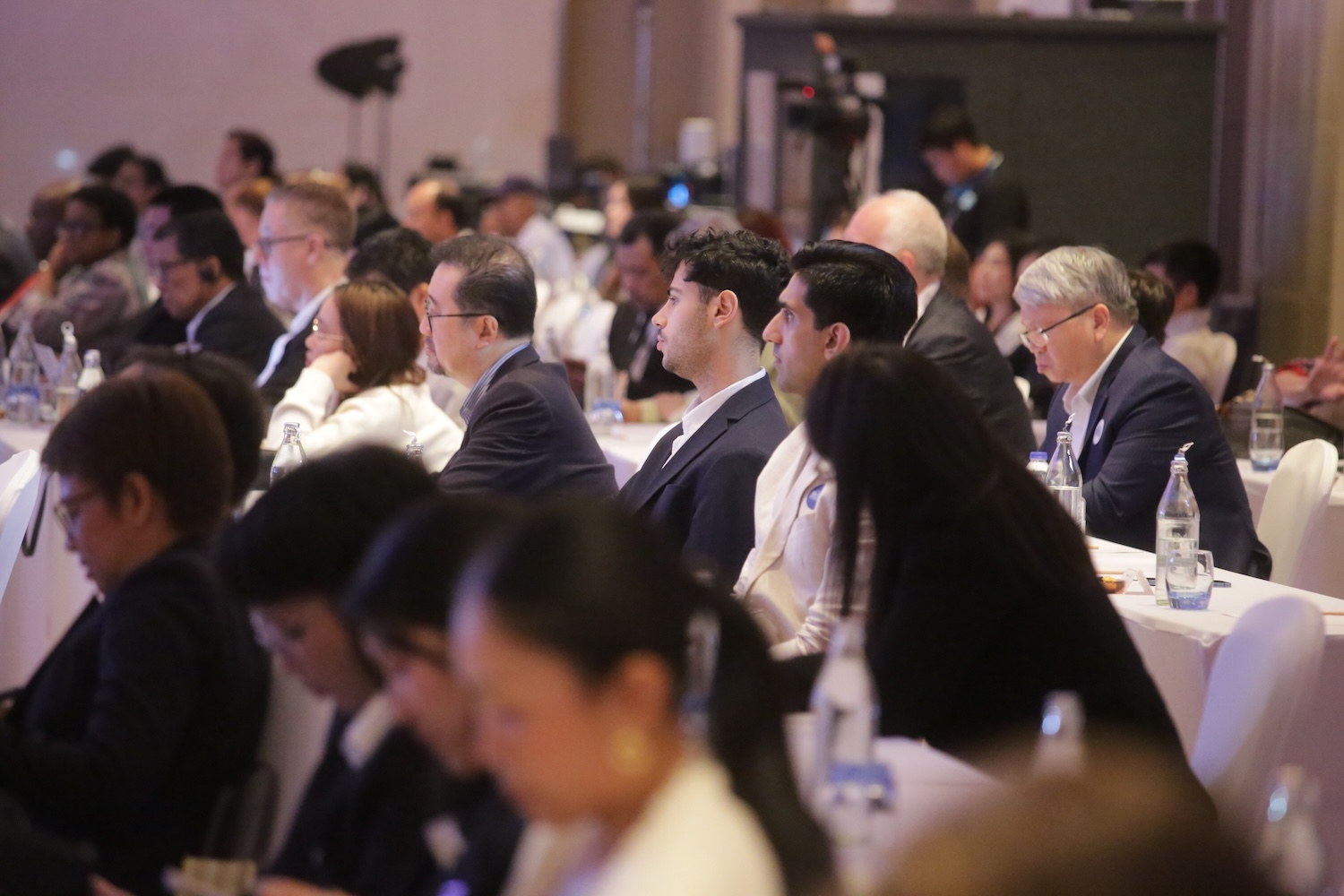
Other speakers at the forum, held under the theme “Global Shockwaves: Thailand’s Survival Blueprint”, also touched on resilience, innovation and sustainability as major ingredients for future economic success. (Story continues below)
‘Affordability crisis’
An affordability crisis is approaching due to rising costs, said Santitarn Sathirathai, a vice-minister of finance, urging all sectors to adapt to the challenges ahead.
For decades, he said, the world prioritised low-cost production, just-in-time supply chains and deep global integration. This created enormous economic gains but it also produced hidden fragilities. The same networks that once accelerated prosperity are now transmitting shocks faster, further and more intensely, he said.
Disruptions will “cascade in waves”, in energy, affordability and demand.
The affordability crisis occurs when rising costs begin to squeeze households and businesses. Workers have less money in their pockets, while companies face declining demand.
He said Thailand is not necessarily facing another financial crisis or runaway inflation, but something different.
“In Thailand, the crisis is not so much on the balance sheet, but [presents itself] on the kitchen tables every day.”
Digital era priorities
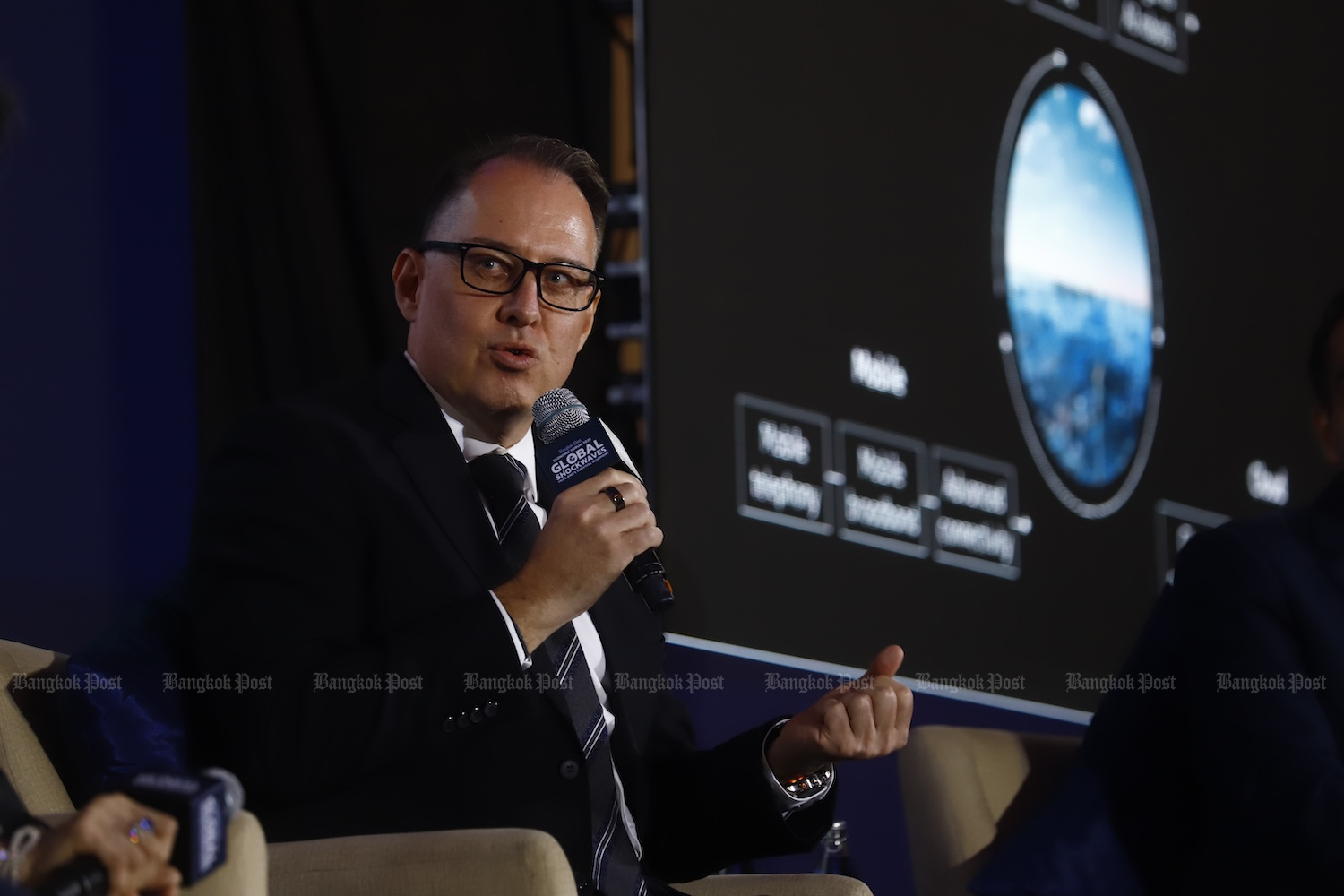
Thailand must accelerate investment in 5G infrastructure, AI and digital skills to remain competitive in the next industrial era, said Anders Rian, head of Ericsson Thailand.
Resilient digital infrastructure has become as essential to national development as highways, ports and electricity networks, he said.
Although Thailand has one of the largest 5G user bases in Southeast Asia, he said the country’s next challenge was to shift the technology beyond consumer applications toward industrial use.
Mr Rian likened data centres to factories of the digital economy, while AI delivers services, insights and applications. Mobile networks function as highways transporting vast amounts of information.
“The next major wave will be the digitisation of industries more broadly, including manufacturing, agriculture, government and large enterprises,” he said.
Energy transition just the start
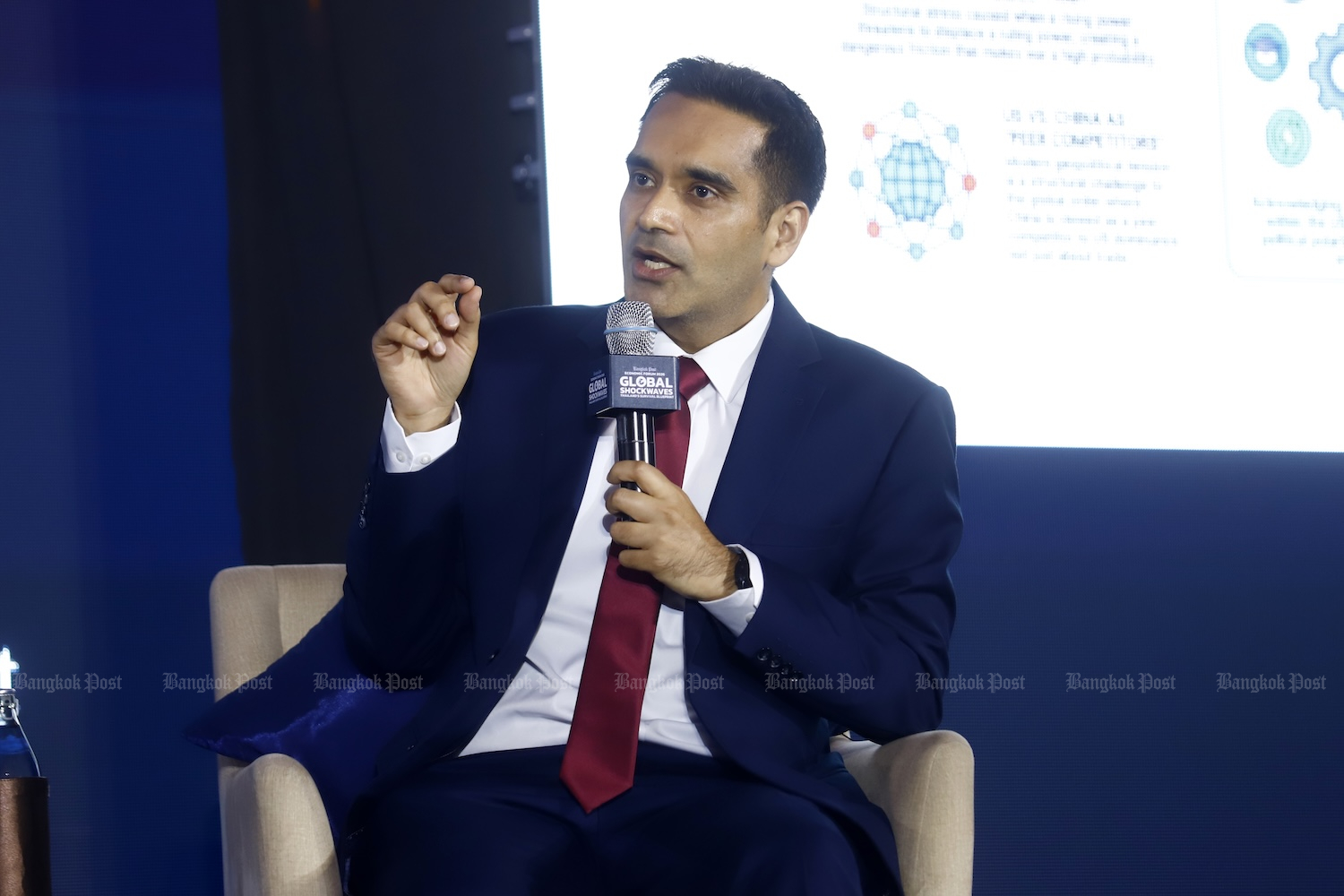
The energy transition is a game-changer for the economy, said Amonthep Chawla, executive vice-president and head of research at CIMB Thai Bank.
Persistent conflict in the Middle East has triggered an energy crisis affecting Thailand and many countries worldwide, increasing costs for businesses and households alike, he said.
“Authorities should focus on easing the burden on vulnerable groups in the short term while strengthening their capabilities over the longer term,” he said.
However, he said the energy transition, labour skill development and AI adoption alone would not be enough to improve efficiency and competitiveness. Structural reform is needed to raise Thailand’s growth potential and ensure long-term sustainability.
While CIMB Thai projects the Thai economy to expand by 2.1% this year, that growth will not be broad-based, he said. Some sectors will remain under pressure from structural weaknesses, including household appliances, food products and non-alcoholic beverages.
While the government’s cash handout scheme will support domestic consumption in the short term, high household debt means purchasing power among vulnerable groups remains fragile, and consumption could weaken sharply after the scheme ends in the fourth quarter.
“Due to weakening purchasing power, there are concerns that even sales of essential goods could turn negative. Structural reform is therefore needed to raise household income over the long term,” he said.
Supply chain shifts
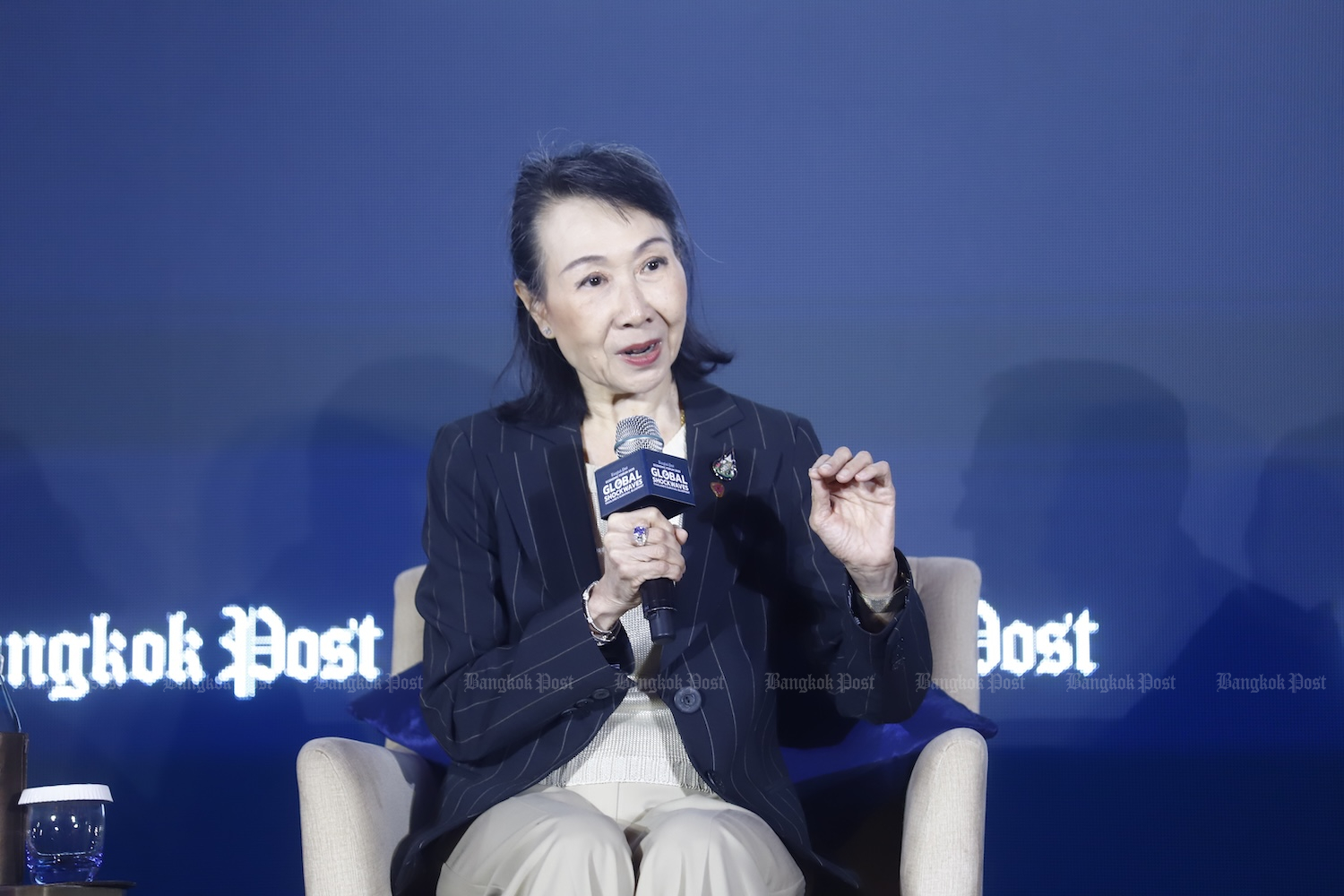
Thailand could benefit from global economic fragmentation and trade tensions, said Pimjai Leeissaranukul, chairwoman of the Federation of Thai Industries (FTI).
Shifting supply chains and geopolitical tensions are reshaping global investment strategies, creating new opportunities for Thailand as an attractive destination for companies seeking to relocate away from geopolitical flashpoints, said Ms Pimjai.
The government’s flagship Eastern Economic Corridor initiative has played a central role in attracting investment in industries such as electric vehicles, semiconductors, smart electronics, healthcare and digital services.
To strengthen industrial resilience, the FTI is promoting a strategy called “The New Chapter of Thai Industry: Empowering Growth with 5I’s”.
The framework focuses on AI-driven industries, innovation, international partnerships, infrastructure reform and sustainable growth.
“Together, these five strategies will position Thailand as a regional supply chain hub,” she said.
The biofuel solution
Thailand is ramping up efforts to promote biofuel usage as part of a long-term plan to reduce its heavy reliance on imported energy, said Veerapat Kiatfuengfoo, deputy permanent secretary of the Ministry of Energy.
Maximising biofuel consumption in the transport sector is one of the most effective ways to shield the economy from global crude oil price volatility, he told the forum.
Biofuels such as ethanol, derived from sugar residue and cassava, and methyl ester, produced from oil palm, are already blended into conventional fuels. Ethanol is mixed with gasoline to create gasohol, while methyl ester is blended with diesel to produce biodiesel.
Mr Veerapat said the government’s next resilience strategy will focus on promoting B20 biodiesel, which contains 20% methyl ester — significantly higher than the 7% blend in B7.
B20 is being positioned as a primary alternative fuel for diesel engine vehicles, particularly heavy-duty trucks and industrial machinery, he said.
“Promoting B20 is a strategic move that links our grassroots economy directly to our energy goals. It boosts demand for domestic crops, stabilises prices and reduces long-term dependence on imported energy,” Mr Veerapat said.