
- Resident Evil Requiem producer Masato Kumazawa believes Capcom succeeding in designing Grace Ashcroft
- Kumazawa responded to the DLSS 5 backlash, calling the negative player response "positive" for Capcom
- He says the response means Grace has "established herself as a fan favourite"
Resident Evil Requiem producer Masato Kumazawa has said the negative reaction to Nvidia's DLSS 5 rendition of Grace Ashcroft from players meant Capcom achieved the best design for the character.
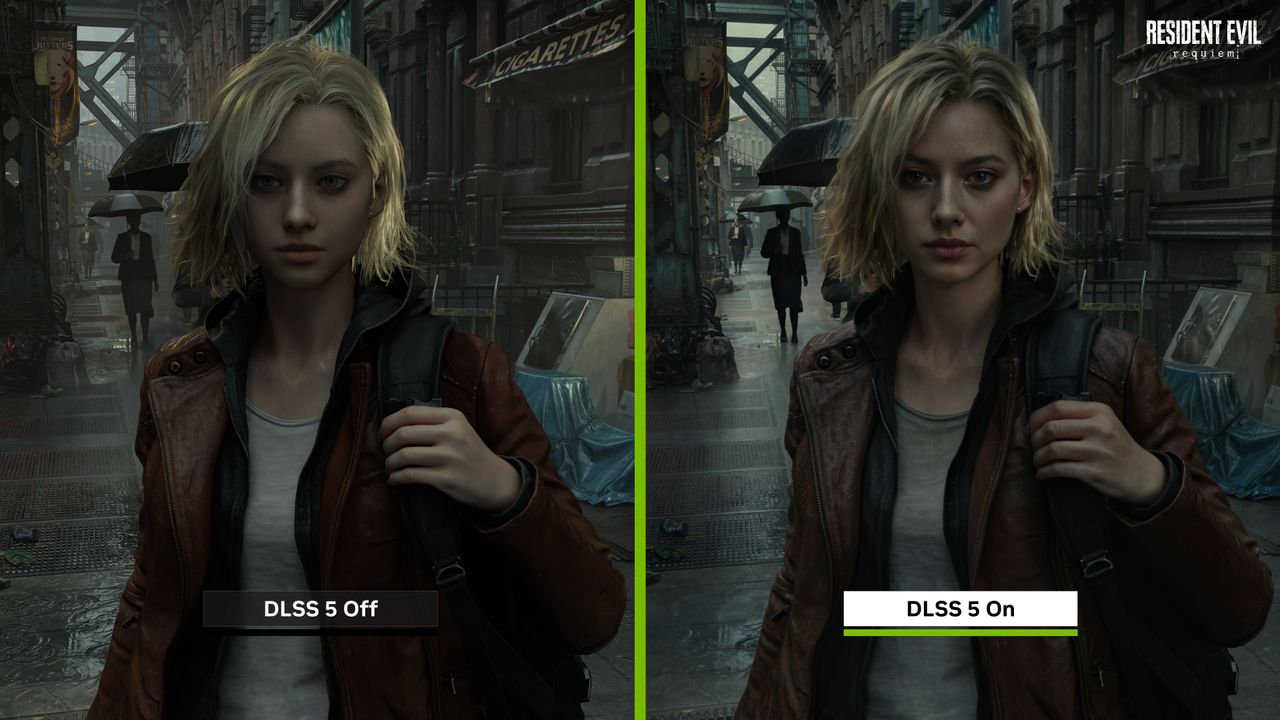
In case you're not caught up on the controversy, in March, Nvidia released the first look at its DLSS upscaling tech, which would bring "real-time neural rendering model that infuses pixels with photoreal lighting and materials," aka generative AI.
The company also shared a highlight reel, showcasing several games utilizing DLSS 5, including Resident Evil Requiem. The response to the footage was overwhelmingly negative, not just because of the ethics surrounding AI, but because it "upscaled" the game's protagonist, Grace Ashcroft, into an unrecognisable, 'yassified' version of the original design.
Now, speaking in an interview with Eurogamer, Kumazawa responded to the controversy. While he couldn't discuss Capcom's involvement directly, he did say the response proved that Grace's design had resonated with players.
"The fact a lot of players commented they really liked the original design of Grace and didn't want to see it changed was a positive," Kumazawa noted.
He added: "It meant we got the design right [and] points to the fact that Grace quickly established herself as a fan favourite, that people had such strong opinions on her design."
Following the backlash to DLSS 5, Nvidia's CEO Jensen Huang doubled down on the use of generative AI and said players were "completely wrong" about the upscaling tech's purpose.
"The reason for that is because, as I have explained very carefully, DLSS 5 fuses controllability of the geometry and textures and everything about the game with generative AI," Huang said at the time.
"All of that is in the control – direct control – of the game developer. This is very different than generative AI; it's content-control generative AI. That's why we call it neural rendering."
Soon after, Huang came out with another, more mellowed response and addressed the negative response to DLSS 5 once more; however, he still defended the use of gen-AI.
"I think their [gamers] perspective makes sense, and I could see where they're coming from, because I don't love AI slop myself. I'm emphatic towards what they're thinking. That's just not what DLSS 5 is trying to do," he said.
"It's conditioned by the textures and the artistry of the artist. It enhances every single frame, but doesn't change anything."
DLSS 5 is slated to be released later this year and will support a multitude of games on PC, including Resident Evil Requiem, Starfield, Assassin's Creed Shadows, and more.