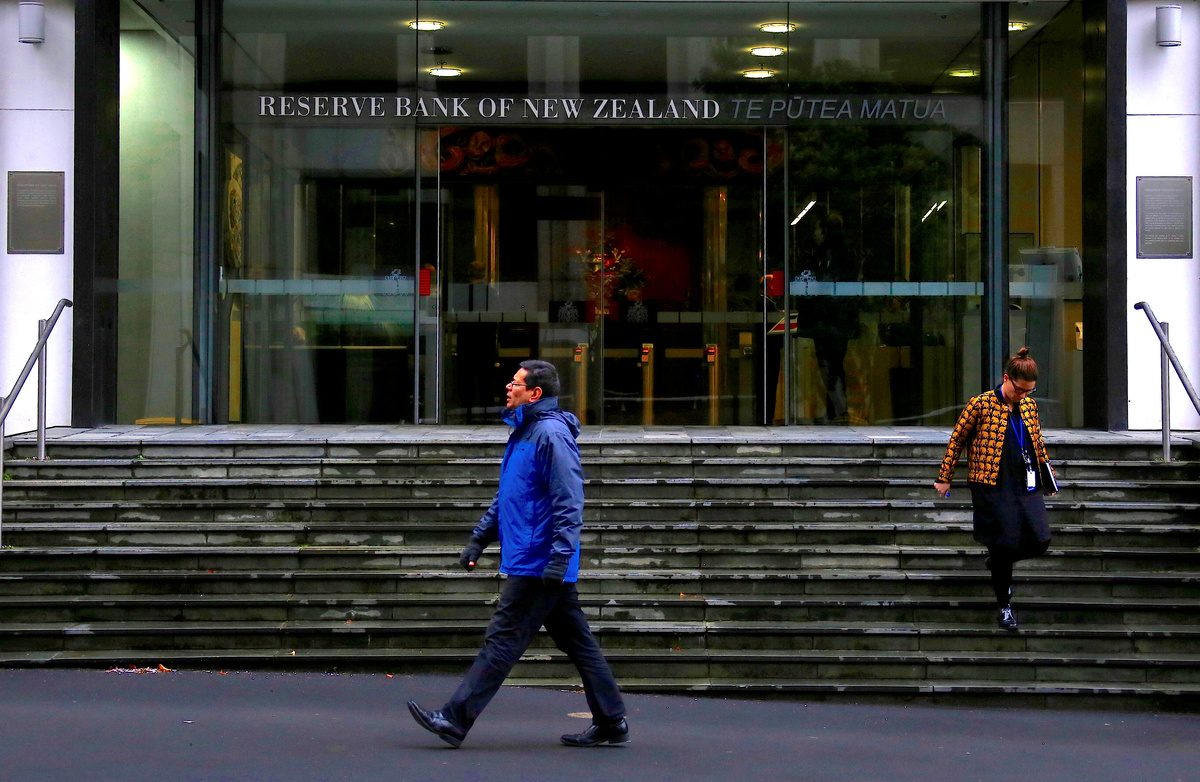
New Zealand's central bank said on Thursday it would decide in the coming months if further delays were warranted in its implementation of banks' capital review, after a stress test revealed the banking system was resilient to economic shocks.
The Reserve Bank of New Zealand (RBNZ) pushed back its proposal to raise the amount of capital top banks must hold until July next year due to the economic impact from the coronavirus pandemic.
RBNZ said a decision on whether to delay it further would be taken before the financial stability report is released in November, adding that all options were on the table.
"We do not want the banks to be challenged in meeting high levels of capital while we would still want them to use the buffers they have to support the economy," said Toby Fiennes, RBNZ's head of financial system policy analysis.
RBNZ also said its stress test of top banks showed they could draw on their existing capital buffers and continue lending to support the economy during a severe downturn.
The base case stress test scenario assumed the unemployment rate rises to 13% and annual gross domestic product falls by 12%.
"The results show us that banks can, and should, draw on their capital buffers to continue meeting customers' needs during very challenging economic times," RBNZ Deputy Governor Geoff Bascand said in a statement.
New Zealand's economy slipped into recession in the second quarter but economists expect it bounced back soon due to the country's success in containing COVID-19.
RBNZ also tested a more severe economic scenario, which assumes unemployment rises to around 18%, and annual GDP declines 18% and in this scenario, banks came under considerable strain, and needed to access additional capital to remain above their regulatory minimums.
"Even though these scenarios are severe, they are not unprecedented internationally, and the economic costs of such bank failures are significant," Bascand said.
(Reporting by Swati Pandey and Praveen Menon; Editing by Jacqueline Wong)