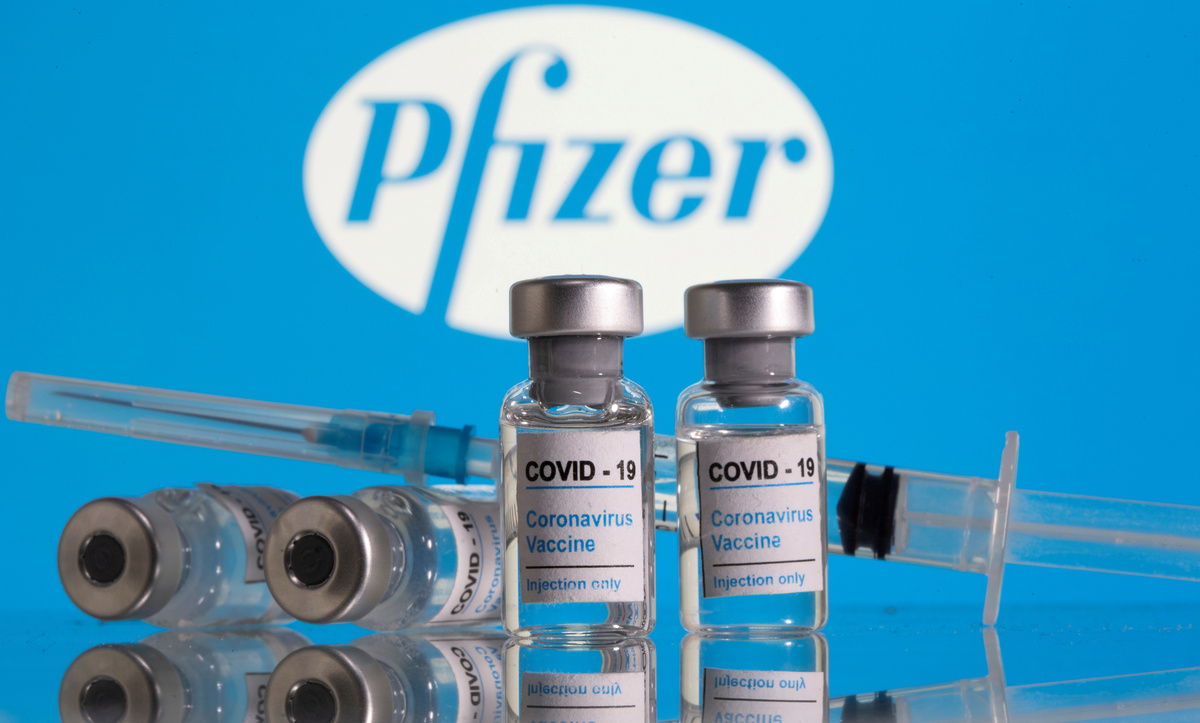
The second dose of Pfizer Inc's COVID-19 vaccine could be delayed in order to cover all priority groups as the first one is highly protective, two Canada-based researchers said in a letter published in the New England Journal of Medicine.
The vaccine had an efficacy of 92.6% after the first dose, Danuta Skowronski and Gaston De Serres said, based on an analysis of the documents submitted by the drugmaker to the U.S. Food and Drug Administration (FDA).
These findings were similar to the first-dose efficacy of 92.1% reported for Moderna Inc's mRNA-1273 vaccine, according to the letter https://www.nejm.org/doi/full/10.1056/NEJMc2036242 on Wednesday.
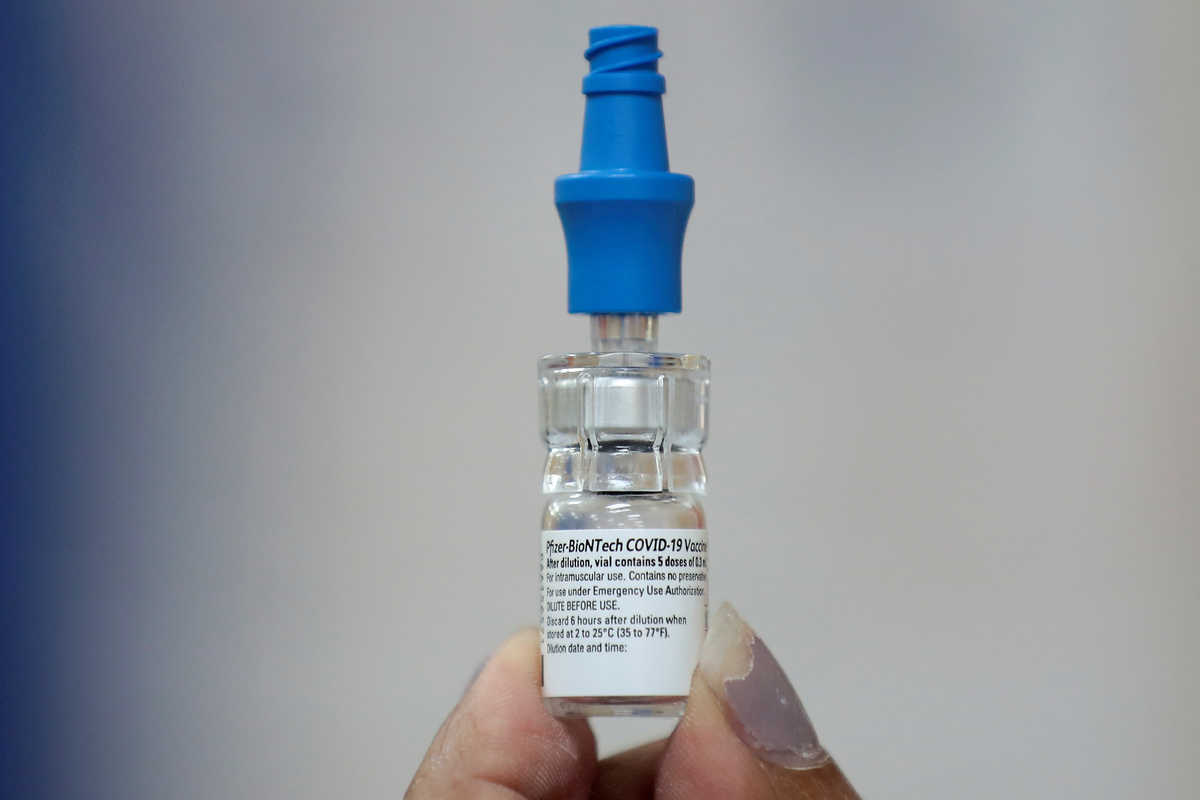
In its response, Pfizer said alternative dosing regimens of the vaccine had not been evaluated yet and that the decision resided with the health authorities.
Some countries, grappling with low supplies, are looking at dosing patterns or volumes that differ from how the vaccines were tested in clinical trials.
There are differences over the merits of such strategies, with some arguing the urgency of the pandemic requires flexibility, while others oppose abandoning data-driven approaches for the sake of expediency.
Skowronski and De Serres cautioned that there may be uncertainty about the duration of protection with a single dose, but said the administration of the second dose a month after the first provided "little added benefit in the short term".
Skowronski works at the British Columbia Centre for Disease Control, while De Serres is from the Institut National de Santé Publique du Québec
In Britain, authorities have said that data supported its decision to move to a 12-week dosing schedule for Pfizer's COVID vaccine. Both Pfizer and partner BioNTech have warned that they had no evidence to prove it.
Pfizer's vaccine is authorized to be taken 21 days apart.
The U.S. FDA and the European Medicines agency have stuck by the interval tested in the trials.
(Reporting by Shubham Kalia and Ann Maria Shibu in Bengaluru; Editing by Vinay Dwivedi and Sriraj Kalluvila)