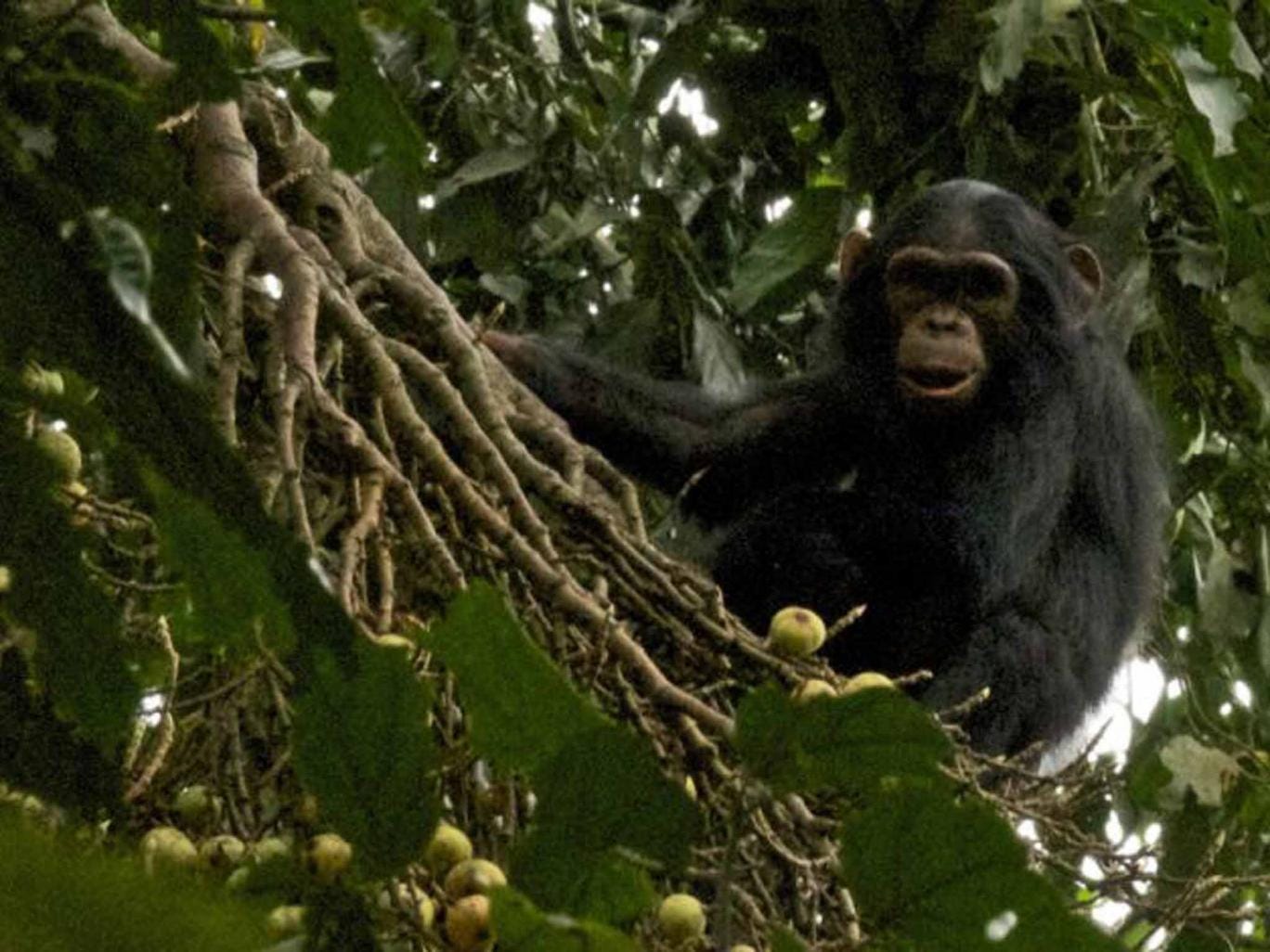
A chimpanzee mother caring for her disabled infant daughter in the wild could suggest how humans developed social behaviour, according to a Japanese study.
The researchers from Kyoto University said there had been no reports examining how a chimpanzee mother in the wild copes with a disabled infant.
Their study, published in the online edition of Primates, showed how chimpanzees cared for a female infant which was "severely disabled" and exhibited "symptoms resembling Downs syndrome".
Despite her handicaps, the infant was able to survive for at least two years thanks to the care of her mother and sister.
The mother was observed scooping up the infant when moving and raising her to her nipple when breast-feeding.
As for the elder sister, she looked out for her little sister while their mother ate.
Michio Nakamura, one of the study's authors, told The Japan Times the research could help solve the riddle of how humans evolved into social animals.
“One characteristic of human society is that people reasonably take care of the disabled and those in vulnerable positions,” Mr Nakamura said.
“It’s interesting to observe a chimpanzee looking after a disabled infant in terms of finding out when such sociality occurs, as they are the closest modern species to humans.”
However, he said the disabled infant had not been observed since December 2012, prompting the team to conclude that she had died.