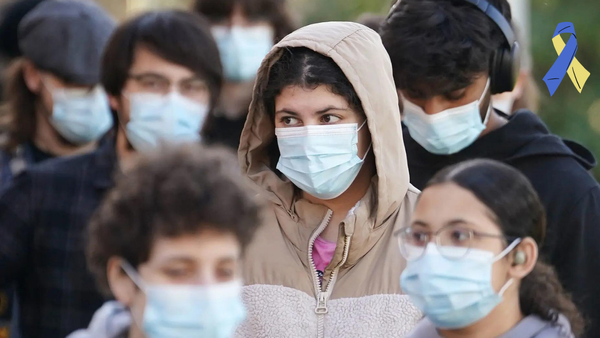
Scientists around the world are scrambling to adapt their research to find solutions to the many problems raised by the COVID-19 pandemic sweeping the world, not the least being a face mask shortage.
Dr. Thomas Rainey from the University of Queensland and his research team are stepping up work on a nanoparticle-removing new material they were developing for biodegradable anti-pollution masks.
In a report published Wednesday on the university's website, Rainey said: "We have developed and tested a highly breathable nano-cellulose material that can remove particles smaller than 100 nanometers, the size of viruses."
"I see many people wearing masks which are not tested for viruses. We have tested this material thoroughly and found it to be more efficient in its ability to remove virus-size nanoparticles than the high-quality commercially available masks we tested and compared it with," he added.
The team also tested the new material for breathability.
“By breathability we mean the pressure or effort the wearer has to use to breathe through the mask; the higher the breathability, the greater the comfort and reduction in fatigue. This is an important factor for people who have to wear masks for long periods or those with existing respiratory conditions.
“Our tests showed the new material is more breathable than commercial face masks, including surgical masks, and has a greater ability to remove the smallest particles.”
The cellulose Nano fiber component is made from waste plant material such as sugar cane bagasse, and is biodegradable. It can be made using relatively simple equipment.
According to Rainey, the team is currently seeking industry partners.