
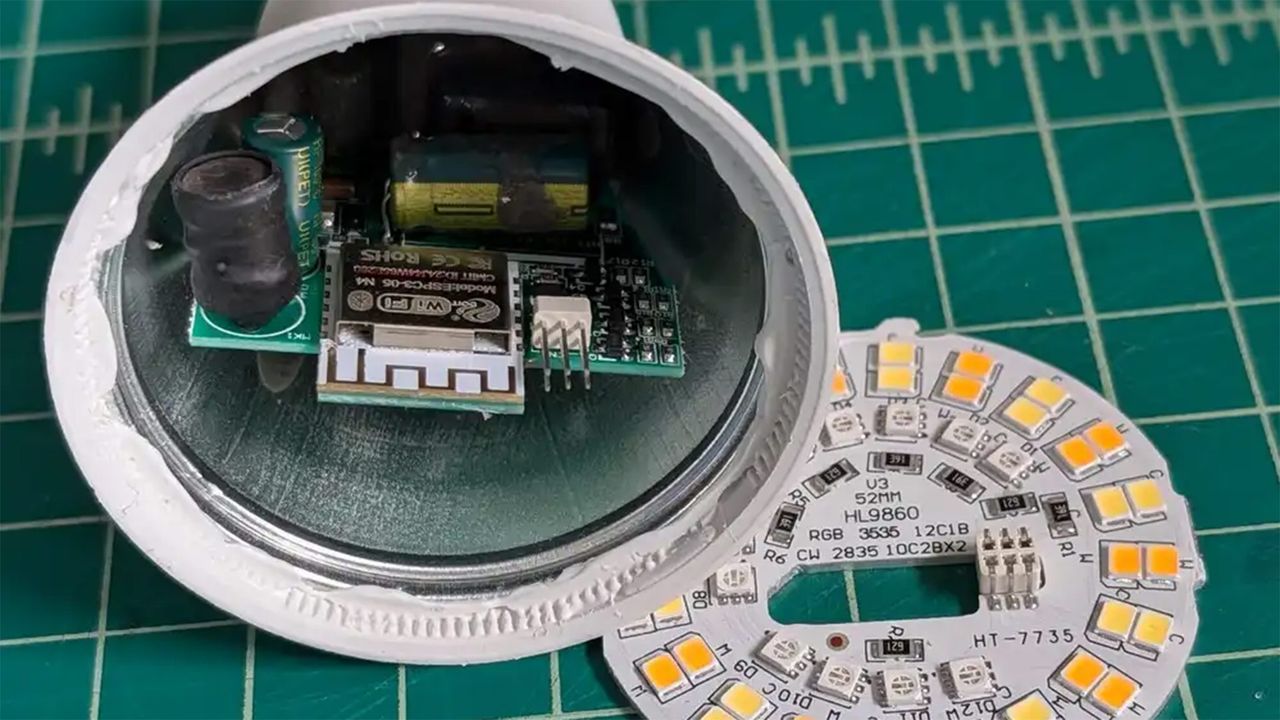
A security researcher has added another dimension to smart lightbulbs by using them to store a library of banned books, creating what they describe as a “cyberpunk digital dead drop.” Rick Osgood wrote about the idea behind the Banned Book Library on his personal blog, alongside a retelling of the process to create a working prototype. Meanwhile, all the code is open source and available via Codeberg. So, anyone interested can acquire some ESP32-powered smart lightbulbs and distribute stealthy banned book libraries of their own.
Osgood notes that he was pondering making smart lightbulbs more useful. As someone “interested in infosec, open-source software, making things, breaking things,” he found inspiration in Ben Brown’s short story of anti-corporate tech resistance, called ‘Library.’ After that lightbulb moment, Osgood knew he wanted to make a small, inexpensive, cyberpunk‑style digital dead drop, designed for resilience and stealth – by reprogramming smart lightbulbs.
The security researcher chose a Tasmota‑flashed ESP32C3 smart bulb as the starting point for the stealth library project. As this device only has 4MB on board in total for everything, including the OS, and not much spare capacity left over, Osgood spent a considerable amount of time and effort wrangling with adding a microSD reader. However, this expansion effort proved fruitless, and thus he decided to live with the total capacity 4MB limit for the sake of sanity, convenience, and stealth.
Once Osgood accepted the 4MB storage limitation, a key task was to expand the existing ~320KB of free space for the filesystem as much as possible. After some optimizations and tuning, he managed to reserve about half of the total storage space available for banned books. We also assume some kind of text compression is used to make the best use of the limited capacity.
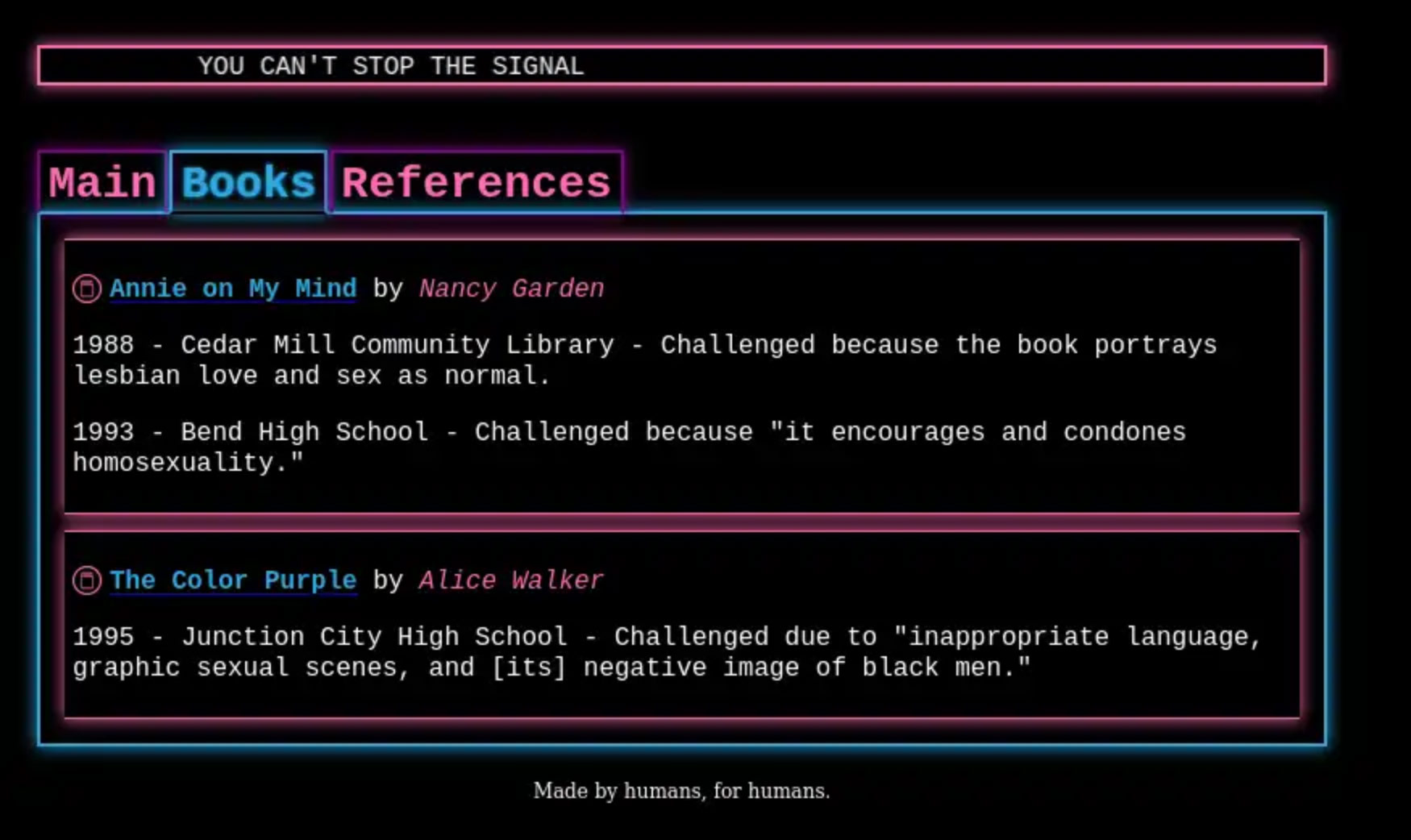
Thus, the current working prototype runs some custom ESP32 firmware, broadcasts an open Wi-Fi network, and hosts a server, with about half of the total capacity of the smart lightbulb left over. That means the all-important LittleFS library partition can be stuffed with almost 2MB of banned books. Osgood's example files use a selection of old public domain titles, presented in a CSS contents page. However, those who set up the lightbulbs will of course want to add their own digital tomes. Guidance for this, and for updating admin settings, and more is provided on the linked blog and Codeberg pages.
The Banned Book Library supports OTA updates. It is also worth mentioning that no cloud services are required, and no sensitive credentials need to be saved on the device. Please remember that modifying your smart lightbulb firmware could ‘brick’ it, so follow the linked guides at your own risk. Finally, also be careful carrying your banned book-stuffed smart lightbulbs when traveling internationally.