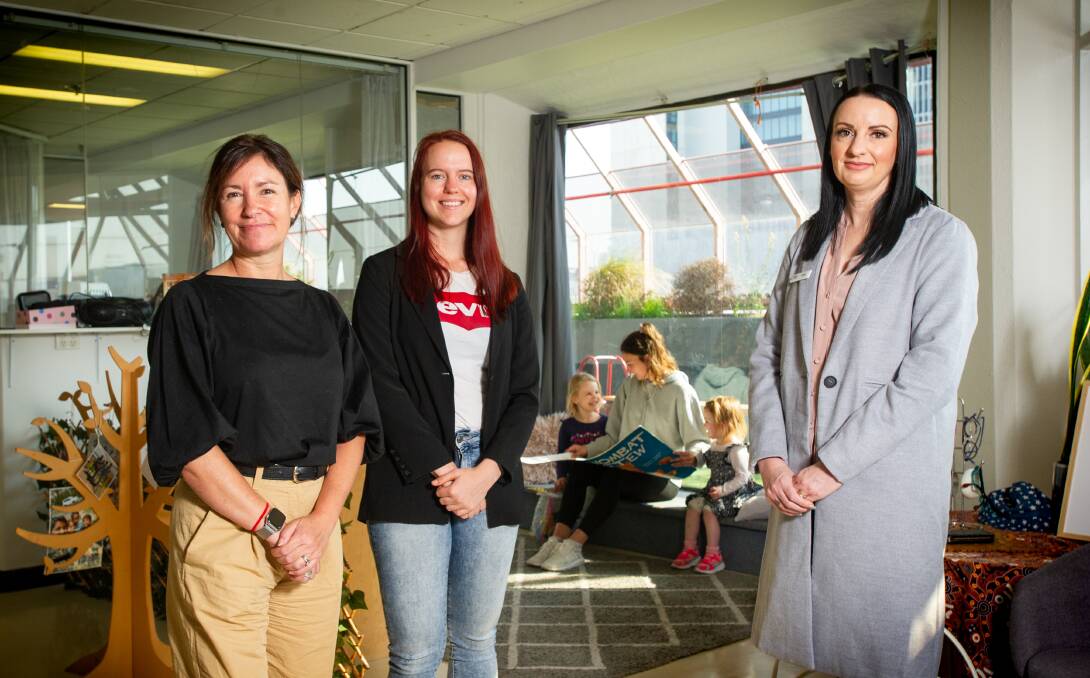
University of Canberra researchers are working with Belconnen childcare centres to tackle development issues before their children hit school-age.
The Belconnen district was among the ACT's worst-performing in the latest Australian Early Development Census, with 26 per cent of kindergarteners in the area considered "developmentally vulnerable".
The census came to that figure by looking at factors like physical health and well-being, social competence and emotional maturity; things the Canberra researchers hope to improve with their "Good Start in Life" project.
As part of the project, the researchers are contacting every early childhood education and care centre in nine Belconnen suburbs, and sending out clinical educators to help with things like language development.
Project manager Dr Vicky Saunders said the team hoped to see improvements in developmental vulnerability by the 2024 census, when data would have been collected about the children's' first year at school.
"With [Belconnen Early Childhood Centre], for instance, we've got our speech students coming in with the clinical educator once a week to do a 'read it again' program where they're ... teaching educators to understand language development a little bit better, and using books [and learning] how we can improve communication," she said.
"So we're not only looking at working with the children in that context, but we're also looking at building skills and knowledge for educators."
Director of the Belconnen childcare centre, Ruth Connor, said about 80 per cent of families who had children in the centre spoke English as a second language, and some had refugee status.
"Because of maybe the social economic barrier there ... they might not be able to access speech therapists and occupational therapists", she said.
"So it's a really nice introduction for families."
Dr Saunders said the project team was also working with other stakeholders, like ACT Playgroups, Evatt Primary School and Canberra Health Services to reach children in the community.
Several multidisciplinary experts were working on the project, so occupational therapists were able to be deployed to Westfield Belconnen to talk to parents in a playgroup setting. More initiatives like that were expected with the project.
"They're talking to parents [about whether they've] got concerns around [their] child's development," Dr Saunders said.
"The parents themselves often don't know that there's issues there but the occupational therapists might pick that up.
"Then they'll be able to support them, either through the centres, Capital Regional Community Service's programs or through some referrals to the child development service."
Dr Saunders said there were long wait lists to see experts like community paediatricians in the ACT, so the project aimed to bridge that gap for people in the Belconnen district.
The team hoped outcomes of the project could be applied in other areas of the ACT.
"It's also about looking at how we can provide universal supports, training and education to just increase physical literacy skills generally, and then also be able to pick up quicker those challenges that children might be having," Dr Saunders said.
"There's got to be other things we can do for families whilst they're waiting for those professional experts to look at their children, and there's things that we can offer through [this program]."
The project had also onboarded a family liaison coordinator to help connect families to services, and the team planned to host pop up play sessions in neighbourhood spaces.
The project's chief investigators were Professor Rachel Davey, director of the Health Research Institute at the University of Canberra, and Professor Michelle Lincoln, executive dean of the Faculty of Health.