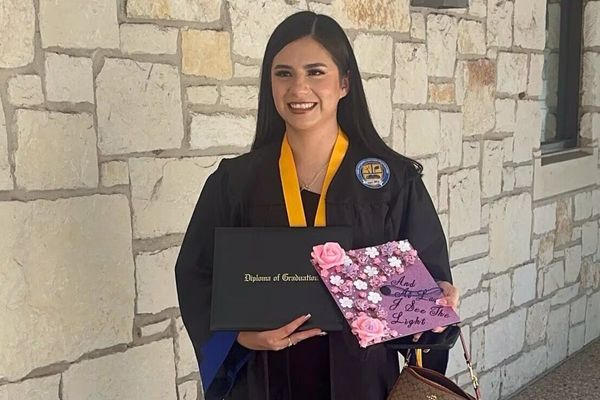

It is almost completely dark in Ángeles De Andrés’s sixth-floor apartment. A nightlight reflects off a 3-foot statue of the Madonna, which is flanked by porcelain angels. A red kilim covers the wooden floor.
Dressed in sweatpants and a blue shirt, De Andrés sits on her living room couch beside her fluffy white dog, Lana. The lights of the Galician port city of Vigo glow in the distance, though it is hard to make out the harbor through the diaphanous curtains. The massive wooden coffee table in front of her is covered with maps of the Aegean Sea; it takes up so much space that it is difficult to navigate the room.
She flicks her tablet with the little finger of her right hand, and her gaze intensifies in the light of the screen. Messages have been coming in throughout the day, via the instant messaging service WhatsApp, from refugees in Europe, Turkey, Iraq, and Syria. A Syrian man named Kawa Horo, who is currently living in Sweden, has sent photographs of a Syrian refugee in Turkey who is injured. “This young man has a broken neck and needs a device for treatment,” he wrote to De Andrés. “Can we help him[?]”
Many people reach out to De Andrés this way, all of them seeking help and in varying stages of distress — a group of 30 Syrians lost on a raft in the Aegean, an Iraqi family without a place to stay in Erbil. Nearly 1.5 million refugees and migrants from Syria, Afghanistan, Iraq, and elsewhere have arrived in Europe by boat since 2015, according to the U.N. refugee agency; more than 11,000 have perished on the high seas in the attempt. Though the flow of migrants making the crossing has consistently declined since 2016, thousands are still attempting the journey.
Over the past four years, De Andrés says she has built a network of about 3,000 refugees and volunteers without ever leaving her hometown of Vigo. She calls it “Red Alert” — a play on red, the Spanish word for net or network.
De Andrés is not a trained aid worker, but her collaborative efforts to track people attempting to cross the eastern Aegean have helped shine a light on urgent cases, providing assistance to those in need. Proactiva Open Arms, the Spanish lifeguard NGO that has plucked thousands of refugees from rubber rafts in the eastern Aegean and the Mediterranean Sea, credits her with having saved many lives.
That night De Andrés stays up until 3 a.m. responding to messages, though most of the problems passed her way go unresolved. In the days that follow, some progress is made: It turns out the man in Turkey needs around $3,500 for a neck prosthesis, so De Andrés reaches out to her WhatsApp network and online to friends to see how best to raise the funds. The Syrians whose raft was lost at sea made it safely to the Greek island of Chios. She says she plans to send $60 out of her own pocket via Western Union to the family in Erbil.
“We can’t stop war, nor can we save everybody,” De Andrés says. “But we can save this one and that one.”