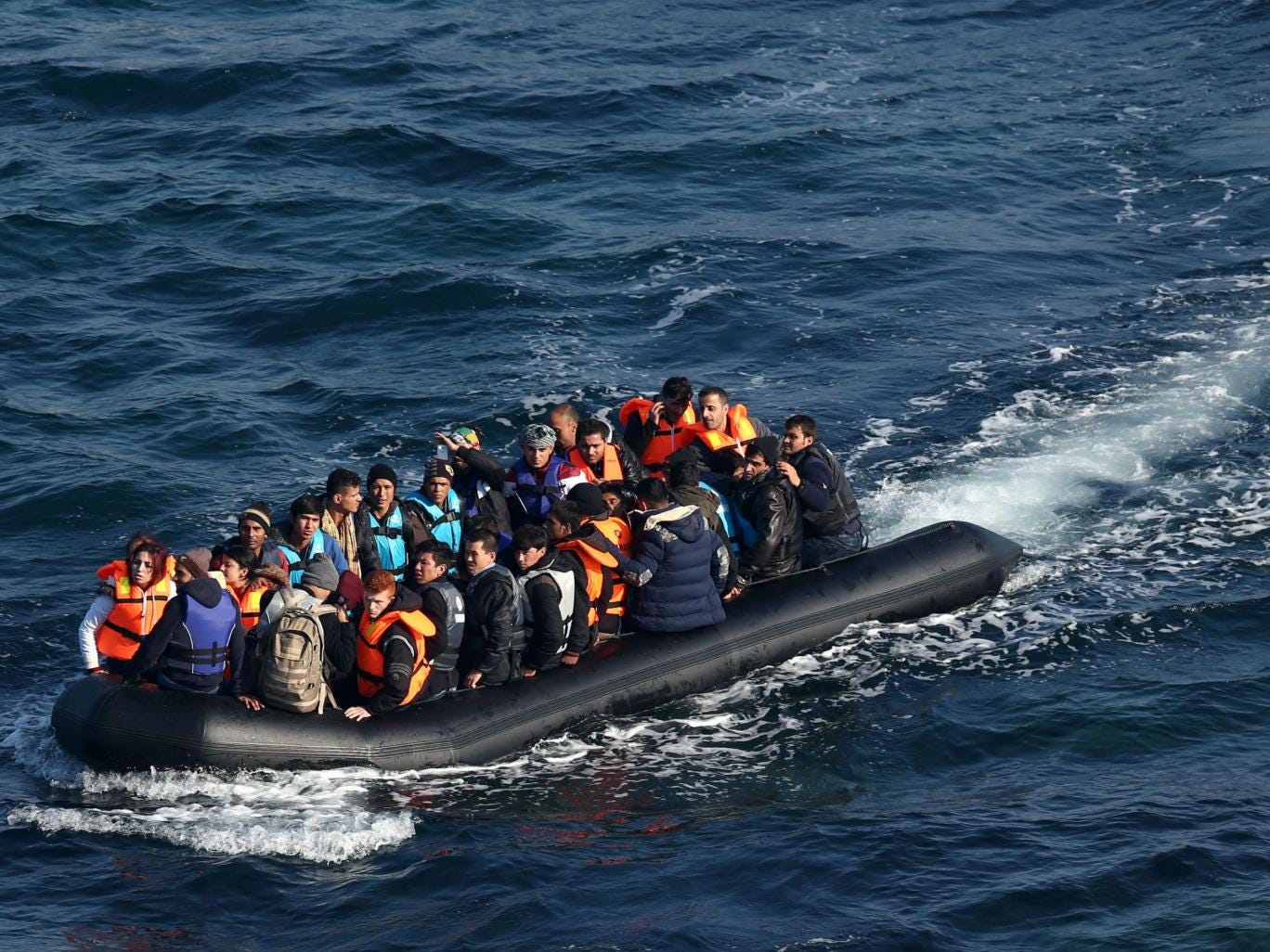
At least 31 refugees drowned in the Aegean Sea while rescue workers looked on unable to help because they reportedly feared being charged with people smuggling.
Australian national Simon Lewis says he and a team of rescue workers were sailing in international waters near the Greek island of Lesbos when they spotted a refugee boat in trouble.
On closer inspection the team realised the sinking boat was technically on the Turkish side of the sea, meaning they were unable to get close to the desperate men, women and children on board.
With the boat in trouble and unable to cross the water border under its own steam, the rescue workers were forced to watch as all 31 people on board drowned – apparently including a desperate mother who tried in vain to throw her baby over the border so that the team might save it.
"That's the nature of lifesaving, we put ourselves in that situation to help prevent people from drowning and yet because it's across the way in international water you're restricted and can't actually do anything about it," Mr Lewis told Australia’s ABC News.
Speaking about his memories of the desperate mother, Mr Lewis was quoted as saying: "We realised what she was about to do, you know, throw us the baby and so we had to pull away from her and put some distance between us. Just seeing her face, that heartbreak."
ABC said the reason Mr Lewis' team were unable to intervene is because rescue workers can be charged with people smuggling if they help refugees cross borders.
Tragically had the vessel made it into international waters before sinking then all 31 lives may well have been saved.
Mr Lewis, who went to Greece as part of a joint venture between the Greek Lifeguards and the International Surf Lifesaving Association, said his team were able to save the lives of 517 people in just 10 days. He estimates 2,000 refugees passed through the waters in that time.
He has also run a crowd-funding campaign which has raised A€22,000 to pay for a rescue jet ski which will be donated to Greek lifeguards to help them reach stricken refugees more quickly.