
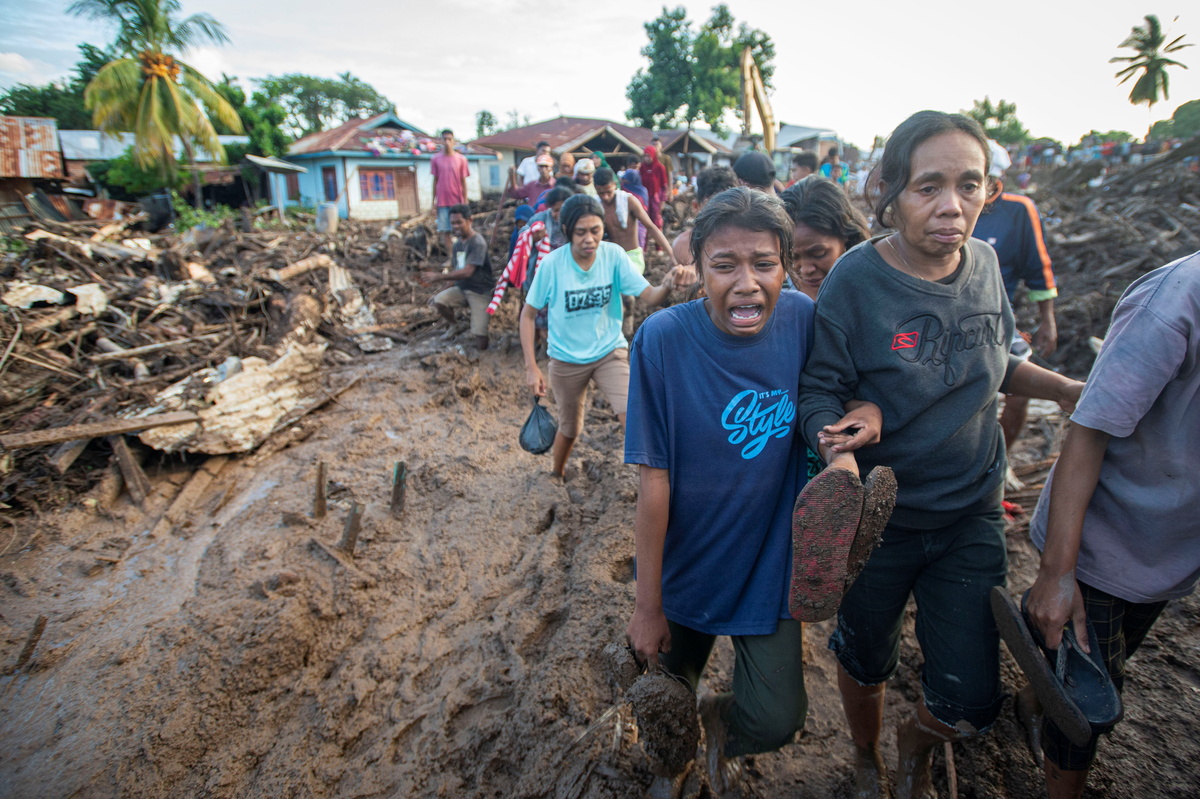
Rescuers searched for dozens missing in the remote islands of southeast Indonesia on Tuesday, as reinforcements arrived to help in the aftermath of a tropical cyclone that killed at least 119 people.
Helicopters were deployed to aid the search, and ships carrying food, water, blankets and medicine reached ports previously blocked by high waves whipped up by tropical cyclone Seroja, which brought heavy rain and triggered deadly floods and landslides on Sunday.
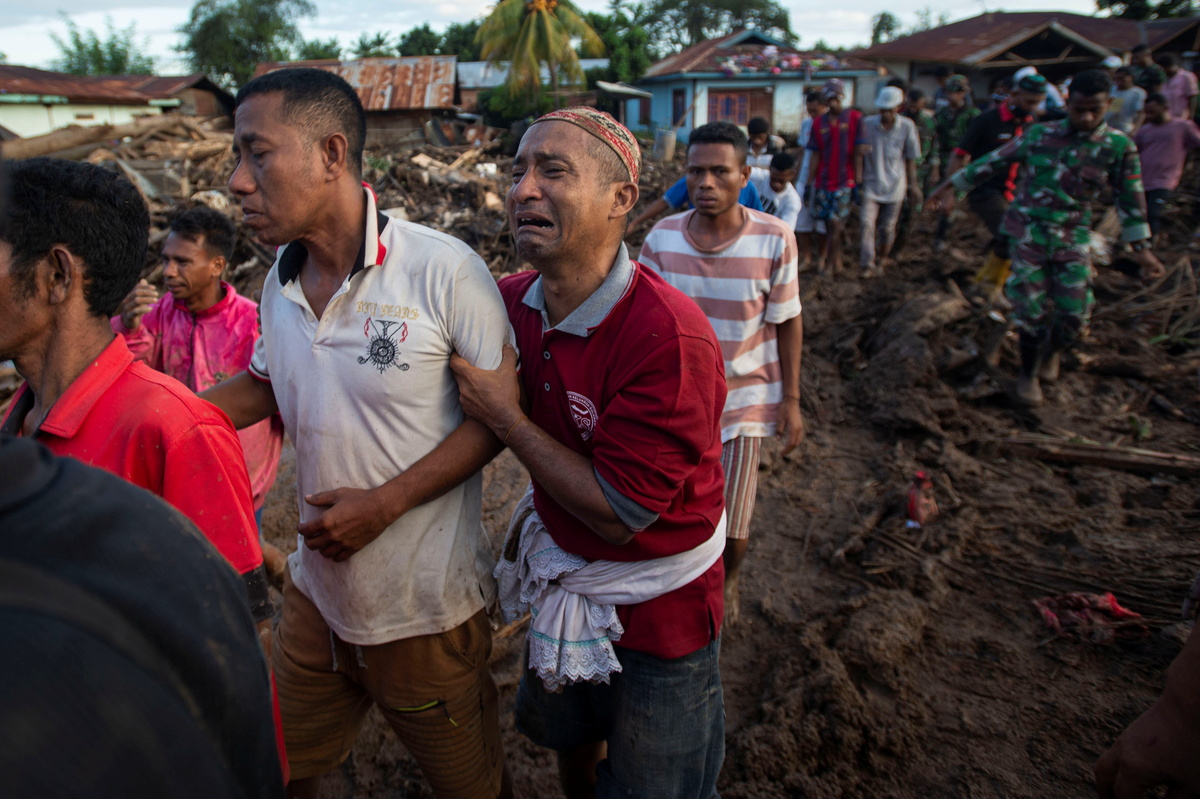
Indonesia's disaster agency BNPB revised upwards the death toll from the cyclone in the East Nusa Tenggara islands, after earlier saying 86 had died. Seventy-six people were still missing.
"The rescue team is moving on the ground. The weather is good," BNPB spokesman Raditya Jati told a news briefing.
Search and rescue personnel, however, had trouble transporting heavy equipment for use in the search.
"Search for victims is constrained, the existing heavy equipment cannot be sent to their destination, especially in Adonara and Alor," the head of BNPB, Doni Monardo, said.
The Adonara and Alor islands were among the islands worst hit by the cyclone, with 62 and 21 people dead respectively.
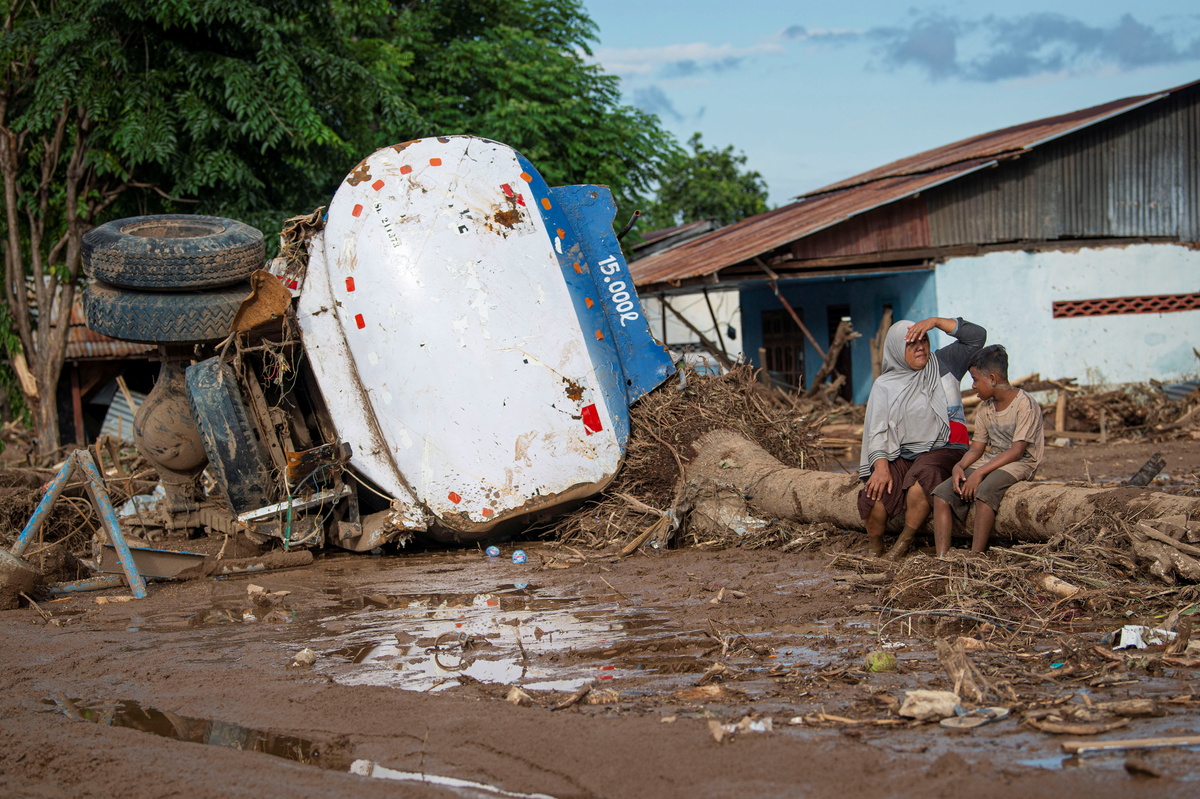
Aerial images from Adonara on Tuesday showed brown mud and flood water covering a vast area, burying houses, roads and trees.
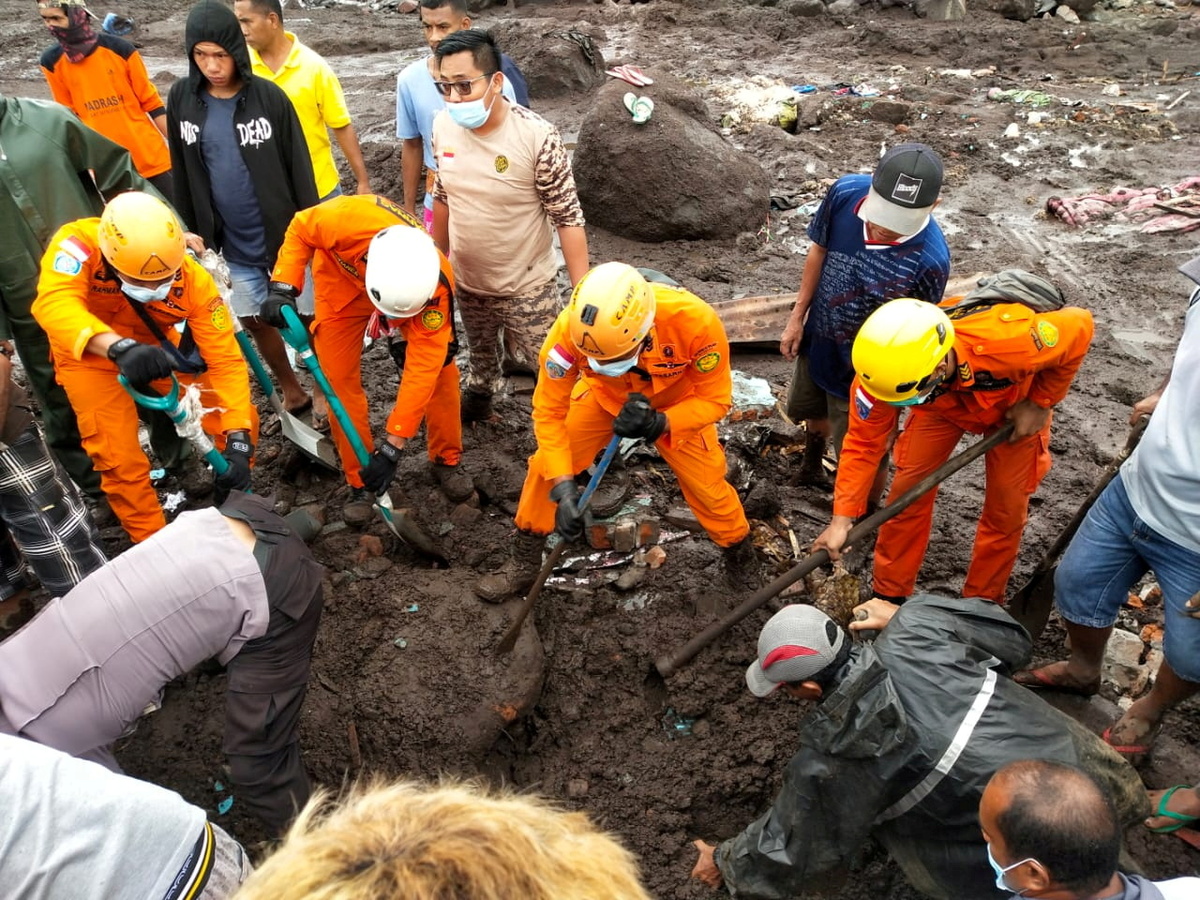
The military and volunteers arrived on the islands on Tuesday and were setting up public kitchens, while medical workers were brought in.
Video taken by a local official in Tanjung Batu village on Lembata, home to the Ile Lewotolok volcano, showed felled trees and large rocks of cold lava that had crushed homes after being dislodged by the cyclone.
Thousands of people have been displaced, nearly 2,000 buildings including a hospital were impacted, and more than 100 homes heavily damaged by the cyclone.
Two people died in nearby West Nusa Tenggara province.
There were also concerns about possible COVID-19 infections in crowded evacuation centres.
(GRAPHIC: Floods triggered by tropical cyclone Seroja Floods triggered by tropical cyclone Seroja -
In neighbouring East Timor, at least 33 were killed in floods and landslides and by falling trees. Civil defence authorities were using heavy equipment to search for survivors.
"The number of victims could still increase because many victims have not been found," the main director of civil protection, Ismael da Costa Babo, told Reuters.
"They were buried by landslides and carried away by floods."
Some residents of Lembata island may have also been washed away by mud into the sea.
A volcano that erupted on Lembata last month wiped out vegetation atop the mountain, which allowed hardened lava to slide towards 300 houses when the cyclone struck, a senior district official said, hoping help was on the way.
"We were only able to search on the seashore, not in the deeper area, because of lack of equipment yesterday," Thomas Ola Langoday told Reuters by phone.
He feared many bodies were still buried under large rocks.
President Joko Widodo urged his cabinet to speed up evacuation and relief efforts and to restore power.
Weather agency head Dwikorita Karnawati said once-rare tropical cyclones were happening more often in Indonesia and climate change could be to blame.
"Seroja is the first time we're seeing tremendous impact because it hit the land. It's not common," she said.
(Reporting by Agustinus Beo Da Costa, Stanley Widianto and Bernadette Christina Munthe in Jakarta and Nelson Da Cruz in Dili; Writing by Gayatri Suroyo and Fathin Ungku; Editing by Martin Petty, Tom Hogue and Bernadette Baum)









)