Senate Republicans abandoned plans Friday night to try to take up a budget resolution for a third reconciliation package, bowing to the reality that they lacked enough votes for it.
The decision to scrap a planned procedural vote on the budget came after a late-night meeting in Majority Leader John Thune’s office with key senators and a phone call with President Donald Trump.
Trump had urged the Senate for weeks not to leave town for the August recess before making headway on a reconciliation package that would pump up defense spending and impose elements of the so-called SAVE America Act, which would require proof of citizenship to register to vote and photo ID at the polls.
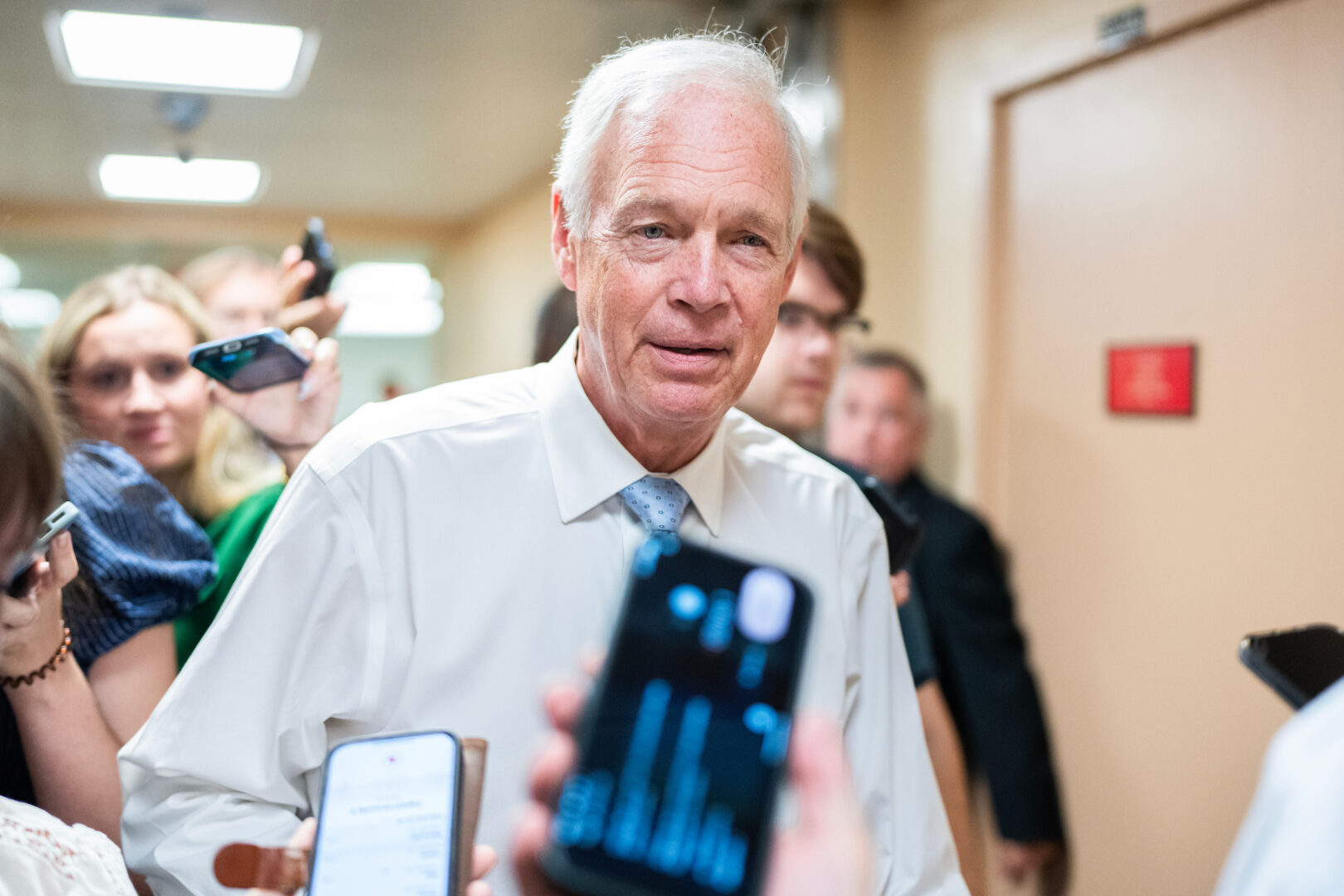
But Senate Budget Chairman Ron Johnson, R-Wis., said Trump agreed to give the reconciliation effort more time to shore up support.
“There was a concern whether or not we could actually pass the budget resolution tonight,” Johnson told reporters after the meeting. “Then we had a discussion with the president. He agrees. Don’t take the vote tonight, and just work diligently through August and September to do an actually … better reconciliation bill.”
The decision to punt came hours after Johnson unveiled the text of the budget resolution whose size and shape had long divided the GOP conference. The resolution was designed to provide up to $105 billion for defense spending, farm aid and voter ID measures.
The budget blueprint amounts to a slightly expanded version of the resolution the House adopted last month, which would set the framework for a $95 billion package.
The Senate budget mostly mirrors the House plan for $60 billion in defense spending, $13 billion for intelligence and $12 billion in farm aid. But it would provide $20 billion for voter ID measures, or $10 billion more than the House plan, Johnson said.
The plain text of the resolution would allow for up to $150 billion in total spending without any offsets required. But Johnson said that figure is inflated to provide maximum flexibility to the authorizing committees charged with drafting the detailed reconciliation bill.
While the resolution technically would allow for up to $60 billion for voter ID measures spread across three committees, for example, Johnson said the final spending total for that initiative would be $20 billion.
To avoid any jurisdictional challenges under the complicated rules of reconciliation in the Senate, the resolution would give instructions to 11 committees — Agriculture, Armed Services, Commerce, Energy and Natural Resources, Foreign Relations, Homeland Security and Governmental Affairs, Indian Affairs, Intelligence, Judiciary, Rules and Veterans’ Affairs.
By contrast, the House budget would instruct only four committees: Agriculture, Armed Services, Intelligence and Administration.
House leaders sought to narrow the instructions to avoid enlarging the package and risking its chances of adoption. While Senate leaders sought to provide greater flexibility, instructions this wide would give Democrats many opportunities to put forward germane amendments that could pose difficult votes for vulnerable Republican senators.
The resolution does avoid an instruction to the Finance Committee, which would have allowed for germane amendments on health and welfare programs.
The $60 billion for defense spending, which matches the House plan, would not please defense hawks who want far more.
The Trump administration has asked for $350 billion in defense spending to be provided through reconciliation, as part of an overall proposal of $1.5 trillion in defense funding — an increase of more than 40 percent over this year’s level.
With the Senate now set to leave for its August recess without action on the budget, Johnson vowed to continue the effort in September.
“We’re not giving up,” he said earlier Friday. “I mean, we need to fund [the] military, I believe. We need to fund election integrity measures. So, I can’t predict the future.”